Top Defense Companies With Best Leadership & Management (1,182)

Vantor is forging the new frontier of spatial intelligence to unlock a more autonomous, interoperable world. We empower decision makers and operators with the clarity they need to navigate what’s happening now and shape what’s coming next. Our AI-powered spatial intelligence platform fuses data from the world’s highest-resolution satellites with real-time sensor feeds from space, air, and ground to create...

Vantor's Top Leadership & Management Strengths
Strategic Vision & Planning: Leadership articulates a deliberate shift from imagery provision to an end-to-end spatial-intelligence platform centered on AI, sensor fusion, and an “AI-ready living globe.” Product architecture and messaging about connecting space, air, and ground data consistently reinforce this direction.
Collaborative & Aligned Leadership: The executive team is organized with clear ownership across U.S. Government, International Government, Enterprise/Ecosystem, Product, Technology, and Space Systems, signaling aligned leadership around the strategy. Recent role announcements tie individual leaders directly to scaling government and sovereign‑intelligence priorities.
Decisive Leadership: Actions such as the rebrand and targeted appointments to lead U.S. and international government businesses demonstrate timely moves to operationalize the stated strategy. These steps are framed around accelerating mission‑ready capabilities and scaling the spatial‑intelligence plan.

A leading global aerospace company and top U.S. exporter, Boeing develops, manufactures and services commercial airplanes, defense products and space systems for customers in more than 150 countries. Our U.S. and global workforce and supplier base drive innovation, economic opportunity, sustainability and community impact. Boeing is committed to fostering a culture based on our core values of safety, quality and...

Boeing's Top Leadership & Management Strengths
Strategic Vision & Planning: Leadership has articulated a coherent recovery roadmap centered on safety and quality, operational stability, culture change, certifications, and rebuilding trust, with concrete initiatives like the Safety & Quality Plan. Messaging links these priorities to actions such as stabilizing production, completing certifications, and investing for the future.
Open & Transparent Communication: Leaders consistently describe the plan and acknowledge remaining work, including stating that stabilizing the 737 line at the targeted monthly rate is taking longer than anticipated. Regular updates outline strategy, operational stability efforts, and certification status in clear terms that separate directional clarity from execution pace.
Purposeful Goal Setting: Management sets specific waypoints—such as targeted 737 production rates and certification milestones for the 737-7/737-10 and 777X—providing tangible markers for near-term execution. These goals are tied to operational changes, training, and process simplification to anchor expectations.
Improving the future and protecting lives is an ambitious mission, but it’s what we do. As a leading aerospace, defense, and security company, we work together to deliver a full range of products and services for air, land, space, and naval forces, as well as advanced electronics, security, information technology solutions and customer support services. How we work is rooted...
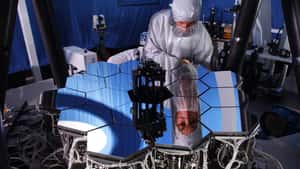
BAE Systems, Inc.'s Top Leadership & Management Strengths
Strategic Vision & Planning: The messaging across mission, strategy, U.S. investment priorities, technology focus areas, and reported results is described as consistent and understandable. Feedback suggests leaders articulate a coherent, long-term direction centered on growing core defense franchises, advanced technologies, and capacity expansion.
Strong Execution: Reported outcomes connect strategy to measurable performance, including growth in sales, EBIT, and order backlog, alongside continued investment in capacity, technology, and people. This pattern indicates leadership follow-through linking priorities to tangible business progress.
Resource Support: Significant U.S. investments—capital expenditure, workforce expansion, added footprint, and portfolio enhancements—are highlighted alongside priorities in microelectronics, naval capacity, space, and combat vehicles. These commitments signal leaders are backing strategy with the resources needed to scale.

Rangeview is building a modern casting platform to manufacture critical metal parts for aerospace, defense, and energy. We combine advanced software, automation, and materials science to reinvent how parts are designed and produced. Based in El Segundo, California, our team brings engineering, manufacturing, and technology together to build the foundry system that reindustrializes America.

Rangeview's Top Leadership & Management Strengths
Strategic Vision & Planning: Leadership consistently articulates a coherent mission centered on modernizing U.S. foundry capacity for aerospace/defense and scaling a “cyber foundry” model. Public updates and executive statements align on target sectors, technology approach, and the near-term path of winning programs and building capacity.
Collaborative & Aligned Leadership: Messaging from the CEO and across company materials remains tightly aligned, reinforcing a unified direction across mission, markets, and technology focus. The visible leadership team presents a coherent narrative that is repeated across announcements and hiring materials.
Strong Execution: Recent partnerships and contracts (e.g., U.S. Navy MRO, Kratos turbine components) demonstrate movement from thesis to tangible programs that fit the stated strategy. Public-facing milestones indicate progress in establishing capacity with strategically relevant customers.

Allen Control Systems is a defense technology company for a new era of drone warfare and to completely change battlefield economics. ACS is developing counter-drone robotic gun systems targeted at neutralizing attacking drone swarms, drones that are pre-programmed with AI, and drones that are non-jammable. ACS was created to lower the cost per kill of a drone to a few...

Allen Control Systems's Top Leadership & Management Strengths
Strategic Vision & Planning: Public materials describe a specific, coherent strategy centered on autonomous counter-drone systems with Bullfrog as the flagship, progressing from development to scaled manufacturing and deployment. Leadership consistently links the threat, technology, product, economics, and U.S./allied customers into a clear plan.
Collaborative & Aligned Leadership: Leaders have articulated a consistent problem-to-solution-to-market chain and explicitly divided CEO/President responsibilities to match the company’s scale-up phase. External reporting and company posts reinforce that the mission remains unchanged while roles focus on execution versus longer-term strategy.
Resource Support: Recent capital and facility expansion are directed toward scaling Bullfrog production and accelerating deployments, aligning resources with stated priorities. Announced funding and a large Austin manufacturing site, plus added engineering capacity, provide tangible support for the strategy.

Caliola Engineering, LLC’s staff of systems, security, and software engineers team with PhD researchers to identify and solve mission-critical problems for customers across the US Government. We have subject matter expertise in wireless communications, cryptography, protected MILSATCOM, software defined radio, and unmanned airborne systems. Our team has experience developing and transitioning innovative technologies to Programs of Record. We are a 100%...

Caliola Engineering's Top Leadership & Management Strengths
Strategic Vision & Planning: Leadership repeatedly anchors the company on secure, resilient mission-critical communications and ties this to a defined technical portfolio and concrete defense programs. A quantified north star—powering one billion mission-critical links by 2034—is connected to executive roles and the technical roadmap.
Open & Transparent Communication: Leaders are described as using structured mechanisms such as EOS planning, weekly Level-10 meetings, and quarterly company updates to keep priorities and progress visible. These practices signal deliberate, recurring communication about near-term and long-term objectives.
Purposeful Goal Setting: A specific, measurable 2034 objective is consistently cited across public materials, serving as a clear target for teams. The goal is explicitly linked to the CEO’s vision and the Chief Scientist’s roadmap, reinforcing alignment.
HRL Laboratories, an IBM company, pioneers the next frontiers of physical and information science. Delivering transformative technologies in automotive, aerospace and defense, HRL advances the critical missions of its customers. As a private company owned by IBM, HRL is a source of innovations that advance the state of the art in profound and far-reaching ways.
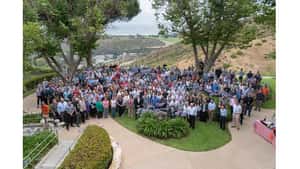
HRL Laboratories's Top Leadership & Management Strengths
Strategic Vision & Planning: Leadership consistently frames the mission as advanced R&D translated into real-world applications for automotive, aerospace, defense, and government customers, and the CEO transition was positioned as continuity of that direction. Program examples spanning quantum communications and DARPA-funded structural reliability reinforce a coherent strategic identity rather than ad hoc projects.
Strong Execution: Direction is tied to concrete initiatives—such as the SPARES program, space-based quantum communications work with Boeing, and facility investments that expand fabrication and testing—signaling follow-through from mission to implementation. Leaders also articulate quantum-computing objectives in operational terms (manufacturable approaches and compact cryogenics), indicating execution discipline.
Collaborative & Aligned Leadership: “One HRL” communications emphasize uniting more than 1,000 employees across sites and disciplines to bridge academia and industry and tackle consequential projects. Employee-oriented messaging around learning, innovation, and collaboration further underscores a cross-functional, aligned leadership posture.
Deepening the Science of Security Founded in 2012 by 3 expert hackers with no investment capital, Trail of Bits is the premier place for security experts to boldly advance security and address technology’s newest and most challenging risks. It has helped secure some of the world's most targeted organizations and devices. Our combination of novel research with practical solutions reduces the...

Trail of Bits's Top Leadership & Management Strengths
Strategic Vision & Planning: Public materials consistently outline a concrete strategy built on research → tools → sharing and an explicit AI‑native direction that explains both the why and the how. Leadership connects this narrative across the About page, leadership presentations, DARPA work, careers messaging, and initiatives like Patch the Planet, showing unusual coherence.
Open & Transparent Communication: Leadership routinely communicates strategy and operating changes through detailed blog posts, talks, handbooks, and company updates. Examples include explicit descriptions of the Research–Assurance feedback loop, open‑sourcing commitments, and a field report on rebuilding workflows around AI.
Strong Execution: Concrete programs and outputs—such as standardizing AI tooling and adoption sprints, DARPA AI Cyber Challenge participation, sustained open‑source contributions, and Patch the Planet—indicate follow‑through on stated priorities. The timeline linking autonomous vulnerability discovery to current AI initiatives further underscores delivery against strategy.

ASI is a dual-use software company that deploys predictive AI to the world's most complex operating environments. Backed by leading investors–including Andreessen Horowitz, Renegade Partners, and Spark Capital–we actively manage over 40% of all US air traffic across both public and private sector air operations. Partnering with major airlines like United and Alaska, we optimize thousands of flights daily, delivering...

Air Space Intelligence's Top Leadership & Management Strengths
Strategic Vision & Planning: Public materials consistently articulate a dual-use mission to move operators from visibility to predictability, with PRESCIENCE positioned as a 4D platform applied across air, sea, and land. Leadership additions and dedicated federal/defense roles mirror this direction.
Strong Execution: Actual deployments and contracts match the thesis, including USAF NITMRE-Geo in production and an FAA 12-year, $875M award that entered operational use in September 2026.
Adaptability & Agility: The company has broadened from airline operations into defense, logistics, and critical infrastructure while keeping the core technology thesis intact.


“In 36 months, agentic AI systems will be an operating reality across major institutions. We intend to be central to it.” — Dr. Jim Rebesco, Cofounder and CEO, Striveworks The next era of American leadership will be defined by whether our AI systems can work when and where it matters most. Since 2018, Striveworks has delivered the most trusted AI...

Striveworks's Top Leadership & Management Strengths
Strategic Vision & Planning: Public messaging consistently positions Striveworks as “The Command Center for Enterprise AI,” with CEO statements, website positioning, growth investment, and major U.S. government agreements aligning around operational AI for defense.
Strong Execution: Defense programs and a $70M multi-year U.S. government agreement, including work building the baseline AI layer for the Army’s Next Generation Command and Control at the corps level, indicate the stated strategy is being put into practice.
Purposeful Goal Setting: Workplace materials describe the use of OKRs, small cross-functional teams, and open-door access to decision-makers to translate strategy into priorities and maintain alignment.

Ursa Major was founded to address a critical shortfall in the U.S. industrial base and bring a new model to aerospace and defense systems: we design and manufacture the world’s leading propulsion systems for space, hypersonic applications, and missile systems. Our products and technologies require an extraordinary team – a team that will mold tomorrow’s technologies while deploying today’s best....

Ursa Major's Top Leadership & Management Strengths
Strategic Vision & Planning: Leadership consistently articulates a clear progression from propulsion to a scaled defense-systems company focused on hypersonics, solid rocket motors, and space mobility. Public statements and the 2026 CEO mandate emphasize transitioning technology into reliable, affordable systems produced at rate.
Open & Transparent Communication: Leaders are described as using OKRs, monthly all-hands, and regular updates to align employees with company goals and make priorities visible. Strategy communications are unusually direct about moving beyond proof-of-concept toward repeatable, affordable production.
Resource Support: Investments in facilities, capital raises, and senior operating hires mirror the stated scale-up across hypersonics, SRMs, and space systems. Announcements highlight expanded manufacturing, avionics, and integration capacity tied to active customer demand.

STR makes the world a safer place by developing technology and applying it to solve emerging national security challenges.

STR's Top Leadership & Management Strengths
Strategic Vision & Planning: Public materials outline a coherent mission in national‑security science and technology with clear focus areas (AI/ML and analytics & C2, autonomous systems, adaptive mission engineering) and an emphasis on helping fielded systems adapt faster than adversaries. Feedback suggests this direction is reflected in organizational choices like a growing product‑management function to align capabilities with operator needs and move toward repeatable, fielded products.
Open & Transparent Communication: Leadership describes using OKRs and all‑hands to keep priorities visible and aligned, with executives emphasizing clarity and active visibility in their roles. Feedback suggests leaders are portrayed as available and focused on keeping priorities obvious through regular forums.
Employee Empowerment & Support: Company materials highlight written role expectations, weekly one‑on‑ones, coaching‑oriented managers, and promotions based on demonstrated ability. Feedback suggests an operating model centered on mastery, autonomy, and purpose with consistent feedback loops.

Onebrief builds collaboration and AI-powered workflow software for military planning and operational coordination. Today, many critical planning workflows still rely on fragmented systems, static documents, and disconnected tools that make collaboration and decision-making unnecessarily difficult. Onebrief brings modern software, AI, and real-time collaboration into those environments, helping teams operate with greater clarity, coordination, and adaptability in situations where decisions carry real-world...
.jpeg)
Onebrief's Top Leadership & Management Strengths
Strategic Vision & Planning: Feedback suggests leadership articulates a coherent direction to build a command decision platform unifying planning, AI, wargaming, simulation, and real-time decision support. CEO messaging and product materials consistently reinforce this trajectory.
Accountability & Follow-Through: Feedback suggests leadership actions align with stated strategy, including a major funding round, an acquisition to integrate simulation/wargaming, and a senior technology hire to expand AI capabilities. These moves are explicitly described as steps toward the declared roadmap over multiple years.
Open & Transparent Communication: Feedback suggests leaders actively communicate direction through public channels and internal alignment notes (e.g., shared vision statements, all-hands messaging). Some accounts highlight accessible leaders who explain priorities and context.
MORSE is a specially selected team of scientists, engineers, and software developers who use asymmetric and unconventional approaches to deploy practical solutions that solve difficult multi-disciplinary problems faced by the US National Security Ecosystem.
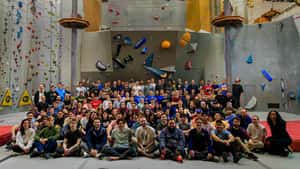
MORSE Corp's Top Leadership & Management Strengths
Strategic Vision & Planning: Leadership articulates a mission-first direction centered on practical AI/autonomy and software for U.S. national-security users, with the CEO prioritizing transition of technology to warfighters. Office expansions to Arlington and Seattle and recent contract pursuits align closely with this stated path.
Open & Transparent Communication: Leadership is described as communicative and accessible, using in-person all-hands meetings, team-based strategic planning, and an open-door approach to keep priorities visible. Regular one-on-ones with managers and Group Leaders help translate company direction to team actions.
Development & Mentorship: Managers and Group Leaders emphasize growth through frequent one-on-ones, goal-setting, and career guidance that encourages ownership and new ideas. Early-career employees are given responsibility and support to propose and lead projects.

Securing The Freedom of Operations Headquartered in Colorado, Sierra Space is a mission-proven Defense Tech company delivering satellite platforms, critical subsystems, reusable spaceplanes, hypersonic technologies, propulsion systems, and infrastructure for the nation’s most critical missions. With more than three decades of heritage and a record of flight-proven success in space, Sierra Space is trusted by U.S. National Security, Civil customers, and global...

Sierra Space's Top Leadership & Management Strengths
Strategic Vision & Planning: Leadership now frames the company as defense-tech first, backed by the formation of a dedicated defense unit, scaled manufacturing capacity, and major SDA missile-warning/tracking awards while retaining select civil/commercial programs. Strategy, capital, and contract wins consistently point toward becoming a scaled national‑security space supplier.
Collaborative & Aligned Leadership: The appointment of a permanent CEO and a dedicated strategy function (later integrated with the CFO role) aligns roles around growth, capital allocation, and defense-oriented execution. Organizational changes indicate tighter coordination from strategy through enterprise execution.
Resource Support: A $550M Series C and new defense manufacturing facilities (e.g., Victory Works) are positioned to expand production capacity and pursue additional national-security contracts. These moves signal tangible backing for the stated plan and scaling ambitions.

Space was once the quietest place in the universe. Now, it's crowded, contested, and confrontational. We are True Anomaly: the only defense company focused exclusively on space defense. Founded in 2022 by ex-U.S. Space Force members, True Anomaly designs and builds advanced systems for space superiority: agile and powerful spacecraft platforms, mission software engineered for unmatched command and control, and payloads...
.jpg)
True Anomaly's Top Leadership & Management Strengths
Strategic Vision & Planning: Leadership consistently articulates a defense-first strategy centered on space superiority, with Jackal as the spacecraft platform and Mosaic as the autonomy/command layer, and has publicly prioritized scaling missions across LEO/GEO and expansion into interceptors. Feedback suggests this direction is reinforced by concrete scale-up plans and executive roles aimed at becoming an enduring prime.
Strong Execution: Program activity mirrors the stated strategy, including completion of Mission X-3 objectives, operational execution of VICTUS HAZE, and selections for initiatives such as space-based interceptors, Kronos, and GHOST-R. Feedback suggests these milestones indicate movement from demonstrations toward operational programs.
Open & Transparent Communication: Internal practice is described as using company-level OKRs, explicit strategic priorities, and detailed mission updates to connect individual work to the mission, alongside a "fly, fix, fly" posture toward challenges. Feedback suggests leaders remain visible and hands-on, helping link strategy to execution.
_0.png)
Red 6 is an innovative Augmented Reality (AR) technology startup leading the way in synthetic air combat training. Our primary technology, supporting our ATARS product, enables pilots to simulate the cognitive challenges of flying while accessing realistic, scalable training in dynamic outdoor environments

Red 6's Top Leadership & Management Strengths
Strategic Vision & Planning: Strategic direction is consistently framed around building ATARS and a broader AI-enabled synthetic training ecosystem for military aviation. Feedback suggests this north star has remained stable across leadership messaging and program announcements.
Strong Execution: Business activity—such as F-16 and Apache work, Navy training initiatives, and M-346 integration—tracks directly to the stated strategy. Feedback suggests these concrete integrations and awards translate vision into visible progress.
Purposeful Goal Setting: Public descriptions reference OKR-style goal setting and a singular mission centered on fielding ATARS. Feedback suggests priorities are structured to align execution with the articulated destination.

We’re developing reusable vehicles that bring payloads home from orbit safely and precisely, enabling faster in-space manufacturing, global delivery, and entirely new capabilities in the space economy.

Outpost Space's Top Leadership & Management Strengths
Strategic Vision & Planning: Public materials consistently articulate a focused “return lane” strategy around reusable Earth‑return vehicles and space logistics, with a Mission Manifest detailing vehicle blocks and launch windows through 2031. CEO messaging and product pages align on dual‑use applications and a concrete development path.
Open & Transparent Communication: Leadership reiterates the same direction across the website, executive statements, LinkedIn posts, hiring materials, and a public Mission Manifest that provides unusual visibility into planned missions. Built In’s profile and company pages also describe monthly all‑hands and an OKR model that emphasize clarity on goals.
Purposeful Goal Setting: Hiring materials cite a “clear technical path” and name specific vehicle programs (CarryAll, AirDrop), while the roadmap sequences missions and booking status into the early 2030s. Feedback suggests strategy is tied to dated deliverables and role accountability rather than left as aspiration.

Vannevar combines Silicon Valley innovation with former special operators to build AI for real-world national security outcomes. Since our founding in 2019, Vannevar has deployed its technology across 125 missions, safeguarding our service members and improving our country's deterrence. We believe our military service members and intelligence officers deserve access to the best technology American innovation can offer, and we are...

Vannevar's Top Leadership & Management Strengths
Strategic Vision & Planning: Leadership messaging since early 2026 is explicit and coherent around mission‑specific AI for national‑security competition, emphasizing deterrence, decision advantage, and defined mission areas. Role delineation across product, mission, and engineering, alongside recent partnerships, reinforces a clear strategic trajectory.
Open & Transparent Communication: Executives host regular engineering office hours and company‑wide offsites, encouraging cross‑functional questions to give teams line of sight into updates. Public statements note a deliberate move to be more open about “what we build and why” as the company scaled.
Purposeful Goal Setting: Operational frameworks like OKRs and team‑based strategic planning are used to connect leadership vision to individual engineering and product work. This structure is presented as a way to align rapid growth with clear priorities.