


Meet Upside:
We created Upside to transform brick-and-mortar commerce. Our technology uses the sophistication of online retail—profit measurement, attribution, and incrementality—to provide users with more value on their everyday purchases and brick-and-mortar businesses with new, profitable customers. We’ve helped millions of users earn 2 to 3 times more cashback than any other product, and hundreds of thousands of brick-and-mortar businesses earn measurable profit. Billions of dollars in commerce run through the Upside platform every year, and that value goes directly back to our retailer partners, the consumers they serve, and important sustainability initiatives.
The Opportunity
AI adoption doesn't fail because companies lack good tools. It fails because the organization isn't legible enough to use them.
For AI to participate in real work drafting documentation, surfacing answers, flagging anomalies, executing workflows it needs material it can actually trust: artifacts that exist, are structured, are attributed to owners, and are fresh enough to act on. Most organizations skip this layer. They deploy AI on top of a knowledge environment full of stale pages, shadow Google Docs, unattributed decisions, and content no one quite believes and then wonder why the outputs can't be relied on.
Upside is building differently. We're investing in the infrastructure layer that makes AI adoption compound rather than stall. The Knowledge Systems Architect owns that layer.
This isn't a writing role. It's a systems design role. The person we're looking for doesn't create content they build the conditions under which content creates itself, gets maintained automatically, and becomes more trustworthy over time. They make the organization legible to machines and to itself.
The scope starts with an R&D focus and expands from there.
Why This Role Exists Now
Upside has strong documentation instincts in some teams and gaps in others. We have powerful tools Glean, Confluence, AI documentation agents but adoption is uneven and the workflows that would make them self-sustaining don't exist yet. Documentation still depends too much on heroic individual efforts.
The Knowledge Systems Architect changes that. Instead of being the person who writes the thing or answers the Slack message, they're the person who designs the system so neither of those is necessary. You won’t be starting from scratch but from a partially-built foundation: some islands of good practice, some legacy sprawl, and AI capabilities that are ahead of our governance. A significant part of the job is turning that foundation into a coherent, durable system.
This is a high-leverage, high-visibility role inside the R&D Intelligence, Systems and Enablement (RISE) team. You'll work directly with the VP of RISE and alongside Engineering, Product, and IO to make Upside's knowledge infrastructure a genuine competitive advantage.
Ongoing Responsibilities:
Own Confluence and Glean as the primary business administrator for both platforms; maintain governance models and usage standards
Maintain documentation standards, style guidance, and structural templates (as system assets, not as a writer)
Define and manage lifecycle rules: what gets refreshed, archived, and retired — and when
Run content health audits on a defined cadence and surface insights to leadership and team owners
Serve as the internal expert on when and how AI can be safely used in documentation workflows — and maintain those guardrails as AI tooling evolves
Manage knowledge infrastructure transitions (new team spaces, ownership migrations, tool changes)
Must have:
Deep experience in knowledge management, information architecture, or technical writing with a strong systems orientation you think in infrastructure, not documents
Demonstrated ability to design and implement governance frameworks, not just follow them
Hands-on experience with Confluence and/or Glean (or equivalent enterprise knowledge and search platforms)
Comfort working across data, analytics, and tooling to instrument and measure knowledge health
A "first-hire" mindset you thrive as a strategist, operator, and change agent. This is not a large team with an existing playbook.
Strong written communication; you may not write the content but you'll define what good looks like
Experience with AI-assisted documentation workflows or LLM-based content tooling
Strong plus:
Background working in a technical environment (R&D, Engineering, or Product-adjacent)
Familiarity with analytics tools (Hex, Looker, or similar) for building dashboards
Experience in an enablement or internal developer-relations type role
Location:
This hybrid role is based in our Austin, Chicago, DC, or NYC office. In-office attendance is required on Monday, Tuesday, and Thursday and may increase based on project-based needs and changes to Upside’s in-office policy over time.
Compensation:
The US base salary range for this full-time position is $153,000 - $165,000 + equity + benefits. The final starting pay will be determined based on job-related skills, experience, qualifications, work location, and market conditions. Your recruiter can share more about the specific salary range during the hiring process.
#LI-Hybrid
#LI-NE1
Benefits:
Medical, dental, and vision coverage starting on Day 1
Equity (ISOs)
401(k) program
Family planning programs + paid parental leave
Physical fitness and wellness memberships
Emotional and mental health support programs
Unlimited PTO + 10 paid federal holidays + our annual, week-long Winter Break
Flexible work environment
Lunch reimbursement for in-office employees
Employee Resource Groups
Learning and Development stipend
Transparent culture
Amazing mission!
Diversity and Inclusion:
Diversity drives innovation, and our differences make us stronger. We‘re passionate about building a workplace that represents a variety of backgrounds, skills, and perspectives, and we do not discriminate based on race, religion, color, national origin, gender, sexual orientation, age, marital status, veteran status, or disability status. Everyone is welcome here!
If there's anything we can do to support a disability or special need during your application or interview process, please email [email protected].
This email is for accessibility accommodations only, it should not be used to submit job applications.
Notice To Recruiters And Placement Agencies:
This is an in-house search with a dedicated recruiter. Please do not submit resumes to any person or email address at Upside. Upside is not liable for, and will not pay, placement fees for candidates submitted by any party or agency other than its approved recruitment partners.
Skills Required
- Deep experience in knowledge management, information architecture, or technical writing
- Demonstrated ability to design and implement governance frameworks
- Hands-on experience with Confluence and/or Glean
- Comfort working across data, analytics, and tooling to instrument and measure knowledge health
- Strong written communication skills
- Experience with AI-assisted documentation workflows
What the Team is Saying






Upside Compensation & Benefits Highlights
-
Healthcare Strength — Healthcare is described as comprehensive, with medical, dental, vision, and mental-health support featured. Some materials also highlight progressive coverage such as abortion-travel support.
-
Parental & Family Support — Family-forming benefits, including a dedicated fertility partner and generous parental leave, are emphasized. Additional supports like adoption assistance and childcare benefits are noted.
-
Leave & Time Off Breadth — Time off is positioned as expansive through unlimited PTO and flexible scheduling. This approach is portrayed as signaling an employee-friendly stance toward rest and balance.
Upside Insights

What We Do
Upside is a technology company that increases the financial power of people and businesses in the real world. Our technology has helped millions of people get more purchasing power on the things they need, and tens of thousands of brick-and-mortar businesses earn measurable profit. Billions of dollars in commerce run through the Upside platform every year, and that value goes directly back to our retailers, the consumers they serve, and towards important sustainability initiatives.
Why Work With Us
We proactively apply our company values in everything we do, so that we develop thoughtful leaders, create inclusive spaces, and develop creative solutions for our communities inside and outside the office.
Gallery

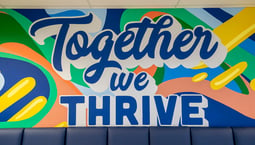





Upside Offices
Hybrid Workspace
Employees engage in a combination of remote and on-site work.
