Employee Applicant Privacy Notice
Who we are:
Shape a brighter financial future with us.
Together with our members, we’re changing the way people think about and interact with personal finance.
We’re a next-generation financial services company and national bank using innovative, mobile-first technology to help our millions of members reach their goals. The industry is going through an unprecedented transformation, and we’re at the forefront. We’re proud to come to work every day knowing that what we do has a direct impact on people’s lives, with our core values guiding us every step of the way. Join us to invest in yourself, your career, and the financial world.
The role:
We’re seeking a Staff Security Detection Engineer to build and mature SoFi’s machine learning–driven detection and anomaly detection program. You will own the detection and model lifecycle end to end; feature engineering, model training, tuning, and validation, operating over large-scale security data lakes and streaming pipelines. You’ll partner closely with our Security Operations Center (SOC), Security Operations Engineering, and Fraud programs to turn high-volume telemetry into high-confidence, low-noise detections at scale.
What you’ll do:
- Design, build, and maintain machine learning models for anomaly detection (unsupervised clustering, time-series and seasonality baselines, isolation forests, autoencoders, risk scoring) with measurable precision/recall targets.
- Operationalize models and detections from notebook to production, including enrichment, correlation, and response playbook hooks (detection-as-code, CI/CD, model versioning, and rollback).
- Engineer and tune features from identity, endpoint, network, cloud, SaaS, and application telemetry stored in the security data lake to improve model signal quality.
- Partner with the SOC to triage, tune, and close detection feedback loops; use analyst dispositions as labels to retrain and improve models, reduce noise, and document runbooks.
- Collaborate with Threat Intelligence, Security Architecture, and Fraud stakeholders to translate threat hypotheses and scenarios into repeatable, model-backed analytics with clear success metrics.
- Establish model governance: offline and online evaluation, drift and data-quality monitoring, periodic retraining and re-baselining, explainability/traceability, and privacy-by-design controls.
- Participate in root-cause and post-incident reviews to identify new signals, features, and coverage gaps; backlog and deliver the resulting models and detections.
- Contribute to reference architectures, standards, and documentation for the ML detection platform, data lake, and pipelines across the security organization.
- Mentor engineers and analysts on applied ML, anomaly detection, detection tuning, data quality, and pipeline reliability.
What you’ll need:
- 7+ years hands-on experience building and operating machine learning models for detection or anomaly detection in production (e.g., security, fraud, or abuse), across both supervised and unsupervised approaches.
- Hands-on experience with data lake and big-data technologies (e.g., Snowflake, Databricks, Spark, Delta/Iceberg, S3/GCS) for storing, transforming, and querying large-scale security telemetry.
- Strong programming and query skills in Python and SQL, with hands-on use of the ML and data stack (e.g., pandas, scikit-learn, PyTorch or TensorFlow) for feature engineering, model training, and automation.
- Solid understanding of security telemetry sources; identity and access (SSO, IGA, PAM), endpoint/EDR, network/proxy, cloud (AWS/GCP/Azure), and SaaS audit logs, and how to shape them into model features.
- Working knowledge of anomaly detection techniques (statistical baselining, clustering, isolation forests, autoencoders, time-series methods) and the end-to-end model lifecycle.
- Familiarity with security frameworks and adversary tradecraft (MITRE ATT&CK, kill chain) and how they map to detectable behaviors and model features.
- Experience collaborating with SOC/DFIR and fraud/risk teams; excellent written communication for models, detections, runbooks, and stakeholder updates.
- Ability to balance detection coverage, model precision, and operational load; metrics-driven mindset (precision/recall, false-positive rate, MTTD, alert fatigue).
- Bachelor’s degree in computer science, data science, statistics, a related field, or equivalent practical experience.
Nice to have:
- Experience with streaming and real-time data engineering (e.g., Kafka, Kinesis, Pub/Sub, Flink, Spark Streaming) for near-real-time model scoring.
- Experience building and deploying ML models on AWS (e.g., SageMaker, S3, Glue, Athena, Lambda) for training, feature pipelines, and inference.
- MLOps practices – feature stores, model registries, experiment tracking, canary and shadow releases for reliable model deployment and retraining.
- Graph-based ML and analytics for entity relationships, risk propagation, and community detection.
- Experience applying deep learning or LLM-based approaches to security, log, or sequence data.
- Experience leveraging LLMs to design, analyze, and test detections.
- Relevant certifications (e.g., AWS/GCP machine learning or data engineering, Databricks, or equivalent).
Skills Required
- 7+ years building and operating ML models for detection or anomaly detection in production (security, fraud, or abuse)
- Hands-on experience with data lake and big-data technologies (Snowflake, Databricks, Spark, Delta/Iceberg, S3/GCS)
- Strong programming and query skills in Python and SQL; experience with pandas, scikit-learn, PyTorch or TensorFlow
- Solid understanding of security telemetry sources (identity/SSO/IGA/PAM, endpoint/EDR, network/proxy, cloud, SaaS audit logs)
- Working knowledge of anomaly detection techniques (statistical baselining, clustering, isolation forests, autoencoders, time-series methods) and model lifecycle
- Familiarity with security frameworks and adversary tradecraft (MITRE ATT&CK, kill chain)
- Experience collaborating with SOC/DFIR and fraud/risk teams and producing runbooks and stakeholder communication
- Metrics-driven mindset (precision/recall, false-positive rate, MTTD) and ability to balance coverage and operational load
- Bachelor's degree in computer science, data science, statistics, related field, or equivalent practical experience
- Experience with streaming/real-time data engineering (Kafka, Kinesis, Pub/Sub, Flink, Spark Streaming)
- Experience building and deploying ML models on AWS (SageMaker, S3, Glue, Athena, Lambda)
- Familiarity with MLOps practices (feature stores, model registries, experiment tracking, canary/shadow releases)
- Graph-based ML and analytics for entity relationships and community detection
- Experience applying deep learning or LLM-based approaches to security or sequence/log data
- Relevant certifications (AWS/GCP machine learning or data engineering, Databricks, or equivalent)
What the Team is Saying











SoFi Compensation & Benefits Highlights
-
Healthcare Strength — Health coverage is described as comprehensive—medical, dental, vision, and mental-health support. Materials also indicate high employer premium contributions on core plans, enhancing overall value.
-
Parental & Family Support — Offerings include fully paid parental leave and extensive family benefits such as fertility, adoption resources, parenting support, and backup childcare/eldercare. Paid caregiver leave and related supports are also highlighted.
-
Affordable Benefits — Materials indicate the company covers most or all medical premiums on certain plans, helping keep employee premium costs low. HSA/FSA options further support affordability.
SoFi Insights

What We Do
SoFi wasn’t built to be a bank. Or a technology company. We were built for one mission: help people achieve financial independence so they can realize their ambitions. Redefining an entire industry isn’t easy work—and it’s not for the faint of heart. It takes a certain kind of team. People with diverse perspectives and expertise, united by a common sense of purpose. People willing to challenge assumptions but always do the right thing. People proving that innovation and responsibility don’t have to compete, but can come together to create something truly unconventional in the world. For the last eight years, we’ve been charting this new path forward. We call it The SoFi Way. At SoFi, we don’t just talk about culture: we live it. The SoFi Way is how we show up every day, how we make decisions, and how we build for our members, clients, and each other.
Why Work With Us
Together with our members, we’re changing the way people think about and interact with personal finance. We’re a next-generation Fintech company using innovative, mobile-first technology to help our members reach their goals. The industry is going through an unprecedented transformation, and we’re at the forefront.
Gallery




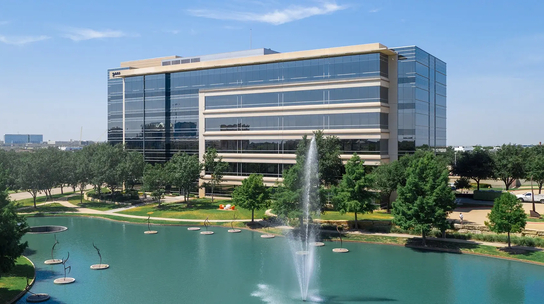
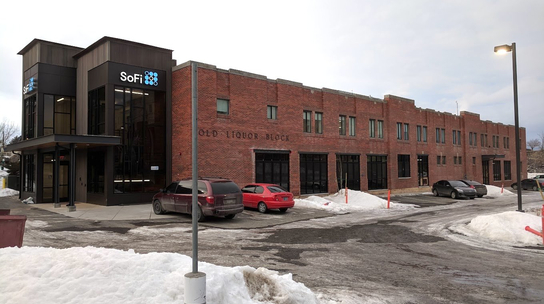
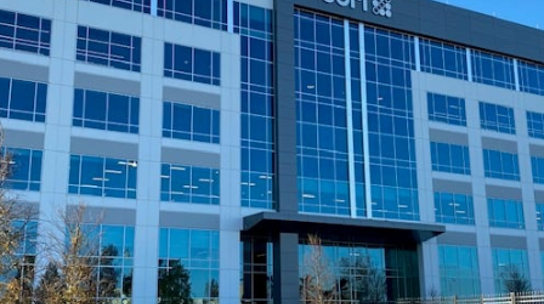
SoFi Offices
Hybrid Workspace
Employees engage in a combination of remote and on-site work.
For the majority of our workforce who work on a hybrid schedule, the in-office requirement is a handful of days per month!