


- We are seeking a highly experienced Engineer - AI Assurance & Compliance to develop and drive technical capabilities and new service offerings in the rapidly evolving fields of Artificial Intelligence and Physical AI.
- This role requires a recognized subject matter expert in AI safety, AI assurance, governance, risk management, and regulatory compliance, with strong knowledge of key standards and regulations such as the EU AI Act, ISO/IEC 42001, ISO/IEC 23894, ISO/IEC 42005, NIST AI Risk Management Framework (AI RMF), and other emerging AI standards and regulatory requirements.
- The successful candidate will help customers assure the safety, reliability, robustness, transparency, and compliance of AI-enabled products, systems, and development processes throughout the AI lifecycle. The role will focus on translating regulatory and technical requirements into practical assessment, testing, evaluation, verification and validation, and assurance methodologies.
- In addition to general-purpose AI and Generative AI, the candidate should preferably possess strong knowledge of Physical AI and AI-enabled safety-critical systems, such as autonomous vehicles, robotics, intelligent industrial systems, medical technologies, and other products where AI interacts with the physical environment.
- A key responsibility of this position is to develop and industrialize new AI assurance services for a TIC organization, including technical assessment methodologies, testing and evaluation approaches, conformity assessment readiness, and potential certification frameworks. The individual will work closely with testing laboratories, certification teams, technical experts, standards organizations, and customers to transform emerging AI technologies, standards, and regulations into scalable and repeatable assurance services.
- This individual will also contribute to market development, customer engagement, technical thought leadership, and strategic partnerships, helping the organization establish a strong technical position in the emerging AI assurance market.
RESPONSIBILITIES
- Serve as a subject matter expert in AI assurance, AI safety, and regulatory compliance, supporting the development and delivery of AI-related services across industries.
- Lead technical activities related to AI governance, risk management, safety, trustworthiness, and regulatory compliance, based on frameworks and standards such as the EU AI Act, ISO/IEC 42001, ISO/IEC 23894, ISO/IEC 42005, NIST AI RMF, and other emerging AI standards and regulatory requirements.
- Support customers in assuring the safety, reliability, robustness, transparency, security, and regulatory compliance of AI-enabled products and systems throughout the AI lifecycle, from data and model development to system integration, deployment, monitoring, and change management.
- Develop and apply AI assessment and assurance methodologies, including AI risk assessment, model and system evaluation, technical documentation assessment, process assessment, gap assessment, verification and validation, and compliance readiness evaluation.
- Support customers in establishing and improving AI governance and AI engineering processes, including data governance, model lifecycle management, AI risk management, validation, monitoring, incident handling, traceability, and continuous improvement.
- Develop technical capabilities for the assurance of Physical AI and AI-enabled safety-critical systems, including autonomous vehicles, robotics, industrial automation, medical technologies, and other systems where AI interacts with the physical environment.
- Define and develop AI testing, assessment, inspection, and certification-related service offerings, translating emerging regulations, standards, technologies, and customer needs into practical and scalable TIC services.
- Develop technical solutions, assessment approaches, customer proposals, and service packages that combine AI governance, technical evaluation, process assurance, product testing, and regulatory compliance.
- Work closely with testing laboratories, certification teams, functional safety, cybersecurity, software/process assessment, and other technical experts to build integrated assurance solutions for AI-enabled products and systems.
- Support business development through technical engagement with customers, identification of emerging AI assurance needs, technical solution positioning, pilot projects, and development of strategic partnerships across the AI ecosystem.
- Build and maintain strong technical relationships with OEMs, Tier 1 suppliers, AI technology providers, robotics companies, industrial manufacturers, medical device companies, and other AI adopters.
- Represent the company in AI standards activities, industry conferences, technical forums, research collaborations, and customer events, contributing to technical thought leadership and early identification of emerging AI assurance opportunities.
- Build internal AI technical capability by developing assessment methods, technical guidelines, training materials, tools, best practices, and reusable service methodologies, and mentor other technical professionals entering the AI assurance field.
QUALIFICATIONS
- Bachelor's degree or above in Computer Science, Artificial Intelligence, Machine Learning, Robotics, Automation, Software Engineering, Systems Engineering, Electronics Engineering, or a related technical discipline.
- Minimum 8-10 years of relevant professional experience, with substantial experience in one or more areas such as AI/ML engineering, AI safety and assurance, software or systems engineering, product verification and validation, engineering quality, regulatory compliance, or technical assessment.
- Demonstrated expertise in AI governance, AI risk management, AI assurance, and responsible AI, with strong knowledge of relevant regulations, standards, and frameworks, including:
- EU AI Act
- ISO/IEC 42001 - Artificial Intelligence Management System
- ISO/IEC 23894 - AI Risk Management
- ISO/IEC 42005 - AI System Impact Assessment
- NIST AI Risk Management Framework (AI RMF)
- Other emerging standards, regulatory requirements, and industry practices related to AI safety, trustworthiness, conformity assessment, and assurance
- Strong understanding of the AI system lifecycle, including data preparation and governance, model development, training and evaluation, system integration, deployment, monitoring, change management, and continuous improvement.
- Practical experience in one or more areas of AI evaluation and assurance, such as model performance evaluation, robustness testing, bias and fairness evaluation, explainability, data quality assessment, risk assessment, technical documentation review, verification and validation, or AI process assessment.
- Proven experience in technical assessment, testing, verification and validation, conformity assessment, engineering quality, audit/assessment preparation, or development of technical assurance methodologies.
- Ability to translate emerging AI technologies, regulations, and standards into practical assessment criteria, testing methodologies, technical requirements, and repeatable service solutions.
- Strong analytical, communication, presentation, and customer-facing skills, with the ability to communicate complex AI risks and assurance requirements to both technical and business stakeholders.
- Ability to independently lead complex technical projects and collaborate with multidisciplinary teams across AI, software, systems engineering, safety, cybersecurity, testing, and certification disciplines.
- Fluent English communication skills, both written and verbal.
Preferred
- Advanced degree (Master's or PhD) in Artificial Intelligence, Machine Learning, Robotics, Computer Science, Automation, Systems Engineering, or a related discipline.
- Strong technical knowledge or hands-on experience in machine learning, deep learning, Generative AI, Large Language Models (LLMs), computer vision, autonomous systems, robotics, or other AI-enabled systems.
- Experience with Physical AI or AI-enabled safety-critical systems, particularly in:
- Autonomous and connected vehicles
- Robotics and autonomous machines
- Industrial automation
- Medical devices and medical AI
- Intelligent consumer or IoT products
- Knowledge of AI safety, robustness, uncertainty, out-of-distribution behavior, adversarial testing, explainability, model evaluation, simulation, scenario-based testing, and AI system verification and validation.
- Knowledge of related safety, cybersecurity, and engineering standards or frameworks, such as:
- ISO 26262 / ISO 13849 Functional Safety
- ISO 21448 (SOTIF)
- ISO/SAE 21434 Automotive Cybersecurity
- IEC 62443 Industrial Cybersecurity
- Automotive SPICE
- Other relevant product safety or software/system assurance standards
- Experience with testing, inspection, certification, accreditation, conformity assessment, product assurance, or third-party technical evaluation, preferably within a TIC organization, certification body, testing laboratory, regulatory organization, or standards organization.
- Experience developing new assessment methodologies, testing methods, certification schemes, technical service offerings, or assurance frameworks for emerging technologies.
- Experience supporting OEMs, Tier 1 suppliers, AI technology companies, robotics companies, semiconductor companies, industrial manufacturers, medical technology companies, or AI platform providers.
- Participation in AI standardization, regulatory working groups, industry alliances, research collaborations, or technical committees is highly desirable.
- Relevant professional certifications or qualifications related to AI management systems, AI governance, functional safety, cybersecurity, software/system assessment, testing, auditing, or conformity assessment are an advantage.
ABOUT US
A global leader in applied safety science, UL Solutions (NYSE: ULS) transforms safety, security and sustainability challenges into opportunities for customers in more than 110 countries. UL Solutions delivers testing, inspection and certification services, together with software products and advisory offerings, that support our customers' product innovation and business growth. The UL Mark serves as a recognized symbol of trust in our customers' products and reflects an unwavering commitment to advancing our safety mission. We help our customers innovate, launch new products and services, navigate global markets and complex supply chains, and grow sustainably and responsibly into the future. Our science is your advantage.
ABOUT THE TEAM
Imagine getting your hands on new technology before it hits the shelves. To dig deep and figure out exactly how it works. That's what we do. We lift the lid and test the boundaries on a huge range of products, from health-monitoring smart watches monitoring to electric vehicles loaded with the latest software. We're always looking for people who are passionate about innovation, embrace change and love new and exciting challenges. Join our team, influence emerging technology and forge a successful career at the center of safety science.
Skills Required
- Bachelor’s degree or above in computer science, artificial intelligence, machine learning, robotics, automation, software engineering, systems engineering, electronics engineering, or a related technical discipline.
- Minimum 8–10 years of relevant professional experience in AI/ML engineering, AI safety and assurance, software or systems engineering, verification and validation, engineering quality, regulatory compliance, or technical assessment.
- Expertise in AI governance, AI risk management, AI assurance, responsible AI, and relevant regulations, standards, and frameworks.
- Strong understanding of the AI system lifecycle, including data governance, model development, evaluation, deployment, monitoring, change management, and continuous improvement.
- Practical experience with AI evaluation and assurance, including robustness, bias and fairness, explainability, data quality, risk assessment, documentation review, verification, validation, or process assessment.
- Experience in technical assessment, testing, verification and validation, conformity assessment, engineering quality, audit preparation, or assurance methodology development.
- Ability to translate AI technologies, regulations, and standards into practical assessment criteria, testing methodologies, technical requirements, and repeatable service solutions.
- Strong analytical, communication, presentation, and customer-facing skills.
- Ability to independently lead complex technical projects and collaborate across AI, software, systems engineering, safety, cybersecurity, testing, and certification disciplines.
- Fluent written and verbal English communication skills.
- Advanced degree in artificial intelligence, machine learning, robotics, computer science, automation, systems engineering, or a related discipline.
- Hands-on experience with machine learning, deep learning, Generative AI, LLMs, computer vision, autonomous systems, robotics, or AI-enabled systems.
- Experience with Physical AI or AI-enabled safety-critical systems, such as autonomous vehicles, robotics, industrial automation, or medical devices.
- Knowledge of AI safety, robustness, uncertainty, out-of-distribution behavior, adversarial testing, explainability, simulation, scenario-based testing, and AI system validation.
- Experience with testing, inspection, certification, accreditation, conformity assessment, product assurance, or third-party technical evaluation.
- Experience developing assessment methodologies, testing methods, certification schemes, technical service offerings, or assurance frameworks for emerging technologies.
- Participation in AI standardization, regulatory working groups, industry alliances, research collaborations, or technical committees.
- Relevant professional certifications related to AI governance, functional safety, cybersecurity, software or system assessment, testing, auditing, or conformity assessment.
What the Team is Saying








UL Solutions Compensation & Benefits Highlights
How does UL Solutions ensure its pay and bonus plans are competitive?
UL Solutions takes a structured approach to compensation by reviewing pay regularly, benchmarking rewards against external market data and linking incentive compensation to company and employee performance. Its Total Rewards framework is designed to balance competitiveness with the industry, fairness and consistency across a global workforce.
- Annual market reviews guide base pay: UL Solutions conducts formal compensation reviews each year and benchmarks pay against market data to help keep salaries competitive by role and geography. Its Total Rewards framework includes an annual global salary review process and ongoing external compensation benchmarking to align pay with market conditions.
- Bonuses are broadly tied to performance: All full-time employees participate in UL Solutions’ performance incentive program, creating a direct connection between individual contribution, business results and annual rewards. Employees also point to the annual incentive bonus as a meaningful part of the compensation package.
- Pay practices are designed around fairness and transparency: Compensation reviews are intended to keep employees within a competitive range for comparable roles in their region, while recruiters communicate pay expectations during candidate conversations and managers discuss compensation in one-on-ones. This gives employees clearer visibility into how pay is determined and how performance connects to rewards.
- Total rewards extend beyond base salary: UL Solutions supplements pay with retirement benefits, health coverage, paid time off, stock-purchase opportunities and other regionally adapted benefits. The company also reviews employer contributions and benefits against market data annually, supporting a broader view of what competitive compensation looks like, outside of base salary.
- External signals:
- Bonus value: Employees highlight the annual incentive bonus as a positive part of the compensation package. (Comparably)
- Benefits satisfaction: 76% of employees report being satisfied with their benefits, and perks and benefits earn an A- rating, placing UL Solutions in the top 15% of similarly sized companies. (Comparably)
- Benefits strength: Recent employees also cite strong benefits as a workplace advantage. (Glassdoor)
Bottom line: UL Solutions supports competitive pay through annual market reviews, regional benchmarking, broad incentive eligibility and regular benefits benchmarking, while employee feedback shows particularly strong satisfaction with bonuses and benefits.
UL Solutions Insights

What We Do
A global leader in applied safety science, UL Solutions transforms safety, security and sustainability challenges into opportunities for customers in more than 100 countries. UL Solutions delivers testing, inspection and certification services, together with software products and advisory offerings, that support our customers’ product innovation and business growth. The UL Certification Marks serve as a recognized symbol of trust in our customers’ products and reflect an unwavering commitment to advancing our safety mission. We help our customers innovate, launch new products and services, navigate global markets and complex supply chains, and grow sustainably and responsibly into the future. Our science is your advantage.
Why Work With Us
Science is in our DNA; we are endlessly curious and passionate about seeking and speaking the truth. We take delight in knowing that our work makes a meaningful contribution to society, and we are proud that our culture is centered on integrity, collaboration, inclusion and excellence.
Gallery


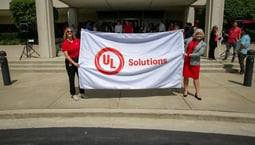

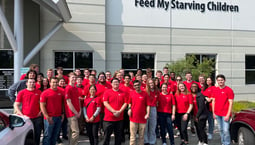

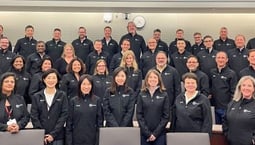



UL Solutions Offices
Hybrid Workspace
Employees engage in a combination of remote and on-site work.
Depending on the role we offer hybrid or remote opportunities.
