

Sonar is driving the future of agent-centric software development. As the leader in AI code review and verification, we solve a critical problem: ensuring that software generated by AI-assisted developers or autonomous agents is reliable, secure, and maintainable.
Integrating seamlessly with Claude Code, Codex, Cursor, GitHub Copilot, Gemini, and Devin, we help over 75% of the Fortune 100 build trusted, reliable, compliant software. Customers who use Sonar are 44% less likely to report an outage due to AI-generated code.
We believe code verification is the critical missing link in the Agent-Centric Development Cycle (AC/DC). Industry giants like Nvidia, ServiceNow, Booking.com, Goldman Sachs, AstraZeneca, and Ford Motor Company count on us to provide independent, explainable, consistent review and governance of their AI-generated code via products like:
SonarQube: The world’s leading AI code review and verification platform.
SonarQube Foundation Agent: Currently topping the leaderboards for agentic software repair.
SonarSweep & Sonar Context Augmentation: Providing the enterprise-grade context and constraints agents need to be truly effective.
Our team operates across global hubs in Austin, Bochum, Dubai, Geneva, London, Singapore, Tokyo, and Washington D.C. We move with a mindset we call CODE:
Committed to our customers and community.
Obsessed with quality.
Deliberate in our decisions.
Effective as one team.
With over $400M in revenue and profitable, fast-paced growth, we are building the backbone of the AI software revolution. If you’re hungry to have an impact, want to build at a fast pace, and ready to work at the forefront of AI, we want to hear from you.
We are still at the beginning of our growth journey and are continuously introducing new processes, technologies, and tools. In this role, you will:
Be a pivotal engineering contributor to the design, implementation, and operation of security controls and automation across our identity platforms, endpoints, and core IT services.
Own key parts of our IdP and access automation stack (e.g., SSO, SCIM, group‑based access, JIT access), ensuring that users get the right access at the right time with strong controls and auditability.
Design and maintain security monitoring, alerting, and SIEM integrations that give us real‑time visibility into identity, endpoint, and SaaS risks.
Partner with IT Ops, Information Security, and Infrastructure Engineering to ensure security controls are deeply integrated into operations (incident management, change, and problem processes), not bolted on.
Use and champion AI tooling to make security operations more efficient — from alert triage and runbook execution to knowledge retrieval and reporting.
Help define and improve how we measure the reliability and effectiveness of our security controls (SLIs/SLOs, error budgets, and dashboards), making risk and performance visible and actionable to stakeholders.
What you will do
Security Monitoring, Alerting & SIEM Ownership: Working with the Information Security team, design, implement, and maintain alerting rules, dashboards, and runbooks across our SIEM and logging platforms, with a focus on identity, access, and SaaS security signals. Continuously tune alerts to reduce noise, improve fidelity, and align with error budgets and SLOs for critical security and identity services.
Endpoint Defense In Depth: Architect and implement our multilayer endpoint defence systems (e.g. Crowdstrike, Cyberark, Cloudflare, secure browser policies), balancing risk against usability in coordination with the Information Security team.
Identity Platform & Access Automation: Build and maintain automation for our identity platforms (e.g., SSO, SCIM provisioning, group‑based access policies, lifecycle workflows) in partnership with Information Security. Implement guardrails and policy‑as‑code for identity, ensuring changes are reviewed, tested, and auditable before reaching production.
Infrastructure as Code & Security Controls as Code: Use IaC and configuration management (e.g., Terraform, Ansible, or similar) plus scripting languages (e.g., Python, Go) to deploy and manage security tooling, integrations, and policies. Treat security controls (e.g., logging, scanning, hardening, secret management) as software artifacts that can be versioned, tested, and rolled back safely.
Observability & Integration with Core IT Operations: Ensure that logging, metrics, and tracing for security‑relevant systems (IdP, VPN, endpoint protection, critical SaaS) are robust, accurate, and integrated into our observability stack. Integrate security events and automations with ITSM and incident management workflows, enabling fast routing, triage, and resolution.
Incident Response & Post‑Incident Engineering: Participate in the on‑call rotation for relevant security and identity services. Lead or contribute to post‑incident reviews, turning root causes into preventative engineering changes (new alerts, automations, guardrails, or documentation) that reduce MTTR and recurrence.
AI‑Enabled Security Operations: Use AI tooling (e.g., LLM‑based assistants, automation platforms) to accelerate alert triage, enrichment, and investigation, while keeping humans in control of decisions. Identify opportunities to embed AI in security and IT operations workflows (e.g., threat intelligence and alert correlation) and help implement these safely and effectively.
Experience and qualifications
Security Engineering & Operations Background: Significant hands‑on experience (4–7 years) in security engineering, security operations, or closely related roles in modern, fast‑paced environments (e.g., SaaS, enterprise IT, cloud‑native infrastructure).
Identity & Access Management Expertise: Practical experience operating IdPs and IAM systems at scale (e.g., Okta, Azure AD, or similar), including SSO, MFA, lifecycle management, and least‑privilege policies. Experience designing and implementing automated provisioning and deprovisioning (e.g., SCIM, HRIS integrations, group‑based and role‑based access models).
SIEM, Logging & Observability: Proven experience with SIEM and observability platforms (e.g., ELK/EFK, Splunk, Datadog, or similar), including writing and tuning detection rules, building dashboards, and working with large‑scale log ingestion. Comfort working with SLIs/SLOs and error budgets for critical services, and using these to guide priorities for hardening and automation.
Automation & Infrastructure as Code: Strong experience with IaC and configuration management tools (e.g., Terraform, CloudFormation, Ansible, or similar) and with scripting/programming languages (e.g., Python, Go, or equivalent) to automate security and operational tasks. Track record of converting manual, repetitive operational work into reliable automation and self‑service capabilities.
Security Controls Implementation: Experience implementing and operating security controls as code: vulnerability scanning, configuration baselines, secret management (e.g., HashiCorp Vault), key rotation, and certificate management.
Incident Management & Cross‑Functional Collaboration: Demonstrated experience participating in or leading incident response, root cause analysis, and post‑incident follow‑through in partnership with IT Ops, Security, and Engineering. Strong communication skills in English, able to explain complex security and operational topics to both technical and non‑technical audiences.
AI Fluency: Comfortable using modern AI tooling (e.g., LLM‑based assistants, automation frameworks) as part of daily work for analysis, content generation, and workflow automation. Ability to reason about where AI is and isn’t appropriate in security and operations, balancing speed with risk and control.
At Sonar, we believe that our diversity is our strength. We are a global company that values and respects different backgrounds, perspectives, and cultures. We are committed to fostering a diverse and inclusive work environment where everyone feels valued and empowered to contribute their best. We are proud to be an equal opportunity employer and welcome all qualified applicants, regardless of race, color, religion, gender, gender identity or expression, sexual orientation, national origin, genetics, disability, age, or veteran status.
If you need any accommodation, please reach out to us at [email protected].
All offers of employment at Sonar are contingent upon the results of a comprehensive background check and reference verification conducted before the start date.
We do not currently support visa candidates in the US.
Applications that are submitted through agencies or third party recruiters will not be considered.
Skills Required
- 4-7 years of security engineering or closely related experience
- Practical experience operating IdPs and IAM systems like Okta or Azure AD
- Experience with SIEM and observability platforms such as Splunk or Datadog
- Strong experience with IaC and configuration management tools
- Experience implementing security controls and policies
- Experience in incident response and collaboration with IT and Security teams
- Comfortable using AI tooling for security operations
What the Team is Saying



.png)






.png)


Sonar Compensation & Benefits Highlights
-
Leave & Time Off Breadth — Leave & Time Off Breadth: Paid time off is positioned as generous for U.S. employees, with a substantial baseline, additional sick leave and holidays, and tenure-based increases. Company-wide time off is also highlighted as part of the package.
-
Healthcare Strength — Healthcare Strength: Health coverage is described as comprehensive, with the employer covering most employee premiums for medical, dental, and vision, and fully funding life and disability insurance. Telemedicine, mental health resources, and an employee assistance program are also included.
-
Retirement Support — Retirement Support: A 401(k) plan with a company match that vests from day one is offered, providing straightforward long-term savings support. This is complemented by employer-paid life and disability protections.
Sonar Insights

What We Do
Sonar provides the essential verification layer for the AI-driven development era, ensuring all code—whether human-written or AI-generated—is code you can trust. Today, AI coding tools are generating explosive volumes of code. This has created an "engineering productivity paradox" : faster code writing doesn't automatically lead to faster, safer software delivery. The new bottleneck is verification. Sonar solves this. Integrating code quality and code security into a single platform (SonarQube), Sonar is the foundation for high performance software engineering, analyzing over 750 billion lines of code daily to ensure applications are secure, reliable, and maintainable. As an independent verification platform, Sonar enables organizations to securely develop at the speed of AI. We are driven by a deep belief in our people, a commitment to excellence, and an unwavering dedication to delivery. We operate as a united group where our collective success is the sum of each individual's contributions. Our company culture is driven by the values of CODE: Committed, Obsessed, Deliberate & Effective. This mindset reflects our culture of creativity, collaboration, and pride in the work we do. Rooted in the open source community, Sonar’s solutions support over 35 programming languages, frameworks, and infrastructure technologies. Today, Sonar is used by 7M+ developers worldwide, including ServiceNow, Booking.com, Deutsche Bank, AstraZeneca, and Ford Motor Company. Sonar is headquartered in Geneva, Switzerland with additional offices in Austin, Texas; Bochum, Germany; London, Singapore, and Tokyo. The company is rapidly growing with over 800 employees! Join us in our mission to solve the trillion-dollar challenge of bad code!
Why Work With Us
We are a product-first company, with a people-first culture. Every employee has the opportunity to grow and learn. We promote from within, provide regular feedback and professional development opportunities, value the right to fail along with respect and kindness and work with team members to achieve their full potential.
Gallery

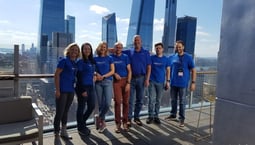




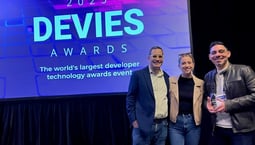
Sonar Offices
Hybrid Workspace
Employees engage in a combination of remote and on-site work.
At Sonar, we require employees to come into the office 3 days/week.
