
About Monte Carlo
Monte Carlo is the agent trust platform that autonomously observes, fixes, and continuously improves agents and the data that powers them — so enterprises can scale trust at the speed of AI. Bayes, our AI teammate, does the work: detecting, triaging, troubleshooting, and fixing issues in AI agents and the data powering them. The result is self-improving agents that get better with every fix instead of drifting. More than 400 enterprises, including Amazon, PepsiCo, CNN, Nasdaq, and JetBlue, rely on Monte Carlo. Learn more at montecarlo.ai.
We're building the products that tell enterprises whether their AI agents can be trusted — and we need someone who works end to end, from an ambiguous problem statement through research, prototyping, and production. You'd get the problem, not the spec: research the approaches, prototype, prove what works, build it, and integrate it into the platform alongside our engineering and data science teams. This role exists because agent observability moved from roadmap to revenue faster than anyone predicted, and the work is now on the critical path.
What You'll DoTake an open problem end-to-end — from research and prototyping through production, killing what doesn't work before it becomes someone's roadmap
Design and ship agent-powered features — root-cause analysis, incident triage, monitor generation — and integrate them into the platform with our engineering team
Build the eval infrastructure that makes those features safe to change: golden datasets, regression suites, offline and online scoring, and the judgment calls about what "good" means
Own retrieval and context pipelines over customer metadata, lineage, and query history, and instrument agent behavior in production — traces, failure taxonomies, cost and latency budgets — to close the loop on quality
Partner with data science on detection quality and experiment design, and with PM on what an agent should do versus what it merely can do
Set the technical bar for how we build with LLMs — patterns, guardrails, and the internal tooling other engineers reuse
You've built agents in production with real users. Not integrated a framework. Not worked on a team that had one. Built them — agents with real autonomy and internal loops, where the model uses tools and decides what to do next without a human in the middle, and you kept them running once real users showed up. RAG with a wrapper doesn't count. Neither does a set of MCP tools point at an API.
You've run evals and monitored agents after launch. Agents are non-deterministic, so normal tests don't work on them. You've owned an eval framework — golden datasets, regression suites, offline and online scoring — not a folder of one-off scripts. And you've watched agents in production, not just in dev.
Python, plus an ML or data science background. Python is your daily language and you're solid on the backend, though you don't need to be a distributed systems specialist. You understand models well enough to reason about how they behave — you're not an application engineer calling someone else's API.
3+ years in ML, data science, or software engineering — at companies that ship quickly. Startups, AI-native teams, or high-growth product companies where the release cadence is measured in weeks, not quarters. If all of your experience sits inside large, process-heavy organizations with the platform already built for you, this seat will be a hard adjustment.
You work from a problem, not a spec. Handed an ambiguous problem statement, you design the experiment, build the smallest version to test it, and take what works into production.
You use AI tools every day. Claude or its equivalents are part of how you write code and do research, not something you tried once. This is backend and model layer work, by the way — no frontend.
You'd rather ship than polish. Most of this work needs a good answer quickly, not a perfect one eventually. You can tell which problems are the exception and deserve real depth — and you'll say no to the version that demos well and falls apart in production.
Nice to have: statistics and hypothesis testing, applied rather than theoretical. Building and maintaining MCP servers. Experience in the data and cloud space — Snowflake, Databricks, dbt, Airflow.
This Is Not For You IfYour AI work is retrieval with a wrapper, or MCP tools pointed at an API — nothing that decides and acts on its own
Your LLM experience is prototypes, notebooks, and demos that never carried production traffic
You need a fully specified problem before you start, or you're uncomfortable with the ambiguity of a category being invented in real time
#LI-REMOTE
#BI-REMOTE
Why Monte CarloWe created the data observability category, and we're doing it again with agent trust — you'll build where the market is forming, not where it's settled
Series D, $236M raised, backed by Accel, Redpoint, Notable Capital, ICONIQ Growth, and Salesforce Ventures
Customers include HubSpot, Fox, Nasdaq, Toast, and Mercado Libre — your work ships to enterprises with real stakes
Snowflake Partner of the Year and a verified connector in Anthropic's Claude AI directory
Remote-first by design since day one, and recognized as a Best Workplace for it
Competitive compensation, equity, and a remote-first environment.
Come As You Are
Equality is a core tenet of Monte Carlo's culture. We are committed to building an inclusive global team that represents a variety of backgrounds, perspectives, beliefs, and experiences.
Monte Carlo is an equal-opportunity employer. We celebrate diversity and are committed to creating an inclusive environment for all employees.
We are proud to be recognized for our world-class employee experience:
Monte Carlo Named 2025 Databricks Data Governance Partner of the Year
We were recently recognized as the #1 Data Observability Platform by G2 for the 4th consecutive quarter. See our G2 reviews here!
Monte Carlo Named to G2's Best Software Products of 2026
Monte Carlo was featured on Database Trends and Applications (DBTA’s) Trend-Setting Products for 2025!
We are super proud to be named the 2026 Best Place to Work by Built In!
Beware of Imposter Recruiters and Job Scams
All official communication from our recruiting team will come from an @montecarlodata.com email address.
We will never ask candidates to provide sensitive personal information (such as bank details, social security numbers, or payment) at any stage of the recruitment process.
We will never request payment for equipment, training, or application processing.
Our open positions are always listed on our official careers page: https://jobs.ashbyhq.com/montecarlodata.
If you are contacted by someone claiming to represent Monte Carlo but you’re unsure of their legitimacy, please reach out to us directly at [email protected] before sharing any personal information.
Skills Required
- Production experience building autonomous AI agents with internal decision-making loops and tool use
- Experience running evaluations and monitoring AI agents after launch in production
- Experience owning evaluation frameworks with golden datasets, regression suites, and offline and online scoring
- Strong Python skills as a daily programming language
- Backend engineering experience
- Machine learning or data science background
- Ability to work from ambiguous problem statements and take solutions from experimentation into production
- Daily use of AI coding and research tools such as Claude or equivalent
- Applied statistics and hypothesis testing experience
- Experience building and maintaining MCP servers
- Experience in data and cloud technologies, including Snowflake, Databricks, dbt, or Airflow
Monte Carlo Compensation & Benefits Highlights
How does Monte Carlo ensure its pay and bonus plans are competitive?
Monte Carlo uses a market-based compensation approach that combines external benchmarking, transparent pay practices, performance-based incentives, and equity. The company’s compensation philosophy is “data-driven, transparent, and consistent,” with targeted pay adjusted over time as market data changes.
- Compensation is benchmarked against changing market conditions: Monte Carlo uses market data to establish targeted compensation for each role and notes that those targets can be adjusted as the external market evolves. Final compensation is then calibrated around factors such as skills, experience, and location, helping the company maintain a consistent framework while remaining responsive to competitive talent markets.
- Pay transparency is built into the recruiting process: Current job postings disclose compensation ranges and explain how final offers are determined, giving candidates visibility into the company’s approach before the offer stage. The same market-based compensation language appears across functions, indicating a standardized philosophy rather than an ad hoc approach that varies significantly by team.
- Incentives are aligned with how employees contribute: Roles with measurable commercial outcomes can include commission or variable compensation in addition to base pay. This allows Monte Carlo to connect a portion of total rewards to performance and business results while using different compensation structures for roles where variable pay is less applicable.
- Equity adds a longer-term component to total rewards: Employees have early exercise rights to stock options, letting them buy stock options before they’re fully vested. This is an advantage with engineers who are evaluating startup equity opportunities and complements immediate compensation and incentives with a form of ownership aligned to the company’s growth.
- Total rewards extend beyond cash compensation: Monte Carlo pairs salary, incentives, and equity with benefits such as retirement support, healthcare, flexible time off, parental leave, and wellness and remote-work resources. Together, these elements make competitiveness a total-rewards question rather than one based solely on base salary.
- External signals:
- Compensation and benefits receive positive employee marks: Employees rate Monte Carlo highly for compensation and benefits. (Glassdoor)
- Benefits strengthen the broader rewards package: Employees rate Monte Carlo’s benefits a 4.1 out of 5 rating. (Glassdoor)
Bottom line: Monte Carlo keeps pay and bonus plans competitive through market benchmarking, transparent compensation practices, role-specific performance incentives, and equity. Its approach is designed to adjust as talent markets change while giving employees a combination of immediate rewards and longer-term participation in the company’s growth.
Monte Carlo Insights

What We Do
Monte Carlo is the agent trust platform that unifies data and agent observability to monitor, troubleshoot, and improve production AI systems. As enterprises prepare to deploy thousands of agents across business-critical use cases, Monte Carlo provides the reliability infrastructure to support them along this AI transformation, from human-guided agents to fully autonomous operations. Founded 2019. Backed by leading investors. Trusted by 400+ enterprises including Amazon, PepsiCo, CNN, Nasdaq, and JetBlue.
Why Work With Us
A Built In 2026 Best Place to Work, Inc. Best Workplace 2024, and Newsweek Most Loved Workplace. We're remote-first, solving one of the biggest problems in the AI era: trust. We build fast, ship bold, and have a great time doing it. Come help the world adopt trusted AI.
Gallery











Monte Carlo Teams

Monte Carlo Offices
Hybrid Workspace
Employees engage in a combination of remote and on-site work.
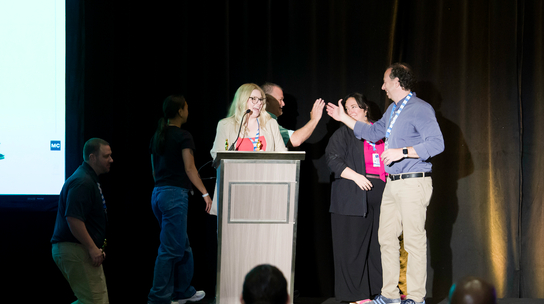
Remote-first, local-second. We hire the best person for the role wherever they are, default to async, and cover coworking for everyone. Dedicated offices in eight cities for anyone who wants an in-person day. None of them required.