Employee Applicant Privacy Notice
Who we are:
Shape a brighter financial future with us.
Together with our members, we’re changing the way people think about and interact with personal finance.
We’re a next-generation financial services company and national bank using innovative, mobile-first technology to help our millions of members reach their goals. The industry is going through an unprecedented transformation, and we’re at the forefront. We’re proud to come to work every day knowing that what we do has a direct impact on people’s lives, with our core values guiding us every step of the way. Join us to invest in yourself, your career, and the financial world.
We are looking for a Fraud Model Analyst to join our Fraud Model Development team, with a focus on governance, oversight, and lifecycle management of third-party (vendor) fraud models. This role will be responsible for ensuring vendor models are compliant, well-documented, and effectively monitored within SoFi’s fraud ecosystem.
This role will partner closely with Fraud Model Development, Fraud Strategy, Product, Operations, and Engineering to establish consistent analytical frameworks for measuring fraud performance, evaluating model and strategy changes, and identifying opportunities to improve fraud detection while minimizing false positives and member friction.
The individual will use large-scale fraud, transaction, and member data to evaluate model and strategy performance, conduct statistical and diagnostic analyses, design and analyze experiments, and develop scalable monitoring and measurement frameworks. The role will also contribute to fraud model development initiatives through feature analysis, performance benchmarking, threshold analysis, and production model evaluation.
The ideal candidate has a strong analytical and statistical mindset, is comfortable working with complex datasets using SQL and Python, understands predictive model performance, and can translate analytical findings into clear recommendations for technical and business stakeholders.
The Fraud Model Analyst will help SoFi scale and govern vendor fraud models by:
Managing the end-to-end lifecycle of vendor fraud models, including onboarding, documentation, monitoring, and periodic reviewsPartnering with Model Risk Management (MRM), Legal, and Compliance teams to ensure adherence to governance and regulatory requirementsCoordinating with external vendors to obtain model documentation, technical details, and performance insightsAnalyzing model performance metrics (e.g., fraud capture, false positive rates, drift) and identifying risks or improvement opportunitiesInvestigating model behavior and data issues using SQL and internal datasets to support root cause analysisSupporting fraud model development initiatives by contributing to feature analysis, performance benchmarking, and strategy designCollaborating with Fraud Strategy, Data Science, and Engineering teams to integrate vendor models into fraud decisioning frameworksPreparing and maintaining model documentation, validation materials, and audit responsesSupporting ongoing monitoring and reporting of vendor model performance, including identifying degradation and recommending actionsActing as a bridge between Data Science, Engineering, Fraud Strategy, and Risk/Compliance teams to ensure alignmentManaging multiple models and timelines, ensuring timely delivery of governance and reporting requirements
- 3+ years of experience in data science, fraud analytics, risk analytics, model analytics, or another related quantitative role.
- Bachelor’s degree in a quantitative field such as Statistics, Mathematics, Economics, Engineering, Computer Science, Data Science, or equivalent experience.
- Strong analytical and statistical skills with experience evaluating predictive model performance and identifying underlying drivers of performance changes.
- Proficiency in SQL and Python for data analysis, statistical analysis, model evaluation, and investigation.
- Experience working with fraud or predictive model performance metrics such as fraud capture rate, false-positive rate, precision/recall, AUC, drift, and other model and business performance measures.
- Familiarity with data science and machine-learning workflows and the ability to work with datasets to support model analysis, benchmarking, monitoring, and validation.
- Understanding of experimental design and statistical significance, with experience analyzing A/B tests, control/treatment groups, champion/challenger tests, backtests, or similar experiments.
- Experience performing root-cause analysis, segmentation, cohort analysis, or other diagnostic analyses to identify drivers of performance changes.
- Ability to evaluate model thresholds and understand trade-offs between fraud detection, false positives, member friction, operational impact, and business outcomes.
- Experience working with large-scale transaction, member, fraud, or operational datasets.
- Experience developing analytical reporting, dashboards, or monitoring frameworks using Tableau, Looker, Power BI, or similar tools.
- Strong communication and data storytelling skills with the ability to translate technical and statistical concepts into clear business recommendations.
- Experience working with cross-functional stakeholders across Data Science, Fraud Strategy, Product, Engineering, Operations, or Risk.
- Strong organizational skills and the ability to manage multiple analytical initiatives and priorities in a fast-moving environment
- Experience working directly with fraud models or contributing to fraud model development.
- Experience in payments fraud, account takeover, first-party fraud, transaction fraud, identity fraud, or financial crime analytics.
- Familiarity with machine-learning concepts and common classification methodologies, with the ability to interpret model outputs, performance metrics, and trade-offs.
- Experience with model monitoring, model drift analysis, backtesting, threshold optimization, segmentation, feature analysis, or champion/challenger frameworks.
- Experience measuring the production impact and incremental value of machine-learning models.
- Understanding of common fraud modeling and measurement challenges, including label maturity, delayed outcomes, class imbalance, changing fraud patterns, data leakage, and selection bias.
- Experience with automated analytical workflows or reusable Python/SQL frameworks for model and fraud performance analysis.
- Familiarity with Model Risk Management (MRM), model governance, documentation, and monitoring requirements.
- Experience working with third-party/vendor fraud models and evaluating their performance alongside internally developed models.
- Exposure to regulatory and compliance environments within financial services.
Skills Required
- Five or more years of experience in fraud modeling, loss forecasting, advanced quantitative modeling, machine learning, or a related field.
- Master's or doctoral degree in Statistics, Mathematics, Economics, Engineering, Computer Science, or another quantitative field, or equivalent relevant professional experience.
- Advanced proficiency in Python for data analysis, feature development, and machine learning model development.
- Advanced proficiency in SQL for data analysis and feature development.
- Experience creating analytical reports or dashboards using Tableau or a comparable data-visualization platform.
- Demonstrated experience developing and evaluating statistical and machine learning models (e.g., logistic regression, decision trees, gradient boosting, random forests, neural networks, clustering).
- Hands-on knowledge of fraud-loss forecasting, fraud-reduction methodologies, or comparable risk-modeling techniques.
- Experience monitoring model performance and recalibrating models in response to performance changes, data drift, or evolving business conditions.
- Strong analytical and problem-solving skills, with ability to evaluate complex datasets and communicate conclusions.
- Ability to translate model results into measurable business outcomes (fraud-loss reduction, false-positive improvement, operational savings).
- Demonstrated ability to work collaboratively across technical and nontechnical teams in a fast-moving environment.
- Proactive approach to identifying problems, driving change, learning new methodologies, and taking ownership of results.
- Experience developing fraud models within financial services, fintech, banking, lending, payments, or digital assets.
- Familiarity with graph databases, graph analytics, or network-based fraud-detection methods.
- Experience developing, deploying, or productionizing machine learning models in an AWS environment.
- Familiarity with machine learning operations, model governance, or automated model-monitoring frameworks.
What the Team is Saying










SoFi Compensation & Benefits Highlights
-
Healthcare Strength — Health coverage is described as comprehensive—medical, dental, vision, and mental-health support. Materials also indicate high employer premium contributions on core plans, enhancing overall value.
-
Parental & Family Support — Offerings include fully paid parental leave and extensive family benefits such as fertility, adoption resources, parenting support, and backup childcare/eldercare. Paid caregiver leave and related supports are also highlighted.
-
Affordable Benefits — Materials indicate the company covers most or all medical premiums on certain plans, helping keep employee premium costs low. HSA/FSA options further support affordability.
SoFi Insights

What We Do
SoFi wasn’t built to be a bank. Or a technology company. We were built for one mission: help people achieve financial independence so they can realize their ambitions. Redefining an entire industry isn’t easy work—and it’s not for the faint of heart. It takes a certain kind of team. People with diverse perspectives and expertise, united by a common sense of purpose. People willing to challenge assumptions but always do the right thing. People proving that innovation and responsibility don’t have to compete, but can come together to create something truly unconventional in the world. For the last eight years, we’ve been charting this new path forward. We call it The SoFi Way. At SoFi, we don’t just talk about culture: we live it. The SoFi Way is how we show up every day, how we make decisions, and how we build for our members, clients, and each other.
Why Work With Us
Together with our members, we’re changing the way people think about and interact with personal finance. We’re a next-generation Fintech company using innovative, mobile-first technology to help our members reach their goals. The industry is going through an unprecedented transformation, and we’re at the forefront.
Gallery




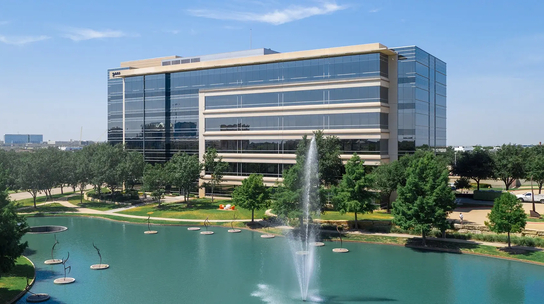
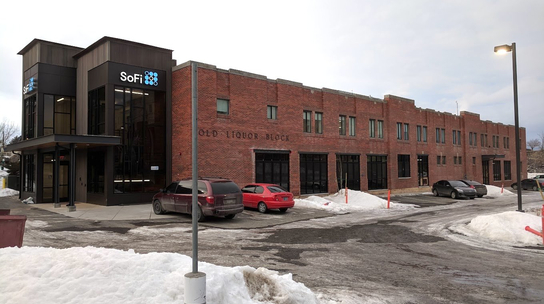
SoFi Offices
Hybrid Workspace
Employees engage in a combination of remote and on-site work.
For the majority of our workforce who work on a hybrid schedule, the in-office requirement is a handful of days per month!