Something strange is happening among software engineers experimenting with agentic AI tools. After years of painstakingly writing their own code from scratch, programmers can now direct teams of agents to spin up entire projects — sometimes without ever reviewing the code at all — resulting in dramatically faster workflows and the ability to juggle far more projects at once. This new superpower has been addictive for some, causing them to stay up all night thinking about what they can build next.
What Is AI Brain Fry?
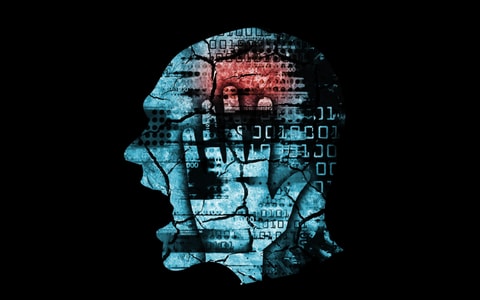
AI brain fry describes the cognitive overload artificial intelligence users feel when they don’t have enough working memory and attention to support the tasks and interactions required to manage AI agents. It can manifest as mental fog, difficulty focusing, slower decision-making and headaches — a “mental hangover distinct from ordinary tiredness or burnout.
OpenAI co-founder Andrej Karpathy told the “No Priors” podcast he’d been in a “state of AI psychosis” for months. Karpathy, who coined the term “vibe coding,” said he felt “extremely nervous” about the idea of falling behind other developers, and that he wanted to be at the forefront of figuring out what’s possible with agentic coding tools. Meanwhile, Y Combinator CEO Garry Tan said at a SXSW event that he had “cyber psychosis” and sleeps four hours a night because he wants to manage the 10 agents he has working on three different projects.
The term “AI psychosis" is typically reserved for instances when chatbot users lose connection with reality, oftentimes because the AI is validating the user’s fantasies, conspiracy theories or otherwise false beliefs. That experience may not be far off for avid vibe coders as well, according to software developer Armin Ronacher, who wrote that programmers can “become dependent on [agents], and separation from them is painful and takes away from our new-found identity.”
“You feel productive, you feel like everything is amazing, and if you hang out just with people that are into that stuff too, without any checks, you go deeper and deeper into the belief that this all makes perfect sense,” Ronacher wrote. “You can build entire projects without any real reality check. But it’s decoupled from any external validation. For as long as nobody looks under the hood, you’re good. But when an outsider first pokes at it, it looks pretty crazy.”
While developers may disagree about the accuracy of AI’s output, a growing number have said their addiction to using these tools has led to late nights, insomnia and compulsive usage — eventually leading to what has become known as “AI brain fry,” a kind of cognitive overload tied to managing AI systems that seem capable of doing everything at once. As agents accelerate the pace and volume of work, some researchers warn this technology may be creating a new form of mental exhaustion unlike anything we’ve seen before.
The Software Engineers Addicted to AI
Computer programmer Steve Yegge, who created an agentic coding orchestrator known as “Gas Town,” described the addictive nature of agentic coding as early as June 2025: “Every time something good happens, which is often, you get rewarded with dopamine. And when something bad happens, also often, you get adrenaline,” he wrote. “The intermittent reinforcement of those dopamine and adrenaline hits creates the core addictive pull. It can become near-impossible to tear yourself away.”
The prospect of magically creating a new feature or completely wrecking one’s codebase is similar to the psychological principles that make a slot machine so addictive. If the prompt fails, they’ll want to keep prompting until they find something that works. If the prompt is successful, they’ll feel inspired to try something else. With these newfound superpowers, developers can now create something in 20 minutes that once took them several days. This allows them to rapidly test ideas, take on larger projects and rethink what’s possible.
The possibilities can be overwhelming for some developers. Quentin Rousseau, co-founder and CTO of Rootly, was unable to sleep for months after he started agentic coding.
“The prompts kept composing themselves behind my eyelids. I’d think of a better way to structure a module, a new feature to try, a refactor that would take ‘just five minutes,’” he wrote in his blog. “My body was in bed but my mind was still in the terminal, still pulling the lever. It got bad enough that I went to see a doctor. Not for anxiety, not for depression — for the inability to shut my brain off.”
While many developers talk about staying up all night in a coding craze, some also say that it can knock them out cold. Yegge, for example, said he suddenly falls asleep at all hours of the day after long vibe-coding sessions. And software developer Simon Willison told Lenny’s Podcast that he finds it “mentally exhausting” managing four agents at a time, and that he often feels ”wiped out” by 11 a.m.
“There is a limit on human cognition — even if you’re not reviewing everything they’re doing — on how much you can hold in your head at one time,” Willison said. “It’s very easy to pop that stack at the moment.”
The Result Is AI Brain Fry
Researchers at Boston Consulting Group have developed a name for the cognitive strain software developers are feeling: “AI brain fry.” The researchers surveyed nearly 1,500 workers across a range of industries and roles, and 14 percent of them said they experienced a sort of “mental hangover” that comes from working with AI tools that exceed their cognitive capacity. Workers may report that their head is in a “fog” or “buzzing,” and they may find it difficult to focus and make decisions.
Other researchers have studied the unique impact artificial intelligence is having on workers’ brains. In March 2026, researchers at the University of California, Berkeley found that employees who used AI at a 200-person tech company worked at a faster pace on a wider scope of tasks for longer periods of time because they felt empowered by the capabilities of the agents. The researchers warned this “intensified” work could lead to cognitive fatigue, weakened decision-making and burnout.
But this latest BCG report, published in April 2026, elaborates on the psychological mechanisms causing AI users’ brains to short-circuit, and how it differs from traditional burnout.
What Causes AI Brain Fry?
AI brain fry is still a fairly new phenomenon, and we’re only just beginning to understand the cognitive mechanisms behind it. But early research suggests the issue is less about AI itself and more about the mental strain that comes from managing multiple agents at once, rapidly switching contexts and trying to keep up with systems that can work faster than humans can think.
Context Switching
Multitasking is notoriously inefficient, particularly in deep work, because it takes time to adjust to different tasks — a process known as context switching. The researchers at Boston Consulting Group found that workers’ productivity increases when they adopt their first agent, their second agent, and to a lesser degree, their third agent. But once they take on a fourth agent, their productivity starts to decline. And when a developer is jumping back and forth checking in on four or even 10 agents, their brain is more likely to be overwhelmed and less likely to be productive.
This describes why Francesco Bonacci, founder of agentic AI startup Cua, wrote that he often finds himself in a state of “vibe coding paralysis." While waiting for an agent to finish one project, he will start additional projects. By the end of the day, he will have four half-finished projects.
“The paradox: the more capability you have, the more you feel compelled to use it,” he wrote. “The more you use it, the more fragmented your attention becomes. The more fragmented your attention, the less you actually ship.”
Limitations in Working Memory
Developers can also experience intense cognitive strain due to the rapid pace of agentic coding. While users still need to maintain a mental model of what is being built, AI agents often move faster than humans can think. This can cause them to lose understanding of how the agent actually produced an output, which makes it difficult to make a correction or take the next step. One senior engineering manager surveyed in the BCG study said his intensive AI use caused him to re-read things and even second-guess himself.
“When you review an agent’s work, you must reconstruct its intent and logic before you can determine correctness. In doing so, you are also contending with a supremely confident creator, who generates outputs with panache and authority,” study co-author Gabriella Rosen Kellerman, partner and director at Boston Consulting Group, told Built In. “We must mentally peel back the layers of polish to assess accuracy. It’s easy to start to lose our way in this maze of recalibration. We can even start to doubt our own judgment. This puts all the rest of our cognitive work on shaky ground and adds to the overall mental fatigue.”
AI Brain Fry vs. Burnout
While AI brain fry may sound similar to burnout, the researchers say it operates in an entirely different way. Burnout is a state of chronic workplace stress characterized by emotional exhaustion, a growing detachment from work and a feeling of cynicism toward the workplace. AI brain fry, meanwhile, is “acute and purely cognitive,” Kellerman said. Because the use of AI exceeds one’s cognitive capacity, it degrades one’s working memory and executive function.
To put it another way: “Brain fry is something you can usually sleep off. Burnout is not,” she said.
Interestingly, researchers found that when AI is used to replace tedious tasks, burnout scores — but not mental fatigue scores — dropped 15 percent because it made work more enjoyable. It’s possible that AI brain fry, if repeated over enough days, could cause enough stress to trigger burnout, but Kellerman said that correlation has not yet been demonstrated.
“The practical implication for engineering leaders is that if your team is reporting brain fry now, you have months — not years — to change the operating model,” Kellerman said.
The Organizational Costs of AI Brain Fry
AI brain fry can take a serious toll on individual workers, but researchers warn the effects can also ripple across entire companies — contributing to poorer decision-making, more errors and higher turnover.
Decision Fatigue
Workers who reported AI brain fry were 33 percent more likely to experience decision fatigue, according to the BCG study. Bonnaci, who wrote about his difficulties finishing the multiple projects he started, said he also found himself over-relying on agents instead of making decisions on his own.
“I’ve caught myself re-planning the same feature three times in a day. Not because the plan was wrong, but because planning felt more comfortable than committing,” he wrote in an X post. “Each re-plan was a way to defer the anxiety of execution.”
Errors
When employees rely too much on generative AI, they tend to create low-quality work, increasing the likelihood of errors and inefficiencies. The stakes are even higher when agents make a mistake, as they are given access to a team’s codebase and permission to operate with much greater autonomy.
Because agents are capable of tackling larger, more complex tasks on their own, many developers have stopped reviewing individual lines of code altogether and now simply review the agent’s entire workflows. According to BCG’s research, workers who experienced AI brain fry were 11 percent more likely to make small missteps, like coding or formatting errors, and 39 percent more likely to make major blunders that could affect safety, outcomes or important decisions.
Turnover
According to BCG’s research, 34 percent of employees who experienced AI brain fry actively wanted to leave their job. This is a 36 percent increase over employees who didn’t experience AI brain fry. People who use AI with high intensity are “superstars,” according to the study, so organizations should be taking efforts to retain them. Plus, turnover can be expensive and time-consuming for companies as a whole.
How Leaders Can Address AI Brain Fry
AI brain fry isn’t inevitable. Companies can take steps to prevent it and better support employees as they adapt to AI-driven work.
Manager Support
Artificial intelligence is fundamentally changing how work gets done, and it’s paramount that managers are there to support their employees and offer guidance. Mental fatigue scores were 15 percent lower among workers whose managers took the time to answer their questions about AI, according to BCG’s research. And when managers expect their employees to figure out AI on their own, the employees’ mental fatigue scores increase 5 percent.
“Employees should be able to discuss with their managers openly what works and what not, since all these tools are really new, and we are trying to accumulate as much information and experience as possible and share it within the company,” Olga Titova, AI product manager at game developer Wargaming, told Built In.
Organized Integration of AI Into Workflows
BCG’s research also notes that workers feel more mental fatigue when they feel pressured to use AI, or if some employees are using AI more than others. But when teams organize how this technology is integrated into their processes, team members will see it as a “collective capability rather than an individual differentiator,” according to the study.
Evaluate Impact, Not Usage
Some tech companies have started ranking developers based on how many AI tokens they use, causing workers to compete for perks, incentives and prestige. This encourages developers to use AI for the sake of using AI, and it promotes the type of excessive usage that causes AI brain fry.
Instead of counting the number of tokens used, managers would be better off measuring the business goals they want developers to achieve with AI. In addition to preserving employee mental health, centering business goals may improve employee productivity and cut down on expensive computing costs.
Establishing an AI Strategy and Best Practices
BCG’s research found that employees suffered from more mental fatigue when their leaders failed to clearly communicate about AI, or when AI was framed primarily as a way to increase workload. Leaders can mitigate this fatigue by establishing best practices, clarifying how AI will reshape the scope of roles and balancing messages about AI efficiency with communication about mental well-being.
Budget Time for Reflection and Evaluation
According to the NeuroLeadership Institute, developers are more likely to have a breakthrough moment when they’re at lunch than sitting at the computer. While some developers might be tempted to “move fast and break things,” as the saying goes, organizations might consider carving out time for developers to evaluate AI outputs and reflect on their next step.
Banging out prompt after prompt may look good on a leaderboard or provide fodder for a post on X, but the research seems to show that engaging deeply with one project is more productive than giving a fraction of your attention to four different projects.
Recognize the Signs of AI Brain Fry
Organizations need to redesign how they evaluate and analyze their employees to evolve with AI workflows, Kellerman said. Among other things, that means monitoring cognitive load, safeguarding against mental fatigue and recognizing the warning signs of mental fatigue, like errors, irritability or a disparity between the number of hours worked and the amount of work produced.
“Ultimately, leaders need to recognize that AI technology may create a perception that work is seamless while simultaneously shifting stress onto the human nervous system,” Bob Hutchins, founder and CEO of Human Voice Media, told Built In. “To achieve sustainable levels of engagement from employees who are using AI technology, organizations need to design workflows that respect the limitations of humans rather than focusing solely on technological capabilities.”
Frequently Asked Questions
How is AI brain fry different from burnout?
Burnout is emotional and builds over months — cynicism, detachment, exhaustion. AI brain fry is acute and purely cognitive: depleted working memory, buzzing head, impaired judgment. Crucially, brain fry is something you can usually sleep off. Burnout is not.
What can managers do to prevent AI brain fog?
Several interventions help: answer your team's AI questions directly; integrate AI systematically as a team practice; communicate a clear AI strategy; measure business outcomes rather than AI usage; budget time for reflection between sessions; and monitor warning signs in employee well-being surveys.