


Job Description
You will serve as the Responsible Engineer (RE) for the aircraft fuel system, owning technical execution from requirements and architecture through design, procurement, integration, build, test, flight, and operational support. This role requires strong thermofluid fundamentals, engineering judgment, and the ability to understand fuel system behavior across demanding aircraft operating conditions while serving as the focal point between propulsion, vehicle teams, suppliers, and flight operations.
What You'll Do
- Serve as the Responsible Engineer for the aircraft fuel system, owning requirements, architecture, interfaces, hardware, and technical decisions from concept through operational deployment.
- Design, size, and integrate fuel tanks, pumps, valves, plumbing, venting and pressurization systems, filtration, level sensing, and associated fuel system hardware.
- Analyze fuel system performance across the aircraft operating envelope, including pressure and flow requirements, transient engine demand, elevated-G maneuvering, tank depletion, slosh, vapor pressure, cavitation, vapor ingestion, and thermal effects.
- Lead technical design reviews, supplier engagements, and hardware procurement while ensuring the fuel system meets performance, mass, thermal, reliability, safety, and mission requirements.
- Plan and execute component, subsystem, and vehicle-level testing, including instrumentation, procedures, data acquisition, performance validation, and flight readiness.
- Analyze ground and flight data to validate system performance, quantify margin, identify anomalies, and drive hardware or operational improvements.
- Lead failure investigations and root cause efforts using analysis, inspection, testing, and data to develop effective corrective actions.
- Work hands-on with design engineers, technicians, propulsion, controls, airframe, manufacturing, supply chain, test, and flight teams to build, integrate, troubleshoot, and iterate flight hardware.
Required Qualifications
- Bachelor's degree in Aerospace Engineering, Mechanical Engineering, or a related engineering discipline.
- 7+ years of experience in aerospace fuel systems, fluid systems, propulsion, or related aircraft system development, with demonstrated ownership of complex aerospace hardware.
- Strong understanding of thermodynamics, fluid mechanics, heat transfer, and compressible and incompressible flow.
- Strong understanding of aerospace fuel system design, including pressure losses, pump performance, venting, vapor pressure, cavitation, transient flow behavior, and thermal effects.
- Hands-on experience with fluid system hardware integration, instrumentation, testing, flight support, and technical failure investigations.
- Strong proficiency in Python or similar tools for engineering analysis, data reduction, and model correlation.
- Demonstrated ability to independently drive ambiguous technical problems to measurable results in a fast-paced development environment.
- U.S. Citizenship and active security clearance.
Preferred Qualifications
- Experience developing fuel systems for high-performance aircraft, tactical aircraft, UAVs, or similar aerospace platforms.
- Experience designing fuel systems for elevated-G maneuvering, aggressive vehicle dynamics, or challenging fuel delivery conditions.
- Experience with fuel tanks, pumps, valves, regulators, level sensing, venting, pressurization, and fuel system control hardware.
- Familiarity with GFSSP, REFPROP, CFD, ANSYS, FEA, or similar thermal-fluid analysis tools.
- Experience working with aerospace suppliers through component selection, procurement, development, qualification, and integration.
- Background in rocket propulsion or propellant systems with experience transferable to aerospace fuel system design, analysis, integration, or test.
- M.S. or Ph.D. in Aerospace Engineering, Mechanical Engineering, or a related engineering discipline.
Skills Required
- Bachelor's degree in Aerospace Engineering, Mechanical Engineering, or a related engineering discipline
- 7+ years of experience in aerospace fuel systems, fluid systems, propulsion, or related aircraft system development
- Demonstrated ownership of complex aerospace hardware
- Strong understanding of thermodynamics, fluid mechanics, heat transfer, and compressible and incompressible flow
- Strong understanding of aerospace fuel system design, including pressure losses, pump performance, venting, vapor pressure, cavitation, transient flow behavior, and thermal effects
- Hands-on experience with fluid system hardware integration, instrumentation, testing, flight support, and technical failure investigations
- Strong proficiency in Python or similar tools for engineering analysis, data reduction, and model correlation
- Ability to independently drive ambiguous technical problems to measurable results in a fast-paced development environment
- U.S. Citizenship
- Active security clearance
- Experience developing fuel systems for high-performance aircraft, tactical aircraft, UAVs, or similar aerospace platforms
- Experience designing fuel systems for elevated-G maneuvering, aggressive vehicle dynamics, or challenging fuel delivery conditions
- Experience with fuel tanks, pumps, valves, regulators, level sensing, venting, pressurization, and fuel system control hardware
- Familiarity with GFSSP, REFPROP, CFD, ANSYS, FEA, or similar thermal-fluid analysis tools
- Experience working with aerospace suppliers through component selection, procurement, development, qualification, and integration
- Background in rocket propulsion or propellant systems transferable to aerospace fuel system design, analysis, integration, or test
- M.S. or Ph.D. in Aerospace Engineering, Mechanical Engineering, or a related engineering discipline
What the Team is Saying


What We Do
At Shield AI, you won't wait years to see your work reach the field. You'll build hardware and software that operates in the real world right now, in the hands of the people who depend on it. Hivemind, our AI pilot, has been flying since 2018. It has flown more than 30 platforms, including an F-16, and it now sits under a U.S. Air Force production contract for Collaborative Combat Aircraft. When you write code or shape a system here, you contribute to technology with a proven flight record and a clear production future. V-BAT flies intelligence, surveillance, and reconnaissance missions with an operational record that stretches from Ukraine to the Indo-Pacific. It delivers eyes where they matter most, in the most demanding conditions on earth. The teams behind it watch their work get tested where the stakes are real. X-BAT takes its first flight this year. It's an AI-piloted fighter that needs no runway, built to operate where traditional aircraft can't. Join now and you help shape a program at its earliest, most formative stage. That's the kind of ground-floor work that defines a career. Do the most impactful work of your life, on problems that matter. Autonomy at this level asks a lot of you. You'll take on problems in perception, planning, and control that few teams anywhere are equipped to solve. You'll work across disciplines, from aerospace and robotics to machine learning and systems engineering, alongside people who hold themselves to an exacting standard and expect the same from you. Our mission is clear: protect service members and civilians with intelligent systems. That purpose runs through every decision, every design review, and every deployment. It's why the work here carries a weight you can feel. Ready to join our mission? Explore our open roles and find where you fit.
Why Work With Us
Founded in 2015 by a former Navy SEAL, Shield AI builds AI pilots and uncrewed aircraft. Veterans aren't an afterthought here, they're at every level. It's why the work carries weight: AI pilots and uncrewed aircraft flying real missions, from Ukraine to the Indo-Pacific, protecting service members and civilians.
Gallery
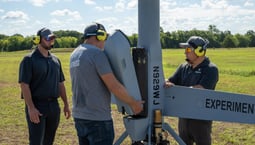
%203.jpg)

Shield AI Teams
.jpg)


Shield AI Offices
Hybrid Workspace
Employees engage in a combination of remote and on-site work.

