


Location: Bay Area (Mountain View)
Employment Type: Full-time
Work Model: On-site
Department: Research
Compensation: $160K – $250K + Equity
Granica is building the next generation of efficient AI infrastructure.
Today’s AI systems are limited not only by model design but by the inefficiency of the data that feeds them. At enterprise scale, redundant data, inefficient representations, and poorly optimized learning pipelines create enormous cost and latency.
Granica’s mission is to eliminate that inefficiency.
We combine advances in information theory, machine learning, and distributed systems to design data infrastructure that continuously improves how information is represented and used by AI.
Granica’s research effort is led by Prof. Andrea Montanari (Stanford) and focuses on building learning systems that operate efficiently on large-scale structured and tabular data.
While much of the industry focuses on text or media models, Granica is building the foundations of AI systems that learn directly from structured enterprise data.
This role focuses on building machine learning systems for structured and tabular data rather than general LLM application development.
The RoleThe Applied AI Research Team sits at the intersection of theory and production.
Your work will take ideas emerging from fundamental research and turn them into practical algorithms, optimized pipelines, and production-ready ML systems that operate across petabytes of structured enterprise data.
This is a high-ownership role for engineers who can think like researchers and build like systems engineers.
You will translate theory into measurable performance improvements and help define the engineering foundations of structured AI.
What You’ll DoTurn research into working systemsTransform foundational ideas from Granica Research and Prof. Andrea Montanari’s group into scalable algorithms and prototypes
Build evaluation harnesses, datasets, and benchmarks that measure real signal from research ideas
Define and improve metrics that quantify progress in structured AI systems
Develop efficient learning methods for relational, tabular, graph, and enterprise datasets
Prototype representation learning architectures and compression-aware models
Explore new approaches for learning from heterogeneous structured data
Implement fast training and inference pipelines using PyTorch, JAX, or custom kernels
Optimize memory usage, compute utilization, and data movement
Improve cost, latency, and throughput for large-scale ML workloads
Design systems integrating symbolic, relational, and neural components
Enable AI models to reason over structured datasets without relying on text intermediaries
Work with Research Scientists to validate hypotheses at scale
Work with Systems Engineers to integrate algorithms into Granica’s data platform
Work with Product Engineering to ship features powering real enterprise workloads
Run controlled experiments and analyze performance improvements
Deliver results with clear benchmarks and reproducible evaluations
Drive the cycle from prototype → production → optimization
Strong background in machine learning, probabilistic modeling, optimization, or large-scale ML systems
Experience building algorithms for structured, relational, tabular, or graph data
Ability to reason from first principles about scaling behavior, efficiency, and information flow
Hands-on experience with PyTorch, JAX, TensorFlow, or similar ML frameworks
Strong programming skills in Python
Experience with systems languages such as Rust, C++, or CUDA is a plus
Experience building large-scale ML pipelines, evaluation frameworks, or distributed systems
Proven ability to turn research ideas into performant, reliable code
Comfort working in research-driven environments with ambiguous problem definitions
Strong experimentation discipline and focus on measurable performance improvements
Structured representation learning, tabular ML, relational learning, or graph ML
Experience with large-scale training infrastructure or distributed ML
Familiarity with data systems, query engines, or large-scale data pipelines
Experience building evaluation infrastructure for ML systems
Open-source contributions or collaborative work bridging research and production systems
The world’s most valuable data is structured.
Most AI systems today are not built to learn from it efficiently.
Granica is building the systems that close this gap.
Your work will help define the engineering foundations of structured AI — designing the algorithms, pipelines, and infrastructure that enable efficient learning from enterprise data at global scale.
This role offers:
high ownership
real research impact
immediate production relevance
and the opportunity to shape a new generation of AI systems.
Competitive salary, meaningful equity, and substantial bonus for top performers
Flexible time off plus comprehensive health coverage for you and your family
Support for research, publication, and deep technical exploration
At Granica, you will shape the fundamental infrastructure that makes intelligence itself efficient, structured, and enduring. Join us to build the foundational data systems that power the future of enterprise AI!
Granica Compensation & Benefits Highlights
-
Healthcare Strength — Policies advertise premium medical, dental, and vision coverage with mental‑health benefits and FSAs. Some materials indicate fully paid employee coverage with meaningful dependent support.
-
Leave & Time Off Breadth — Time off includes unlimited PTO paired with quarterly recharge days, alongside paid holidays and sick time. Guidance encourages multi‑week annual rest to reduce burnout.
-
Strong & Reliable Incentives — Compensation highlights include quarterly performance bonuses for all roles in addition to competitive salary. Feedback suggests these incentives are a consistent part of the total‑rewards design.
Granica Insights
Similar Jobs

What We Do
Our mission is to remove inefficiency from the foundation of AI. By combining new research in information theory, probabilistic modeling, and distributed systems, we’re creating self-optimizing data infrastructure that continuously improves how information is represented and used by intelligent systems.
Why Work With Us
We’re a tight-knit team combining --> * Fundamental research in compression, data systems, and information theory * World-class systems engineering across storage, infrastructure, and research led by our Chief Scientist & Stanford Prof. Andrea Montanari * A shared obsession with performance, scale, and clean design
Gallery
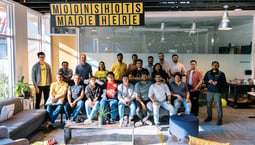




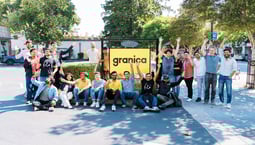



Granica Offices
Hybrid Workspace
Employees engage in a combination of remote and on-site work.
