


WHAT YOU’LL DO:
- Define and evolve the system‑wide software architecture for XBAT, spanning airborne vehicle, ground station, and autonomy layers.
- Translate safety and security goals into technical requirements, standards, and design patterns that guide engineers across multiple software teams.
- Ensure architecture supports safety‑critical and cyber‑relevant workflows. This includes formalizing architecture decisions, traceability, and compliance pathways appropriate for advanced airborne systems.
- Drive cross‑team alignment on APIs, data flows, fault handling, verification strategy, and risk management so mission, vehicle, and autonomy components integrate cleanly.
- Partner with engineering leadership, system architects, and validation teams to balance innovation speed with rigorous assurance practices.
- Set technical direction for long‑term scalability: modularity, maintainability, testability, and support for future capability growth or certification needs.
- Mentor senior engineers and architects, raising the bar for design rigor, documentation quality, and architectural judgment across the organization.
- Produce and maintain architecture artifacts: high‑level system diagrams, component interfaces, data models, risk analyses, and design rationales.
- Lead technical reviews for major features, changes, or integration points; ensure alignment with architectural standards and safety/security constraints.
- Define architecture governance: decision records, change control processes, quality gates, and collaboration flows among development, verification, and operations.
- Collaborate with systems, hardware, and avionics teams to manage boundaries, timing, resource allocation, and failure modes that affect overall aircraft and mission performance.
- Drive technology evaluation and roadmap: select or validate frameworks, middleware, and tooling that meet performance, assurance, and cyber‑hardening needs.
- Support external or internal readiness evaluations: provide architectural evidence, participate in reviews, and help the program articulate compliance posture as requirements evolve.
- Advocate for continuous improvement in architecture practice: metrics, architecture reviews, knowledge sharing, and onboarding for new team members.
REQUIRED QUALIFICATIONS:
- Deep expertise in software architecture for complex, multi‑domain systems—ideally aerospace, defense, autonomous systems, or similarly safety‑critical fields.
- Proven track record designing and delivering production software that must satisfy stringent safety, security, or mission assurance requirements.
- Strong systems thinking: able to navigate tradeoffs across performance, latency, reliability, testability, and certification or compliance considerations.
- Excellent written and verbal communication; able to convey architecture vision and rationale to engineers, program leads, and stakeholders.
- Experience driving architecture adoption and discipline across multiple teams, not just authoring designs in isolation.
- Bachelor’s or advanced degree in Computer Science, Software Engineering, Electrical Engineering, Aerospace, or a closely related field, or equivalent practical experience.
- Ability to obtain a S//SAR level security clearance desired.
PREFERRED QUALIFICATIONS:
- Familiarity with aerospace software assurance frameworks or standards that guide high‑assurance airborne software development.
- Experience working on or integrating autonomy, mission planning, or AI‑enabled software into real‑world systems.
- Strong understanding of cyber hardening and secure design practices for distributed or networked vehicle systems and ground infrastructure.
- Prior leadership or mentor role with responsibility for building and scaling architecture practices and design culture in a fast‑moving engineering organization.
- Experience dealing with constrained platforms: real‑time requirements, limited compute, or avionics‑style integration challenges.
- Hands‑on experience in VTOL or other advanced aircraft programs, or in programs that require austere operations, long‑range operations, or resilient autonomy.
- Exposure to end‑to‑end product lifecycle from concept through flight test or operational deployment.
- Practical knowledge of modern software tooling that supports traceability, CI/CD, automated verification, static analysis, or high‑assurance pipelines.
- Comfort working in a highly collaborative, fast‑paced environment where requirements can evolve quickly and architecture must adapt without losing rigor.
Skills Required
- Deep expertise in software architecture for complex, multi-domain systems (aerospace, defense, autonomous systems, or similar safety-critical fields).
- Proven track record designing and delivering production software meeting stringent safety, security, or mission assurance requirements.
- Strong systems thinking across performance, latency, reliability, testability, and certification/compliance considerations.
- Excellent written and verbal communication; able to convey architecture vision and rationale to engineers, program leads, and stakeholders.
- Experience driving architecture adoption and discipline across multiple teams.
- Bachelor's or advanced degree in Computer Science, Software Engineering, Electrical Engineering, Aerospace, or closely related field, or equivalent practical experience.
- Ability to obtain a S//SAR level security clearance.
What the Team is Saying


Shield AI Compensation & Benefits Highlights
-
Healthcare Strength — Company materials highlight comprehensive medical, dental, and vision coverage with mental-health support and an EAP. Third-party benefits summaries also portray health coverage as a strong component of the package.
-
Retirement Support — Offerings include a 401(k) with employer matching, cited on the careers page and independent benefits directories. Multiple sources indicate a match exists, though exact formulas have varied over time and warrant confirmation.
-
Equity Value & Accessibility — Company communications describe equity for all full-time hires and stock benefits as part of total rewards. Independent listings also note company equity/RSUs as a standard element.
Shield AI Insights

What We Do
At Shield AI, you won't wait years to see your work reach the field. You'll build hardware and software that operates in the real world right now, in the hands of the people who depend on it. Hivemind, our AI pilot, has been flying since 2018. It has flown more than 30 platforms, including an F-16, and it now sits under a U.S. Air Force production contract for Collaborative Combat Aircraft. When you write code or shape a system here, you contribute to technology with a proven flight record and a clear production future. V-BAT flies intelligence, surveillance, and reconnaissance missions with an operational record that stretches from Ukraine to the Indo-Pacific. It delivers eyes where they matter most, in the most demanding conditions on earth. The teams behind it watch their work get tested where the stakes are real. X-BAT takes its first flight this year. It's an AI-piloted fighter that needs no runway, built to operate where traditional aircraft can't. Join now and you help shape a program at its earliest, most formative stage. That's the kind of ground-floor work that defines a career. Do the most impactful work of your life, on problems that matter. Autonomy at this level asks a lot of you. You'll take on problems in perception, planning, and control that few teams anywhere are equipped to solve. You'll work across disciplines, from aerospace and robotics to machine learning and systems engineering, alongside people who hold themselves to an exacting standard and expect the same from you. Our mission is clear: protect service members and civilians with intelligent systems. That purpose runs through every decision, every design review, and every deployment. It's why the work here carries a weight you can feel. Ready to join our mission? Explore our open roles and find where you fit.
Why Work With Us
Founded in 2015 by a former Navy SEAL, Shield AI builds AI pilots and uncrewed aircraft. Veterans aren't an afterthought here, they're at every level. It's why the work carries weight: AI pilots and uncrewed aircraft flying real missions, from Ukraine to the Indo-Pacific, protecting service members and civilians.
Gallery
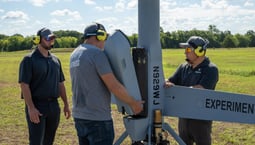
%203.jpg)

Shield AI Teams
.jpg)


Shield AI Offices
Hybrid Workspace
Employees engage in a combination of remote and on-site work.

