


The Autonomous Pilot Integration team builds autonomy solutions for a wide range of CONOPs and mission sets. We combine capabilities from the Autonomy Capabilities team (motion planning, tactics), the Perception team (e.g., track fusion), and the HivemindSDK to develop the autonomy software that runs on an unmanned platform — air, maritime, space, or effects/expendables, depending on the program — then integrate, validate, and field it on the real hardware. In this role, you'll write new autonomy code — such as mission behaviors, platform-specific control, multi-agent coordination, contingencies, and executive autonomy — and own it end-to-end from software-in-the-loop, to hardware-in-the-loop, to vehicle-in-the-loop, to live test exercise. You'll partner closely with the Autonomy Capabilities and Perception teams, feature crews, and external platform integrators (vehicle/autopilot control vendors, C2 providers). It's a hands-on role for engineers who like seeing their code operate in the real world — whether that's flying, sailing, orbiting, or downrange — and want to be there when it does.
At this level, you'll also serve as a technical leader within the team — leading a small feature crew or sub-program through design, integration, and delivery, mentoring mid-level engineers, and representing the team directly to capability teams and external partners.
Shield AI is committed to developing cutting-edge autonomy for unmanned platforms across every operating domain — air, maritime, space, and effects/expendables — in service of the U.S. Department of Defense and our international defense customers. Our Autonomous Pilot Integration engineers bridge the gap between R&D and deployment, ensuring autonomous systems function reliably and effectively wherever and whenever they're needed most.
What You'll Do:
Develop & Field Autonomy — Develop & integrate autonomy software solutions onto unmanned platforms (air, maritime, space, or effects/expendables), including payload computer bring-up, container-based deployment (e.g., k3s/k3d), and configuration across onboard compute, sensors, and command-and-control interfaces — and lead a small team through the design, development, and delivery of a major capability or sub-program.
Technical Leadership — Lead a small feature crew or sub-program; set technical direction, break down work, unblock the team, and report progress to leadership and stakeholders.
Collaboration Across Teams — Act as a primary technical interface with the Autonomy Capabilities team (motion planning, tactics), the Perception team, feature crews, and external partners (platform integrators, vehicle/autopilot control vendors, C2 providers); author and negotiate ICDs and interface contracts rather than just consume them
Mentorship & Growth — Mentor mid-level engineers on the team; partner with managers on onboarding, leveling, and growth planning. Formally onboard senior new hires.
Design & Documentation — Drive design reviews, ICDs, and post-mortems for your area; push the team toward higher rigor and close process gaps that span teams.
Pre-deployment Preparation — Own the build, configuration, and validation process for mission-ready systems; coordinate hardware/software compatibility, mission readiness, and release cadence with capability and feature teams.
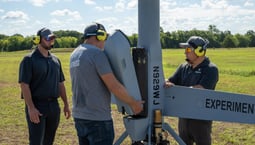
On-site Test & Mission Support — Travel to test sites and support live mission operations (flight tests, range exercises, on-water trials, integration events), including safety checks, system bring-up, and troubleshooting under time-critical constraints.
Hardware/Software Debugging — Diagnose and resolve integration issues across complex autonomy stacks, payload computers, and embedded systems in lab and field environments — including memory, CPU, and timing profiling under operationally-representative loads.
Mission Data & Debrief Support — Capture mission and test data, reproduce issues in simulation, and partner with autonomy capability owners to drive fixes back into the next build.
Continuous Improvement — Build tools and processes to improve integration timelines, test/mission reliability, and team efficiency across deployment cycles.
C2 Interoperability & Standards — Own the interface contracts with C2 providers and drive standards compliance for your area, including implementation and validation against command-and-control standards (e.g., A-GRA, UCI, OMS).
Hiring — Interview candidates, help define the skills bar for open roles in your area, and onboard new engineers into your sub-program.
Travel Requirement – Members of this team typically travel around 10-20% of the year (to different office locations, customer sites, and integration/test events).
Required Qualifications:
BS/MS in Computer Science, Electrical Engineering, Mechanical Engineering, Aerospace Engineering, and/or similar degree, or equivalent practical experience
Typically requires a minimum of 7 years of related experience with a Bachelor’s degree; or 5 years and a Master’s degree; or 4 years with a PhD; or equivalent work experience.
Proficiency in C++, with experience developing or integrating real-time or latency-sensitive systems.
Proficiency in Linux-based development and experience working with embedded systems, shell scripting, and system diagnostics.
Familiarity with middleware, pub-sub, or IPC frameworks used in autonomy or robotics systems (e.g., DDS, message buses).
Hands-on experience supporting demos, exercises, or field/mission tests for unmanned or autonomous systems.
Experience with autonomy simulation environments for testing and validation.
Demonstrated experience leading a small technical team or owning a major capability from design through field delivery.
Track record of mentoring engineers and growing technical talent.
Experience authoring or negotiating interface contracts / ICDs with internal or external stakeholders.
Strong problem-solving skills, with the ability to troubleshoot and optimize system performance across the full stack.
Excellent communication and teamwork skills, with the ability to work effectively in a collaborative, multidisciplinary environment.
Ability to obtain a SECRET clearance.
Preferred Qualifications:
Direct experience supporting unmanned systems (air, maritime, space, ground, or effects/expendables) or similar field test campaigns.
Proficiency in Python for scripting, automation, and analysis.
Experience leading a feature crew, sub-program, or small team in an unmanned systems context.
Experience owning customer- or partner-facing technical relationships (e.g., autopilot vendors, C2 providers, government program offices).
Track record of cross-team improvements (process, rigor, documentation, or developer experience).
Familiarity with autonomy stacks, motion planning, or vehicle-control integration.
Competence in vehicle electronics bring-up (avionics, spacecraft buses, or vessel control), payload computer integration, or hardware-in-the-loop debugging.
Experience with container orchestration (e.g., k3s, k3d, Docker) on embedded or payload compute.
Familiarity with platform control / autopilot stacks (e.g., PX4, ArduPilot, spacecraft flight software, vessel autopilots).
Proficiency in developing automation tools for system testing, logging, and data parsing.
Build-system experience (e.g., Conan, CMake) and CI/CD pipeline familiarity.
Comfortable interfacing with DoD stakeholders during field events or technical reviews.
Experience with C2 standards such as A-GRA, UCI, or OMS.
Familiarity with government-furnished simulation environments (e.g., AFSIM, NGTS) is a plus.
Skills Required
- BS/MS in Computer Science, Electrical, Mechanical, Aerospace engineering, or equivalent practical experience
- Minimum ~7 years related experience (or 5 years with MS, or 4 years with PhD, or equivalent)
- Proficiency in C++ with experience developing or integrating real-time or latency-sensitive systems
- Proficiency in Linux-based development, embedded systems, shell scripting, and system diagnostics
- Familiarity with middleware, pub-sub, or IPC frameworks used in autonomy or robotics (e.g., DDS, message buses)
- Hands-on experience supporting demos, exercises, or field/mission tests for unmanned or autonomous systems
- Experience with autonomy simulation environments for testing and validation
- Demonstrated experience leading a small technical team or owning a major capability from design through field delivery
- Track record of mentoring engineers and growing technical talent
- Experience authoring or negotiating interface contracts / ICDs with internal or external stakeholders
- Strong problem-solving skills and ability to troubleshoot and optimize system performance across the full stack
- Excellent communication and teamwork skills in multidisciplinary environments
- Ability to obtain a SECRET clearance
- Direct experience supporting unmanned systems or similar field test campaigns
- Proficiency in Python for scripting, automation, and analysis
- Experience leading a feature crew, sub-program, or small team in an unmanned systems context
- Experience owning customer- or partner-facing technical relationships (autopilot vendors, C2 providers, government program offices)
- Competence in vehicle electronics bring-up, payload computer integration, or hardware-in-the-loop debugging
- Experience with container orchestration (e.g., k3s, k3d, Docker) on embedded or payload compute
- Familiarity with platform control / autopilot stacks (e.g., PX4, ArduPilot, spacecraft flight software, vessel autopilots)
- Build-system experience (e.g., Conan, CMake) and CI/CD pipeline familiarity
- Experience with C2 standards such as A-GRA, UCI, or OMS
- Familiarity with government-furnished simulation environments (e.g., AFSIM, NGTS)
- Comfortable interfacing with DoD stakeholders during field events or technical reviews
What the Team is Saying


Shield AI Compensation & Benefits Highlights
-
Healthcare Strength — Company materials highlight comprehensive medical, dental, and vision coverage with mental-health support and an EAP. Third-party benefits summaries also portray health coverage as a strong component of the package.
-
Retirement Support — Offerings include a 401(k) with employer matching, cited on the careers page and independent benefits directories. Multiple sources indicate a match exists, though exact formulas have varied over time and warrant confirmation.
-
Equity Value & Accessibility — Company communications describe equity for all full-time hires and stock benefits as part of total rewards. Independent listings also note company equity/RSUs as a standard element.
Shield AI Insights

What We Do
At Shield AI, you won't wait years to see your work reach the field. You'll build hardware and software that operates in the real world right now, in the hands of the people who depend on it. Hivemind, our AI pilot, has been flying since 2018. It has flown more than 30 platforms, including an F-16, and it now sits under a U.S. Air Force production contract for Collaborative Combat Aircraft. When you write code or shape a system here, you contribute to technology with a proven flight record and a clear production future. V-BAT flies intelligence, surveillance, and reconnaissance missions with an operational record that stretches from Ukraine to the Indo-Pacific. It delivers eyes where they matter most, in the most demanding conditions on earth. The teams behind it watch their work get tested where the stakes are real. X-BAT takes its first flight this year. It's an AI-piloted fighter that needs no runway, built to operate where traditional aircraft can't. Join now and you help shape a program at its earliest, most formative stage. That's the kind of ground-floor work that defines a career. Do the most impactful work of your life, on problems that matter. Autonomy at this level asks a lot of you. You'll take on problems in perception, planning, and control that few teams anywhere are equipped to solve. You'll work across disciplines, from aerospace and robotics to machine learning and systems engineering, alongside people who hold themselves to an exacting standard and expect the same from you. Our mission is clear: protect service members and civilians with intelligent systems. That purpose runs through every decision, every design review, and every deployment. It's why the work here carries a weight you can feel. Ready to join our mission? Explore our open roles and find where you fit.
Why Work With Us
Founded in 2015 by a former Navy SEAL, Shield AI builds AI pilots and uncrewed aircraft. Veterans aren't an afterthought here, they're at every level. It's why the work carries weight: AI pilots and uncrewed aircraft flying real missions, from Ukraine to the Indo-Pacific, protecting service members and civilians.
Gallery
%203.jpg)

Shield AI Teams
.jpg)


Shield AI Offices
Hybrid Workspace
Employees engage in a combination of remote and on-site work.

