


Apptronik is a human-centered robotics company developing AI-powered robots to support humanity in every facet of life. Our flagship humanoid robot, Apollo, is built to collaborate thoughtfully with people, starting with critical industries such as manufacturing and logistics, with future applications in healthcare, the home, and beyond.
We operate at the cutting edge of embodied AI, applying our expertise across the full robotics stack to solve some of society's most important problems. You will join a team dedicated to bringing Apollo to market at scale, tackling the complex challenges like safety, commercialization, and mass production to change the world for the better.
JOB SUMMARY
Apptronik is seeking a Staff Mechanical Engineer to serve as the technical lead for Apollo’s lower body. This is a high-visibility leadership role responsible for the hip, leg, knee, ankle, and foot assemblies.
You will own the complete lifecycle—architecture, design, integration, and verification—of the lower body stack. This position requires deep expertise in locomotion kinematics, dynamic stability, and high-load structural design. You will lead the development of systems that must deliver human-like mobility, absorb high-energy impacts, and maintain durability across millions of cycles in real-world environments.
ESSENTIAL DUTIES AND RESPONSIBILITIES or KEY ACCOUNTABILITIES
System Architecture & Locomotion Design- Lower Body Ownership: Define the mechanical architecture for the hips, legs, knees, ankles, and feet. Lead trade-off studies between power density, range of motion (ROM), stability, and energy efficiency.
- Locomotion Performance: Architect systems that enable stable walking, running, lifting, and recovery from disturbances (e.g., slips, trips, and falls). Balance dynamic performance with robustness and safety.
- Mass Distribution & Stability: Optimize mass placement and inertia to improve balance, agility, and whole-body coordination.
- High-Performance Joints: Drive the design of multi-DOF joints (hip, knee, ankle) capable of high torque output and high cycle life while maintaining precision and backdrivability where needed.
- Shock & Impact Management: Design structures and mechanisms that absorb and dissipate energy during foot-ground contact and high-impact events (e.g., stepping off ledges, falls).
- Structural Integrity: Lead the design of the lower body load path to support full robot mass and dynamic loads using advanced materials and topology optimization.
- Foot & Contact Design: Develop feet and contact interfaces that provide traction, compliance, and adaptability across varied terrains.
- Actuation Integration: Partner closely with controls and actuation teams to ensure mechanical designs support force control, impedance control, and dynamic motion planning.
- Subsystem Integration: Lead integration of actuators, sensors , and structural elements within tight mechanical envelopes.
- Cable & Harness Routing: Architect robust routing strategies through high-flex joints (hips, knees, ankles), ensuring multi-million cycle reliability and maintainability.
- Environmental Robustness: Ensure designs meet requirements for ingress protection (IP), thermal performance, and durability in real-world operating conditions.
- DVT Ownership: Define and execute the Design Verification Test (DVT) plan for the lower body, including fatigue testing, impact testing, and long-duration lifecycle validation.
- Failure Analysis: Lead root cause investigations for field or lab failures related to wear, fatigue, or performance degradation.
- Technical Mentorship: Conduct deep-dive design reviews, establish best practices for dynamic robotic systems, and mentor engineers across experience levels.
SKILLS AND REQUIREMENTS
- Drive Through Influence: Proven ability to lead technical initiatives and align cross-functional stakeholders without direct authority. Strong track record of driving system-level decisions.
- Subject Matter Expertise: Demonstrated experience designing multi-axis robotic legs, exoskeletons, or comparable high-DOF dynamic systems.
- Locomotion & Dynamics: Deep understanding of kinematics, dynamics, and control considerations for legged locomotion.
- Structural & Fatigue Design: Expertise in designing for high-cycle fatigue, impact loading, and durability.
- Packaging Mastery: Strong experience integrating actuators, sensors, and structures in compact, high-performance systems.
- CAD Expertise: Expert-level proficiency in CAD tools (SolidWorks, NX, CATIA).
EDUCATION and/or EXPERIENCE
- Education: BS/MS in Mechanical Engineering, Robotics, or a related field.
- Experience: B.S. in Mechanical Engineering with a 8+ years of experience in mechanical design of complex robotic systems, with a focus on legged systems or high-load dynamic mechanisms.
PHYSICAL REQUIREMENTS
- Prolonged periods of sitting at a desk and working on a computer
- Must be able to lift 15 pounds at times
- Vision to read printed materials and a computer screen
- Hearing and speech to communicate
*This is a direct hire. Please, no outside Agency solicitations.
Apptronik provides equal employment opportunities to all employees and applicants for employment and prohibits discrimination and harassment of any type without regard to race, color, religion, age, sex, national origin, disability status, genetics, protected veteran status, sexual orientation, gender identity or expression, or any other characteristic protected by federal, state or local laws.
Skills Required
- B.S. in Mechanical Engineering
- 8+ years of experience in mechanical design of complex robotic systems
- Proven ability to lead technical initiatives
- Demonstrated experience designing multi-axis robotic legs or exoskeletons
- Deep understanding of kinematics and dynamics for legged locomotion
- Expertise in designing for high-cycle fatigue and impact loading
- Strong experience integrating actuators, sensors, and structures
- Expert-level proficiency in CAD tools
Apptronik Compensation & Benefits Highlights
-
Healthcare Strength — Medical coverage includes employer-subsidized plan options with add-ons like mental health support and FSA availability. Plan variety and cost sharing on medical are presented as core strengths.
-
Leave & Time Off Breadth — Open or generous PTO combines with paid holidays and sick time to create ample time-off flexibility. Hybrid scheduling further supports time-away usability.
-
Parental & Family Support — Generous parental leave, family medical leave, and an onsite Mother’s Room are highlighted. Company‑sponsored family events reinforce family-oriented support.
Apptronik Insights

What We Do
Apptronik is building robots for the real world to improve human quality of life and to help solve the ever-increasing labor shortage problem. Our team has been building some of the most advanced robots on the planet for years, dating back to the DARPA Robotics Challenge. We apply our expertise across the full robotics stack to some of the most important and impactful problems our society faces, and expect our products and technology to change the world for the better. We value passion, creativity, and collaboration to help us overcome existing technological barriers in the industry to create truly innovative products.
Why Work With Us
At Apptronik, we don't see a future where man competes against machine. Instead, we envision a harmonious world where man and machine coexist. Our mission statement, "It is not Man vs. Machine, but Man + Machine," encapsulates our belief that the synergy between humans and robots will pave the way for a brighter, more advanced future.
Gallery
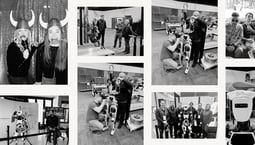


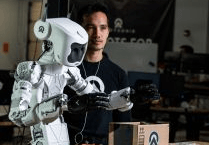
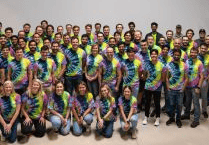

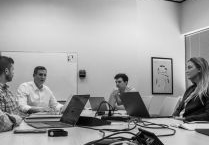
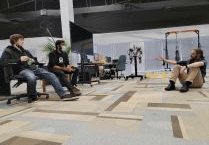
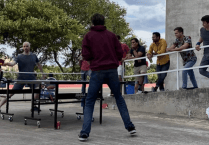
Apptronik Offices
Hybrid Workspace
Employees engage in a combination of remote and on-site work.
