


What you'll do:
- You will be responsible for developing and implementing design-for-reliability best practices, conducting rigorous testing, shaping manufacturing requirements, selecting materials, and analyzing field data to enhance the robustness of VBAT hardware.
- Perform stress screening, environmental testing, and drive failure analysis to ensure flight hardware meets reliability and performance targets.
- Analyze designs and test results to identify potential failure modes and mitigations.
- Collaborate with design engineers to implement design for reliability best practices early in design.
- Act as a key stakeholder in reviewing and approving designs for release.
- Participate in design reviews and failure mode effects analysis (FMEA) to assess potential reliability issues.
- Investigate manufacturing non-conformances and field hardware failures to determine root cause.
- Travel as needed to perform deep dives into supplier processes.
- Develop and recommend corrective actions to address identified reliability issues.
- Utilize reliability modeling and simulation tools to predict system performance and lifespan.
- Stay current with industry trends, advancements, and best practices in hardware reliability engineering.
- Propose and implement process improvements to drive improvements in reliability across the program.
Required qualifications:
- Technical background in materials science, electronics manufacturing processes (PCB fabrication and assembly), hardware reliability concepts, and environmental test practices.
- Candidate must be self-starting and come with a growth mindset, with excellent problem-solving skills and attention to detail.
- Bachelor's degree in Materials Engineering preferred. Degrees in Mechanical OR Reliability Engineering also are acceptable.
- Familiarity with electronics (PCBs, PCBAs, electronic components) and moving mechanical assemblies.
- Team-player with clear and concise written and oral communication skills.
- Experience working with interdisciplinary teams to execute product design from concept to production.
- Experience with the project management of technical projects.
- Proficiency in Python, including NumPy, Pandas, SciPy, Plotly, and Matplotlib.
- Familiarity with relevant industry standards, including IPC, JEDEC, AIAA, AEC, MIL, and SMC standards.
- Ability to obtain a S//SAR level security clearance desired.
Preferred qualifications:
- Master's degree in Materials Engineering preferred. Degrees in Mechanical OR Reliability Engineering also are acceptable.
- 3+ years of experience in hardware reliability engineering, preferably with a focus on aerospace or automotive applications.
- Proficiency in failure analysis techniques and materials characterization methods
- Experience with environmental testing, including temperature cycling, vibration, highly accelerated limit testing (HALT), and highly-accelerated stress screening (HASS).
- Familiarity with PCB fabrication, SMT, and polymerics application manufacturing processes
- Significant knowledge of reliability engineering principles, methods, and tools
Skills Required
- Technical background in materials science, electronics manufacturing processes (PCB fabrication and assembly), hardware reliability concepts, and environmental test practices
- Self-starting with growth mindset, excellent problem-solving skills, and attention to detail
- Bachelor's degree (Materials Engineering preferred; Mechanical or Reliability Engineering acceptable)
- Familiarity with electronics (PCBs, PCBAs, electronic components) and moving mechanical assemblies
- Clear and concise written and oral communication skills; team-player
- Experience working with interdisciplinary teams to execute product design from concept to production
- Experience with project management of technical projects
- Proficiency in Python, including NumPy, Pandas, SciPy, Plotly, and Matplotlib
- Familiarity with industry standards (IPC, JEDEC, AIAA, AEC, MIL, SMC)
- Ability to obtain a S//SAR level security clearance
- Master's degree in Materials, Mechanical, or Reliability Engineering
- 3+ years of experience in hardware reliability engineering (aerospace or automotive preferred)
- Proficiency in failure analysis techniques and materials characterization methods
- Experience with environmental testing (temperature cycling, vibration, HALT, HASS)
- Familiarity with PCB fabrication, SMT, and polymerics application manufacturing processes
- Significant knowledge of reliability engineering principles, methods, and tools
What the Team is Saying


Shield AI Compensation & Benefits Highlights
-
Healthcare Strength — Healthcare coverage is described as excellent, with dental/vision and mental‑health support, and ancillary protections like life and disability appearing in benefit summaries. The breadth and perceived affordability of coverage are highlighted as a standout component of the package.
-
Parental & Family Support — Paid parental leave is featured alongside enhanced maternity benefits, fertility and childcare support, and onsite resources such as a Mother’s Room. These elements are positioned as competitive and above the minimal baseline for the company’s stage.
-
Equity Value & Accessibility — Equity is granted to all full‑time hires, with RSUs, double‑trigger tax timing, and tools to model scenarios (e.g., through Carta Tax). Communications also reference a transition from options to RSUs, reinforcing access and maturity of ownership programs.
Shield AI Insights

What We Do
At Shield AI, you won't wait years to see your work reach the field. You'll build hardware and software that operates in the real world right now, in the hands of the people who depend on it. Hivemind, our AI pilot, has been flying since 2018. It has flown more than 30 platforms, including an F-16, and it now sits under a U.S. Air Force production contract for Collaborative Combat Aircraft. When you write code or shape a system here, you contribute to technology with a proven flight record and a clear production future. V-BAT flies intelligence, surveillance, and reconnaissance missions with an operational record that stretches from Ukraine to the Indo-Pacific. It delivers eyes where they matter most, in the most demanding conditions on earth. The teams behind it watch their work get tested where the stakes are real. X-BAT takes its first flight this year. It's an AI-piloted fighter that needs no runway, built to operate where traditional aircraft can't. Join now and you help shape a program at its earliest, most formative stage. That's the kind of ground-floor work that defines a career. Do the most impactful work of your life, on problems that matter. Autonomy at this level asks a lot of you. You'll take on problems in perception, planning, and control that few teams anywhere are equipped to solve. You'll work across disciplines, from aerospace and robotics to machine learning and systems engineering, alongside people who hold themselves to an exacting standard and expect the same from you. Our mission is clear: protect service members and civilians with intelligent systems. That purpose runs through every decision, every design review, and every deployment. It's why the work here carries a weight you can feel. Ready to join our mission? Explore our open roles and find where you fit.
Why Work With Us
Founded in 2015 by a former Navy SEAL, Shield AI builds AI pilots and uncrewed aircraft. Veterans aren't an afterthought here, they're at every level. It's why the work carries weight: AI pilots and uncrewed aircraft flying real missions, from Ukraine to the Indo-Pacific, protecting service members and civilians.
Gallery
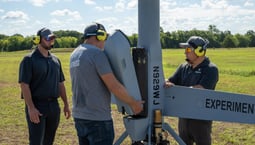
%203.jpg)

Shield AI Teams
.jpg)


Shield AI Offices
Hybrid Workspace
Employees engage in a combination of remote and on-site work.

