


The Staff Industrial Engineer, Sustainment Analytics, leads data-driven sustainment decisions by integrating maintenance, FRACAS, failure and repair, supply-chain, operational demand, configuration, labor, and fleet-trend data to identify drivers of downtime, maintenance burden, readiness risk, and lifecycle cost. The role translates these insights into structured analyses, defensible trade studies, and actionable recommendations that optimize maintenance levels, repair capability, spares, manpower, support equipment, processes, and sustainment strategy—improving fleet readiness, repair throughput, maintenance effectiveness, and total cost of ownership.
The engineer partners closely with Fleet Support Engineering, Reliability and Maintainability Engineering, Product Engineering, Reliability Data Engineering, Supply Chain, Manufacturing, Finance, and Operations to ensure sustainment decisions improve fleet availability, customer support, affordability, and long-term system performance.
What you'll do:
- Own sustainment decision analysis for fielded aircraft systems, including maintenance-level determinations; repair-versus-replace, repair-location, and repair-capability assessments; spares optimization; manpower analysis; and support-equipment trade studies.
- Build and maintain integrated fleet-readiness and availability models that link reliability, maintainability, maintenance demand, repair turnaround time, inventory and supply lead times, labor availability, operational utilization, repair capacity, and cost to readiness outcomes.
- Develop repair-versus-replace and repair-network business cases that assess discard, organizational/field-level repair, depot or centralized repair, supplier return, and redesign alternatives using repair yield, turnaround time, labor, test-equipment requirements, supply lead times, fleet impact, risk, and lifecycle cost.
- Analyze maintenance records, work orders, failure and repair history, supply and logistics data, labor data, and fleet operations data to identify recurring maintenance burdens, demand drivers, capacity constraints, bottlenecks, readiness risks, and high-value sustainment opportunities.
- Develop demand forecasts, spares recommendations, and provisioning strategies using failure rates, consumption history, repair turnaround times, operational tempo, lead times, service-level targets, and deployment requirements.
- Perform manpower, workload, capacity, and skill-mix analyses to define staffing needs, identify workload constraints and maintenance bottlenecks, and improve repair throughput and maintenance effectiveness.
- Evaluate investments in support equipment, test equipment, tooling, facilities, and repair capability by quantifying capacity, utilization, cost, risk reduction, readiness impact, return on investment, and total lifecycle value.
- Develop lifecycle-cost models and economic trade studies to inform sustainment planning, maintenance-program changes, provisioning decisions, repair-network strategy, and leadership investment decisions.
- Apply Pareto, trend, statistical, sensitivity, and scenario analyses to prioritize actions that improve fleet availability, reduce downtime, lower sustainment cost, and mitigate readiness risk.
- Translate complex analyses into clear recommendations, decision packages, executive-ready briefings, and prioritized action plans for sustainment leadership and cross-functional stakeholders.
- Establish repeatable sustainment analytics processes, including data standards, modeling methods, decision criteria, assumptions management, and lessons-learned feedback loops; mature the capability toward predictive maintenance, condition-based maintenance, and proactive fleet-health decision support.
Required qualifications:
- Bachelor’s degree in Industrial Engineering, Systems Engineering, Operations Research, Data Analytics, or a related technical discipline; equivalent practical experience considered.
- 5+ years of experience in industrial engineering, sustainment, logistics, supportability, maintenance, operations research, fleet operations, aviation sustainment, defense logistics, or other complex hardware-support environments.
- Demonstrated experience using maintenance, reliability, repair, inventory, supply-chain, production, fleet-operations, or fielded-hardware data to develop quantitative analyses and recommendations related to availability, readiness, repair capability, logistics, labor, capacity, cost, and operational performance.
- Experience performing repair-versus-replace, make-versus-buy, repair-capability, or comparable sustainment trade studies; able to build structured models, quantify assumptions, conduct sensitivity analyses, compare alternatives, and communicate uncertainty and risk.
- Proficiency with SQL, Python, Power BI, Tableau, Excel, R, MATLAB, or comparable tools for data analysis, modeling, visualization, and reporting.
- Ability to integrate technical, operational, supply-chain, labor, and financial inputs into practical, data-driven recommendations for complex sustainment decisions while balancing analytical rigor, data limitations, operational urgency, customer impact, fleet readiness, cost, and long-term sustainment needs.
- Strong cross-functional collaboration and communication skills, including the ability to work with engineering, fleet support, supply chain, manufacturing, finance, operations, and analytics teams; develop clear decision packages, technical analyses, recommendations, and leadership-level summaries; and independently drive decisions without direct authority.
Preferred qualifications:
- Familiarity with aviation, defense, aerospace manufacturing, unmanned systems, aircraft sustainment and deployed hardware systems.
- Familiarity with RCCA, FRACAS, PQDR, AS9100, service bulletins, maintenance releases, supply chain and workforce management.
- Proficiency with data analysis and visualization tools such as SQL, Excel, Python, Salesforce, Foundry, or similar platforms.
- Demonstrated ability to collect, clean, join, and structure data from multiple operational, maintenance, failure, or quality systems.
- Experience developing metrics, dashboards, or recurring reports that improved decision-making, increased visibility, or reduced manual reporting effort.
- Demonstrated success identifying and correcting data-quality, traceability, or reporting issues before they affected technical or business decisions.
- Ability to translate complex data into clear, decision-ready information for technical and non-technical audiences.
- Experience supporting military, government, international, or deployed aviation customers.
- Familiarity with ITAR, export-controlled technical data, or controlled customer environments.
- Active Secret or Top Secret clearance.
Skills Required
- Bachelor's degree in Industrial Engineering, Systems Engineering, Operations Research, Data Analytics, or a related technical discipline; equivalent practical experience may be considered.
- 5+ years of experience in industrial engineering, sustainment, logistics, supportability, maintenance, operations research, fleet operations, aviation sustainment, defense logistics, or complex hardware-support environments.
- Experience using maintenance, reliability, repair, inventory, supply-chain, production, fleet-operations, or fielded-hardware data to develop quantitative analyses and recommendations.
- Experience performing repair-versus-replace, make-versus-buy, repair-capability, or comparable sustainment trade studies.
- Ability to build structured models, quantify assumptions, conduct sensitivity analyses, compare alternatives, and communicate uncertainty and risk.
- Proficiency with SQL, Python, Power BI, Tableau, Excel, R, MATLAB, or comparable tools.
- Ability to integrate technical, operational, supply-chain, labor, and financial inputs into data-driven recommendations.
- Strong cross-functional collaboration and communication skills, including leadership-level summaries and independent decision-making.
- Familiarity with aviation, defense, aerospace manufacturing, unmanned systems, aircraft sustainment, or deployed hardware systems.
- Familiarity with RCCA, FRACAS, PQDR, AS9100, service bulletins, maintenance releases, supply-chain, or workforce management.
- Proficiency with SQL, Excel, Python, Salesforce, Foundry, or similar data-analysis and visualization platforms.
- Experience collecting, cleaning, joining, and structuring data from operational, maintenance, failure, or quality systems.
- Experience developing metrics, dashboards, or recurring reports that improved decision-making or reduced manual reporting effort.
- Experience identifying and correcting data-quality, traceability, or reporting issues.
- Ability to translate complex data into decision-ready information for technical and non-technical audiences.
- Experience supporting military, government, international, or deployed aviation customers.
- Familiarity with ITAR, export-controlled technical data, or controlled customer environments.
- Active Secret or Top Secret clearance.
What the Team is Saying


Shield AI Compensation & Benefits Highlights
-
Healthcare Strength — Company materials highlight comprehensive medical, dental, and vision coverage with mental-health support and an EAP. Third-party benefits summaries also portray health coverage as a strong component of the package.
-
Retirement Support — Offerings include a 401(k) with employer matching, cited on the careers page and independent benefits directories. Multiple sources indicate a match exists, though exact formulas have varied over time and warrant confirmation.
-
Equity Value & Accessibility — Company communications describe equity for all full-time hires and stock benefits as part of total rewards. Independent listings also note company equity/RSUs as a standard element.
Shield AI Insights

What We Do
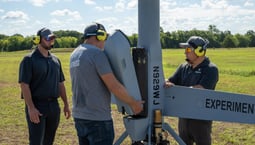
At Shield AI, you won't wait years to see your work reach the field. You'll build hardware and software that operates in the real world right now, in the hands of the people who depend on it. Hivemind, our AI pilot, has been flying since 2018. It has flown more than 30 platforms, including an F-16, and it now sits under a U.S. Air Force production contract for Collaborative Combat Aircraft. When you write code or shape a system here, you contribute to technology with a proven flight record and a clear production future. V-BAT flies intelligence, surveillance, and reconnaissance missions with an operational record that stretches from Ukraine to the Indo-Pacific. It delivers eyes where they matter most, in the most demanding conditions on earth. The teams behind it watch their work get tested where the stakes are real. X-BAT takes its first flight this year. It's an AI-piloted fighter that needs no runway, built to operate where traditional aircraft can't. Join now and you help shape a program at its earliest, most formative stage. That's the kind of ground-floor work that defines a career. Do the most impactful work of your life, on problems that matter. Autonomy at this level asks a lot of you. You'll take on problems in perception, planning, and control that few teams anywhere are equipped to solve. You'll work across disciplines, from aerospace and robotics to machine learning and systems engineering, alongside people who hold themselves to an exacting standard and expect the same from you. Our mission is clear: protect service members and civilians with intelligent systems. That purpose runs through every decision, every design review, and every deployment. It's why the work here carries a weight you can feel. Ready to join our mission? Explore our open roles and find where you fit.
Why Work With Us
Founded in 2015 by a former Navy SEAL, Shield AI builds AI pilots and uncrewed aircraft. Veterans aren't an afterthought here, they're at every level. It's why the work carries weight: AI pilots and uncrewed aircraft flying real missions, from Ukraine to the Indo-Pacific, protecting service members and civilians.
Gallery
%203.jpg)

Shield AI Teams
.jpg)


Shield AI Offices
Hybrid Workspace
Employees engage in a combination of remote and on-site work.

