Responsibilities
- Design and implement software systems that turn raw clinical, lab, and operational data into reliable, analysis-ready datasets
- Partner with scientists, clinicians, lab operations, and data teams to understand data generation, transformation, and usage needs
- Develop services, libraries, data models, and workflow components that enforce data integrity, access control, and compliance by design
- Navigate complex data requirements such as schema evolution, blinding, consent, and privacy compliance
- Collaborate on cross-functional initiatives involving data quality, testing strategy, monitoring, and operational excellence
- Lead software engineering efforts for long-lived systems that must evolve alongside active clinical and research programs
- Mentor engineers and collaborate with scientists to ensure software decisions support both technical and scientific outcomes
- [Contribute to documentation, onboarding materials, and processes that support cross-functional adoption and data literacy across teams]
- [Participate in incident response or investigation processes related to data quality or availability issues in production systems]
Required Qualifications
- 7+ years of experience building production-grade software systems
- Strong software engineering fundamentals, including system design, data modeling, API design, and writing well-tested production code.
- Experience building and operating data-intensive software systems, not just declarative pipelines or SQL-only workflows
- Proficiency in Go or Python (or similar general-purpose language)
- Experience with data modeling, validation, and transforming real-world data into usable formats
- BS in Computer Science, Engineering or Bioinformatics, or a related field, or equivalent practical experience
Preferred Qualifications
- 2+ years experience working in regulated or clinical data environments (e.g., HIPAA, CLIA, GCP, FDA compliance)
- Direct experience working with or supporting scientific teams (e.g., bioinformatics, wet lab, clinical research)
- Experience designing systems that manage laboratory or bioinformatics data (e.g., LIMS, sequencing pipelines, assay metadata)
- Familiarity with GxP practices and regulatory reporting requirements in clinical studies is a plus
- Prior experience working in biotech, diagnostics, or life sciences companies
- Experience supporting sample tracking, structured scientific data pipelines, or cross-functional data lifecycle management
- Experience designing systems with data sequestration, permissioning, or privacy controls
- Experience writing or contributing to software libraries, shared tooling, or reusable components used by other teams
- Advanced degree (MS or PhD) in computer science, engineering, bioinformatics or a related discipline
What the Team is Saying


.JPG)




.JPG)


GRAIL Compensation & Benefits Highlights
-
Healthcare Strength — Multiple medical plan options, comprehensive medical/dental/vision coverage, and strong mental health programs are described, with employer HSA contributions up to $3,000 for the HDHP. These elements indicate a well‑rounded health offering.
-
Leave & Time Off Breadth — Flexible time off is highlighted, with examples of unlimited/FTO policies working well in practice. Paid holidays and company winter breaks further support time away from work.
-
Equity Value & Accessibility — New‑hire equity grants that vest over four years and a discounted Employee Stock Purchase Plan are positioned as meaningful parts of total compensation. Ongoing eligibility for additional equity is also noted.
GRAIL Insights
Similar Jobs
.png)

What We Do
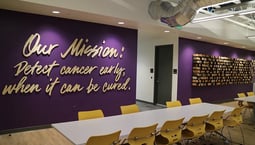
GRAIL is a healthcare company whose mission is to detect cancer early, when it can be cured. GRAIL is using the power of high-intensity sequencing, population-scale clinical studies, and state-of-the-art computer science and data science to enhance the scientific understanding of cancer biology, and to develop and commercialize pioneering products.
Why Work With Us
Everything we do is guided by our mission to detect cancer early, when it can be cured. It’s the reason we’re here, and it’s no small task. The right people make all the difference. That’s why we’re looking for those who strive to share their knowledge, contribute their skills, inspire each other and commit to something bigger than themselves.
Gallery



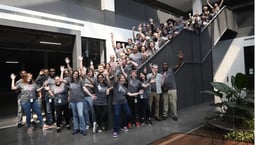



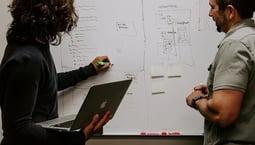

GRAIL Offices
Hybrid Workspace
Employees engage in a combination of remote and on-site work.
GRAIL has a variety of work types depending on the roles. Some roles are onsite like a lab role, some are fully remote like our Galleri Sales Consultant roles. Others are hybrid with 2-3 days onsite. Typically Tuesday and Thursday.