


This role is for a Computer Vision C++ Engineer to support the development of real-time perception capabilities for Shield AI's autonomous systems.
The Computer Vision Engineer will be responsible for designing, developing, and integrating advanced computer vision algorithms into high-performance C++ software pipelines. The role will focus on building custom perception capabilities from the ground up, with an emphasis on real-time performance, reliability, and deployment in edge compute environments. This position is required to increase the team's capacity and technical depth in real-time computer vision, image processing, and applied machine learning.
The successful candidate will bring strong C++ software engineering skills, experience developing high-performance or real-time systems, and a deep understanding of computer vision fundamentals. They should be capable of translating research concepts into deployable software and comfortable working on bespoke algorithms rather than relying only on existing libraries. Experience with areas such as visual SLAM, visual odometry, target tracking, feature detection and matching, 3D reconstruction, state estimation, sensor fusion, or real-time mapping would be highly valuable.
The role will also support the development of tracking and spatial perception pipelines for autonomous systems, including applications such as visual localization, motion estimation, scene reconstruction, landmark tracking, map building, and perception-assisted navigation. Familiarity with SLAM frameworks, probabilistic estimation, optimization, bundle adjustment, feature-based and direct methods, and deployment of real-time perception algorithms into C++ edge environments would be beneficial. Candidates with a Master's or PhD in Computer Science, Engineering, Robotics, Computer Vision, Autonomous Systems, or a related field would be well aligned with the technical needs of the team, though strong applied industry experience is also highly relevant.
Required qualifications:
- Degree in Computer Vision, Computer Science, Engineering, or related technical field.
- Deep proficiency in C++, with proven experience developing software in high-performance, real-time environments.
- Demonstrated experience designing and implementing custom computer vision algorithms from scratch, rather than exclusively applying existing libraries.
- Solid foundational understanding of computer vision, image processing, and machine learning principles.
- Strong software engineering fundamentals, including data structures, algorithms, performance optimization, and version control.
- Proven ability to own technical work from ambiguous requirements through algorithm design, implementation, integration, and delivery.
- Ability to collaborate effectively with multidisciplinary cross-functional teams, including AI experts, robotics engineers, and optical engineers, to deliver reliable edge solutions.
Preferred qualifications:
- Master’s or PhD in Computer Science, Engineering, or a related field.
- Experience with object detection, target tracking, 3D reconstruction, SLAM, camera calibration, or behaviour analysis.
- Background in automated video surveillance or other related real-time vision systems.
- Familiarity with industry-standard vision toolkits, such as OpenCV.
- Exposure to deep learning methodologies for image classification, recognition, or sequence modelling.
- Practical experience integrating deep learning models into broader computer vision systems for real-time deployment scenarios.
- Previous experience in the Defence sector, autonomous unmanned systems, or similar mission-critical domains.
Skills Required
- Degree in Computer Vision, Computer Science, Engineering, or related technical field.
- Deep proficiency in C++, with proven experience developing software in high-performance, real-time environments.
- Demonstrated experience designing and implementing custom computer vision algorithms from scratch.
- Solid foundational understanding of computer vision, image processing, and machine learning principles.
- Strong software engineering fundamentals, including data structures, algorithms, performance optimization, and version control.
- Proven ability to own technical work from ambiguous requirements through algorithm design, implementation, integration, and delivery.
- Ability to collaborate effectively with multidisciplinary cross-functional teams, including AI experts, robotics engineers, and optical engineers.
- Experience with visual SLAM, visual odometry, target tracking, feature detection and matching, 3D reconstruction, state estimation, sensor fusion, or real-time mapping.
- Master's or PhD in Computer Science, Engineering, Robotics, Computer Vision, Autonomous Systems, or related field.
- Familiarity with SLAM frameworks, probabilistic estimation, optimization, bundle adjustment, feature-based and direct methods, and deploying real-time perception into C++ edge environments.
- Familiarity with industry-standard vision toolkits, such as OpenCV.
- Exposure to deep learning methodologies and integrating deep learning models into real-time vision systems.
- Background or prior experience in the defence sector, autonomous unmanned systems, or mission-critical real-time vision systems.
What the Team is Saying


What We Do
At Shield AI, you won't wait years to see your work reach the field. You'll build hardware and software that operates in the real world right now, in the hands of the people who depend on it. Hivemind, our AI pilot, has been flying since 2018. It has flown more than 30 platforms, including an F-16, and it now sits under a U.S. Air Force production contract for Collaborative Combat Aircraft. When you write code or shape a system here, you contribute to technology with a proven flight record and a clear production future. V-BAT flies intelligence, surveillance, and reconnaissance missions with an operational record that stretches from Ukraine to the Indo-Pacific. It delivers eyes where they matter most, in the most demanding conditions on earth. The teams behind it watch their work get tested where the stakes are real. X-BAT takes its first flight this year. It's an AI-piloted fighter that needs no runway, built to operate where traditional aircraft can't. Join now and you help shape a program at its earliest, most formative stage. That's the kind of ground-floor work that defines a career. Do the most impactful work of your life, on problems that matter. Autonomy at this level asks a lot of you. You'll take on problems in perception, planning, and control that few teams anywhere are equipped to solve. You'll work across disciplines, from aerospace and robotics to machine learning and systems engineering, alongside people who hold themselves to an exacting standard and expect the same from you. Our mission is clear: protect service members and civilians with intelligent systems. That purpose runs through every decision, every design review, and every deployment. It's why the work here carries a weight you can feel. Ready to join our mission? Explore our open roles and find where you fit.
Why Work With Us
Founded in 2015 by a former Navy SEAL, Shield AI builds AI pilots and uncrewed aircraft. Veterans aren't an afterthought here, they're at every level. It's why the work carries weight: AI pilots and uncrewed aircraft flying real missions, from Ukraine to the Indo-Pacific, protecting service members and civilians.
Gallery
%203.jpg)

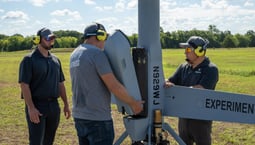
Shield AI Teams
.jpg)


Shield AI Offices
Hybrid Workspace
Employees engage in a combination of remote and on-site work.

