


Shield AI develops AI-powered autonomy software and aircraft systems that protect service members and civilians by enabling intelligent operations in contested environments. As part of the X-BAT program, you will help develop and validate next-generation autonomous aircraft and mission-critical hardware that must perform reliably in demanding operational conditions.
Job Description:Shield AI is seeking a Manager, Mechanical Engineering to lead the mechanical hardware-test team supporting X-BAT. The team develops and sustains the test stands, fixtures, tooling, support equipment, and facility interfaces used to validate mission-critical aircraft hardware across development, integration, qualification, and production.
You will be accountable for the team's people, technical direction, operating model, and delivery across a portfolio of test-equipment projects. You will translate program and verification priorities into a clear roadmap, build the capacity needed to execute it, and establish the engineering standards that make test systems safe, repeatable, maintainable, and ready for sustained use.
The ideal candidate combines strong mechanical and test-equipment judgment with demonstrated people leadership. You know how to grow engineers, manage competing priorities, make sound technical tradeoffs, and scale a hardware capability from rapid prototype work into disciplined, configuration-controlled operations. You remain close enough to the hardware to guide architecture, lead critical reviews, and help the team resolve its hardest problems.
What you'll do:
- Lead, coach, and grow a team of mechanical engineers responsible for X-BAT hardware-test equipment; set clear expectations and provide regular feedback, career development, performance management, hiring, and onboarding.
- Own the mechanical hardware-test roadmap and delivery portfolio across development, subsystem integration, qualification, and production-test needs.
- Convert program milestones and verification needs into executable plans with clear scope, priorities, staffing, schedule, dependencies, decision owners, and risk-reduction actions.
- Manage team capacity and workload across concurrent test campaigns; identify resource gaps and communicate staffing, schedule, budget, and technical tradeoffs with transparency.
- Set the quality bar for requirements, concepts, design reviews, analysis, GD&T, tolerance analysis, DFM/DFA, drawing and model release, configuration control, validation, acceptance, and sustaining documentation.
- Ensure test stands and fixtures are safe, repeatable, maintainable, serviceable, and efficient for operators while meeting structural, thermal, durability, environmental, and facility-interface requirements.
- Serve as the senior mechanical escalation point for test-equipment architecture, load paths, materials, mechanisms, mounting, cooling, plumbing, instrumentation accommodation, guarding, and other hazards or interfaces.
- Establish and use meaningful operating metrics such as schedule predictability, design-review closure, first-pass checkout, equipment uptime, recurring failures, corrective-action closure, and reuse of proven designs.
- Drive standardization and reuse across test assets, including common design practices, modular hardware, documentation, checkout methods, and maintenance strategies.
- Partner with test, electrical, avionics, systems, manufacturing, quality, facilities, supply chain, technicians, and program leadership to resolve interfaces and deliver integrated test capability when it is needed.
- Oversee fabrication, procurement, assembly, commissioning, and sustainment strategies with internal shops and external suppliers; make informed make-versus-buy and schedule-risk decisions.
- Lead high-impact root-cause investigations and corrective actions involving test equipment or units under test, ensuring lessons learned improve future designs and team practices.
- Build a culture of technical rigor, urgency, ownership, candid communication, and safe hands-on execution.
Required qualifications:
- B.S. in Mechanical Engineering or a related STEM discipline.
- 8+ years of relevant experience developing complex mechanical hardware, test equipment, tooling, fixtures, or ground-support equipment in aerospace, defense, robotics, automotive, industrial systems, or another high-consequence environment.
- 2+ years of direct people-management experience, including goal setting, work allocation, coaching, performance management, hiring, and developing engineers.
- Demonstrated success leading a team or function through the design, release, fabrication, assembly, checkout, deployment, and sustainment of multiple complex hardware systems.
- Strong mechanical engineering fundamentals, including statics and dynamics, load paths, strength and stiffness, fatigue and durability, materials and finishes, fastener design, tolerancing, GD&T, and machine or fixture safety.
- Experience establishing engineering standards and leading effective requirements, architecture, and design reviews.
- Proficiency with an industry-standard CAD and product-lifecycle or release workflow such as NX, SolidWorks, CATIA, Teamcenter, or an equivalent toolset.
- Experience managing a multi-project technical roadmap, balancing resources and priorities, and communicating risk and tradeoffs to program and engineering leadership.
- Hands-on judgment developed in lab, prototype, manufacturing, or production environments, including collaboration with technicians, machinists, suppliers, and test operators.
- Excellent written and verbal communication skills with a record of building alignment across engineering, operations, and program organizations.
Preferred qualifications:
- Experience developing and sustaining aerospace ground-test or production-test equipment for avionics, propulsion, structures, actuation, power systems, or other flight-critical hardware.
- Experience with environmental or qualification testing, including vibration, shock, thermal, pressure, contamination, or durability testing and the facility interfaces those tests require.
- Experience with high-load structural fixtures, rotating equipment, fluid systems, thermal-management hardware, or propulsion-related test equipment.
- Working knowledge of analysis tools such as ANSYS, Abaqus, Nastran, or equivalent methods used to support test-equipment design decisions.
- Experience with system-safety and reliability practices such as hazard analysis, DFMEA, FTA, proof-load testing, guarding, interlocks, or safe-state design.
- Experience improving equipment uptime, throughput, repeatability, maintainability, calibration, traceability, or configuration control in a production or qualification environment.
- Experience developing capital-equipment plans and managing fabrication partners or equipment suppliers.
- Active secret clearance or eligibility to obtain one, as well as SCI eligibility.
Skills Required
- B.S. in Mechanical Engineering or related engineering discipline
- 5+ years of experience designing mechanical systems, test equipment, aerospace hardware, or electromechanical systems
- Proficiency with CAD software such as NX, SolidWorks, CATIA, or Creo
- Experience creating engineering drawings and releasing designs for fabrication and assembly
- Strong understanding of mechanical design fundamentals, materials, manufacturing processes, GD&T, and tolerance analysis
- Experience designing fixtures, tooling, test stands, or ground support equipment
- Hands-on experience building, integrating, and troubleshooting mechanical or electromechanical systems
- Strong analytical and problem-solving skills with ability to work independently on moderately complex projects
- Ability to thrive in a fast-paced development environment with evolving priorities
- Experience supporting aerospace, defense, robotics, automotive, or autonomous systems programs
- Experience with finite element analysis (FEA) tools such as ANSYS, Abaqus, or Nastran
- Familiarity with environmental, vibration, thermal, and durability testing methods
- Experience working with instrumentation, sensors, and data acquisition systems
- Familiarity with aerospace qualification standards such as MIL-STD-810 or DO-160
- Experience designing field-deployable or ruggedized test equipment
What the Team is Saying


Shield AI Compensation & Benefits Highlights
-
Healthcare Strength — Company materials highlight comprehensive medical, dental, and vision coverage with mental-health support and an EAP. Third-party benefits summaries also portray health coverage as a strong component of the package.
-
Retirement Support — Offerings include a 401(k) with employer matching, cited on the careers page and independent benefits directories. Multiple sources indicate a match exists, though exact formulas have varied over time and warrant confirmation.
-
Equity Value & Accessibility — Company communications describe equity for all full-time hires and stock benefits as part of total rewards. Independent listings also note company equity/RSUs as a standard element.
Shield AI Insights

What We Do
At Shield AI, you won't wait years to see your work reach the field. You'll build hardware and software that operates in the real world right now, in the hands of the people who depend on it. Hivemind, our AI pilot, has been flying since 2018. It has flown more than 30 platforms, including an F-16, and it now sits under a U.S. Air Force production contract for Collaborative Combat Aircraft. When you write code or shape a system here, you contribute to technology with a proven flight record and a clear production future. V-BAT flies intelligence, surveillance, and reconnaissance missions with an operational record that stretches from Ukraine to the Indo-Pacific. It delivers eyes where they matter most, in the most demanding conditions on earth. The teams behind it watch their work get tested where the stakes are real. X-BAT takes its first flight this year. It's an AI-piloted fighter that needs no runway, built to operate where traditional aircraft can't. Join now and you help shape a program at its earliest, most formative stage. That's the kind of ground-floor work that defines a career. Do the most impactful work of your life, on problems that matter. Autonomy at this level asks a lot of you. You'll take on problems in perception, planning, and control that few teams anywhere are equipped to solve. You'll work across disciplines, from aerospace and robotics to machine learning and systems engineering, alongside people who hold themselves to an exacting standard and expect the same from you. Our mission is clear: protect service members and civilians with intelligent systems. That purpose runs through every decision, every design review, and every deployment. It's why the work here carries a weight you can feel. Ready to join our mission? Explore our open roles and find where you fit.
Why Work With Us
Founded in 2015 by a former Navy SEAL, Shield AI builds AI pilots and uncrewed aircraft. Veterans aren't an afterthought here, they're at every level. It's why the work carries weight: AI pilots and uncrewed aircraft flying real missions, from Ukraine to the Indo-Pacific, protecting service members and civilians.
Gallery
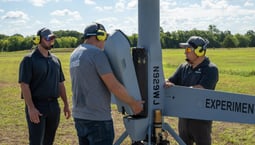


Shield AI Teams


Shield AI Offices
Hybrid Workspace
Employees engage in a combination of remote and on-site work.

