


What You'll Do
- Develop and enhance radar sensor models for use in simulation and evaluation of aeronautical vehicles.
- Translate theoretical models into efficient, reliable C++ implementations with a focus on numerical accuracy and performance.
- Validate models against real-world data and authoritative references, including field test data and calibration procedures.
- Collaborate with simulation and training application teams to ensure models integrate cleanly into operator-facing tools.
- Design automated validation and regression testing strategies for mathematical models to ensure fidelity across releases.
- Prototype and evaluate new modeling techniques (reduced-order models, uncertainty quantification, machine learning–based surrogates) to push the state of the art.
- Document assumptions, equations, and validation results so that both engineers and operators can trust model outputs.
Required Qualifications
- BS or higher in Aerospace Engineering, Applied Math, Physics, or related field with 5+ years of aerospace modeling experience.
- C++ foundation with experience implementing numerical methods.
- Demonstrated experience with aerospace models such as: Radar sensors, Radio communications systems
- Experience validating simulations against real-world or experimental data.
- Ability to write clear documentation explaining assumptions, limitations, and expected behaviors of models.
- Ability to obtain a S//SAR level security clearance desired.
Preferred Qualifications
- 1+ years of experience working on pilot/operator training systems.
- Experience with Eigen or SciPy for model prototyping and validation.
- Familiarity with state estimation sensor models (GPS, IMU, Gyro, etc) for simulation environments.
- Demonstrated experience with payload sensor models including: Laser senros, IR and optical cameras
- Knowledge of uncertainty quantification and statistical analysis methods.
- Experience with parallelization or GPU acceleration for compute-heavy models.
- Strong problem-solving mindset with a collaborative and detail-oriented approach.
- Familiarity with Python for test automation and data analysis pipelines.
- Passion for aerospace and autonomous vehicle systems.
Skills Required
- BS or higher in Aerospace Engineering, Applied Math, Physics, or related field with 5+ years of aerospace modeling experience
- C++ foundation with experience implementing numerical methods
- Demonstrated experience with aerospace models such as radar sensors and radio communications systems
- Experience validating simulations against real-world or experimental data
- Ability to write clear documentation explaining assumptions, limitations, and expected behaviors of models
- Ability to obtain a S//SAR level security clearance
- 1+ years of experience working on pilot/operator training systems
- Experience with Eigen or SciPy for model prototyping and validation
- Familiarity with state estimation sensor models (GPS, IMU, Gyro) for simulation environments
- Experience with payload sensor models including laser sensors, IR and optical cameras
- Knowledge of uncertainty quantification and statistical analysis methods
- Experience with parallelization or GPU acceleration for compute-heavy models
- Familiarity with Python for test automation and data analysis pipelines
What the Team is Saying


Shield AI Compensation & Benefits Highlights
-
Healthcare Strength — Company materials describe excellent medical, dental, and vision coverage alongside a mental‑health EAP. Site perks such as an onsite gym in DC and a gym discount in San Diego support a health‑focused offering.
-
Retirement Support — Careers materials highlight a 401(k) with company match as part of the standard package. A Total Rewards overview emphasizes retirement features within a broader, transparent compensation view.
-
Career-Linked Recognition & Rewards — Compensation for in‑demand technical and senior go‑to‑market roles is described as competitive, with visible engineering ranges and top‑end packages. This points to meaningful upside tied to role, level, and scarce skills.
Shield AI Insights

What We Do
Founded in 2015, Shield AI is a venture-backed deep-tech company with the mission of protecting service members and civilians with intelligent systems. Its products include the V-BAT and X-BAT aircraft, Hivemind Enterprise, and the Hivemind Vision product lines. With offices and facilities across the U.S., Europe, the Middle East, and the Asia-Pacific, Shield AI’s technology actively supports operations worldwide.
Why Work With Us
What makes Shield AI special is our people. We unlock the power of autonomy, and in the face of overwhelming odds and challenges, we find ways to win and make a difference for our customers. We bring together software, AI, and aerospace engineering disciplines to deploy the most intelligent aviation capabilities in the world.
Gallery
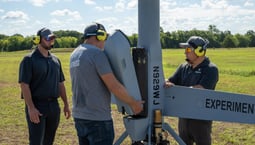
Shield AI Offices
Hybrid Workspace
Employees engage in a combination of remote and on-site work.
