


Shield AI develops intelligent autonomous systems that protect service members and civilians. The X-BAT Engineering team is building a next-generation autonomous aircraft for demanding and contested environments.
We are seeking a new-graduate RF Hardware Test Engineer to help verify RF modules, assemblies, and interfaces used in airborne and ground systems. Working alongside experienced engineers, you will build practical expertise in RF measurements, instrument automation, data analysis, troubleshooting, and qualification support. This role is centered on disciplined test execution and objective evidence rather than top-level RF system architecture.
This is an Engineer I (L1) position intended for candidates completing an undergraduate or graduate degree or beginning their professional career. Coursework, research, internships, student teams, and personal projects are all relevant ways to demonstrate readiness.
What you'll do:
- Execute documented RF test plans and procedures with mentorship, record test configurations, and produce clear, traceable results.
- Characterize RF modules and assemblies for S-parameters, gain and loss, output power, compression, harmonics and spurious emissions, isolation, rejection, noise figure, and receiver sensitivity as applicable.
- Set up and operate vector network analyzers, spectrum analyzers, signal generators, power meters, oscilloscopes, noise-figure equipment, programmable power supplies, and related laboratory instruments.
- Calibrate measurement setups and characterize cables, adapters, attenuators, fixtures, and other sources of measurement error.
- Develop simple test fixtures, harnesses, interface adapters, and monitoring circuits; perform basic soldering and hardware rework when appropriate.
- Automate instrument control, data collection, analysis, and plotting using Python, MATLAB, or comparable tools.
- Compare measured performance with requirements, identify unexpected behavior, and summarize conclusions in engineering reports and reviews.
- Troubleshoot test anomalies with senior engineers and learn to distinguish device behavior from setup, calibration, software, or environmental artifacts.
- Support EMI/EMC pre-compliance and MIL-STD-461 qualification testing, environmental testing, hardware integration, and ground or flight test activities as needed.
- Maintain safe, organized laboratory practices and follow equipment calibration, configuration-control, and data-management processes.
- Collaborate with RF, electrical, mechanical, systems, software, manufacturing, and supplier teams.
- Perform other duties as assigned.
Required qualifications:
- Bachelor's or master's degree in Electrical Engineering, Applied Physics, or a related technical field, completed or expected within 12 months of the anticipated start date.
- Coursework, research, project, or internship experience in RF or microwave engineering, communications, electromagnetics, analog circuits, or electronic hardware testing.
- Fundamental understanding of S-parameters, impedance, transmission lines, gain and loss, noise, power, spectral content, and frequency response.
- Hands-on laboratory experience gained through coursework, research, an internship, a student organization, or a personal project.
- Basic programming and data-analysis skills in Python, MATLAB, or a similar environment.
- Ability to follow test procedures, document setups and results accurately, recognize uncertainty, and ask for guidance when needed.
- Clear written and verbal communication skills and the ability to work constructively in a multidisciplinary team.
- Ability to work on-site in a laboratory and hardware-development environment.
Preferred qualifications:
- Experience using a vector network analyzer, spectrum analyzer, signal generator, power meter, oscilloscope, noise-figure analyzer, or programmable test equipment.
- Experience automating laboratory instruments or analyzing measurement data using Python, MATLAB, SCPI, or a comparable approach.
- Familiarity with RF simulation or design tools such as ADS, AWR, HFSS, or CST.
- Experience with PCB bring-up, soldering, RF connectors and cables, test fixtures, harnesses, or basic hardware rework.
- Exposure to EMI/EMC testing or MIL-STD-461 through coursework, research, an internship, or laboratory work.
- Exposure to environmental, qualification, reliability, or acceptance testing of electronic hardware.
- Experience on a university design team, research laboratory, internship, co-op, or project involving aerospace, defense, robotics, communications, or other high-reliability hardware.
- Ability to obtain an S//SAR level security clearance, if required by the program.
Skills Required
- Bachelor’s or master’s degree in Electrical Engineering, Applied Physics, or a related technical field, completed or expected within 12 months of start
- Coursework, research, project, or internship experience in RF or microwave engineering, communications, electromagnetics, analog circuits, or electronic hardware testing
- Fundamental understanding of S-parameters, impedance, transmission lines, gain and loss, noise, power, spectral content, and frequency response
- Hands-on laboratory experience from coursework, research, an internship, student organization, or personal project
- Basic programming and data-analysis skills in Python, MATLAB, or a similar environment
- Ability to follow test procedures, document setups and results accurately, recognize uncertainty, and seek guidance when needed
- Clear written and verbal communication skills and ability to work constructively in a multidisciplinary team
- Ability to work on-site in a laboratory and hardware-development environment
- Experience using RF laboratory instruments such as vector network analyzers, spectrum analyzers, signal generators, power meters, oscilloscopes, or noise-figure analyzers
- Experience automating laboratory instruments or analyzing measurement data using Python, MATLAB, SCPI, or comparable tools
- Familiarity with RF simulation or design tools such as ADS, AWR, HFSS, or CST
- Experience with PCB bring-up, soldering, RF connectors and cables, test fixtures, harnesses, or basic hardware rework
- Exposure to EMI/EMC testing or MIL-STD-461
- Exposure to environmental, qualification, reliability, or acceptance testing of electronic hardware
- Experience with aerospace, defense, robotics, communications, or other high-reliability hardware projects
- Ability to obtain an S//SAR-level security clearance if required by the program
What the Team is Saying


What We Do
At Shield AI, you won't wait years to see your work reach the field. You'll build hardware and software that operates in the real world right now, in the hands of the people who depend on it. Hivemind, our AI pilot, has been flying since 2018. It has flown more than 30 platforms, including an F-16, and it now sits under a U.S. Air Force production contract for Collaborative Combat Aircraft. When you write code or shape a system here, you contribute to technology with a proven flight record and a clear production future. V-BAT flies intelligence, surveillance, and reconnaissance missions with an operational record that stretches from Ukraine to the Indo-Pacific. It delivers eyes where they matter most, in the most demanding conditions on earth. The teams behind it watch their work get tested where the stakes are real. X-BAT takes its first flight this year. It's an AI-piloted fighter that needs no runway, built to operate where traditional aircraft can't. Join now and you help shape a program at its earliest, most formative stage. That's the kind of ground-floor work that defines a career. Do the most impactful work of your life, on problems that matter. Autonomy at this level asks a lot of you. You'll take on problems in perception, planning, and control that few teams anywhere are equipped to solve. You'll work across disciplines, from aerospace and robotics to machine learning and systems engineering, alongside people who hold themselves to an exacting standard and expect the same from you. Our mission is clear: protect service members and civilians with intelligent systems. That purpose runs through every decision, every design review, and every deployment. It's why the work here carries a weight you can feel. Ready to join our mission? Explore our open roles and find where you fit.
Why Work With Us
Founded in 2015 by a former Navy SEAL, Shield AI builds AI pilots and uncrewed aircraft. Veterans aren't an afterthought here, they're at every level. It's why the work carries weight: AI pilots and uncrewed aircraft flying real missions, from Ukraine to the Indo-Pacific, protecting service members and civilians.
Gallery
%203.jpg)

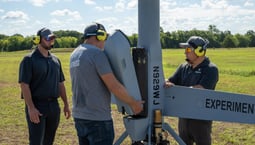
Shield AI Teams
.jpg)


Shield AI Offices
Hybrid Workspace
Employees engage in a combination of remote and on-site work.

