


Shield AI is seeking a Reliability Analyst to transform fleet failure, maintenance, and operational data into trusted insights that improve aircraft reliability, availability, and readiness.
This role owns the reliability data and reporting foundation for the Aircraft Operations Division’s Sustainment and Product Health organization. The Reliability Analyst will establish accurate, traceable, and configuration-aware data; identify emerging failure trends and top fleet degraders; and provide Engineering, Quality, Fleet Support, and leadership with the information needed to prioritize corrective action.
Success in this role means improving the quality and timeliness of reliability data, reducing manual reporting effort, giving stakeholders earlier visibility into recurring issues, and providing objective evidence that corrective actions are improving fleet performance.
The Reliability Analyst owns the reliability data domain, including FRACAS data quality, failure and degrader trending, reliability and maintainability metrics, and reliability-specific reporting. The role partners with Reliability and Maintainability Engineering, Configuration and Change Control, Sustainment Analytics, Quality, Fleet Support, Material Review Board Engineering, and Obsolescence and Lifecycle Management. These teams retain ownership of technical investigations, configuration baselines, enterprise reporting, hardware dispositions, and lifecycle decisions.
What You'll Do:
Build and maintain a trusted, configuration-aware reliability dataset that connects fleet operational data, maintenance activity, field failures, FRACAS records, and returned-material information.
Improve the completeness, consistency, traceability, and usability of reliability records against established data-quality standards.
Calculate and publish reliability and maintainability metrics, including MTBF, MTTR, failure rate, operational availability, and readiness impact.
Establish repeatable reporting packages for fleet health reviews, reliability readouts, FRACAS reviews, and top-degrader discussions.
Analyze failure and maintenance data to identify emerging trends, recurring defects, and candidate top degraders before they materially affect fleet readiness.
Build and maintain reliability-specific dashboards that reduce manual data preparation and provide stakeholders with timely, decision-ready information.
Provide Reliability and Maintainability Engineering with prioritized, data-supported candidates for technical investigation and root cause analysis.
Track corrective action status and post-implementation performance to determine whether completed actions are improving reliability, maintainability, availability, or readiness.
Provide Fleet Support, Quality, and Engineering with historical trends, failure frequency, maintenance burden, and configuration-aware data to support investigations and decisions.
Provide curated reliability data to Sustainment Analytics for use in broader fleet health and executive reporting.
Partner with Configuration and Change Control to associate reliability records with the correct serial numbers, hardware revisions, software versions, payloads, and customer configurations while treating the as-maintained baseline as the system of record.
Partner with Material Review Board Engineering to incorporate returned-material and disposition status into reliability reporting.
Flag components with increasing failure rates, recurring defects, or growing repair burden to Reliability and Maintainability Engineering and Obsolescence and Lifecycle Management.
Identify and resolve data-quality gaps, reporting blind spots, and automation opportunities within the reliability data pipeline.
Document reliability data definitions, metric calculations, reporting standards, and processes to ensure the reporting function is consistent, auditable, and scalable as the fleet grows.
Required Qualifications:
Bachelor’s degree in Industrial Engineering, Statistics, Data Science, Mathematics, Systems Engineering, or a related quantitative discipline, or equivalent practical experience.
2+ years of experience in reliability analysis, maintenance analytics, quality reporting, product health, or a related data role supporting complex hardware.
Demonstrated ability to collect, clean, join, and structure data from multiple operational, maintenance, failure, or quality systems.
Experience developing metrics, dashboards, or recurring reports that improved decision-making, increased visibility, or reduced manual reporting effort.
Demonstrated success identifying and correcting data-quality, traceability, or reporting issues before they affected technical or business decisions.
Proficiency with data analysis and visualization tools such as SQL, Excel, Python, Salesforce, Foundry, or similar platforms.
Working knowledge of reliability and maintainability metrics, including MTBF, MTTR, failure rate, and operational availability.
Experience working with structured systems such as FRACAS, maintenance databases, failure-tracking tools, quality systems, or service-management platforms.
Ability to identify and communicate meaningful trends while distinguishing data-supported observations from engineering root cause conclusions.
Ability to translate complex data into clear, decision-ready information for technical and non-technical audiences.
Strong attention to detail, organization, and data-quality discipline.
Ability to manage recurring reporting cadences, competing priorities, and ad hoc analytical requests in a fast-paced, fielded-product environment.
Preferred Qualifications:
Experience improving reliability, maintenance, quality, or fleet-health reporting for aircraft, UAS, defense systems, robotics, or other mission-critical hardware.
Demonstrated experience identifying an emerging product or fleet degrader through data analysis and supporting the organization’s response.
Experience measuring the effectiveness of corrective actions using post-implementation performance data.
Familiarity with FRACAS, Root Cause and Corrective Action, FMEA, Weibull analysis, reliability growth, or related reliability methods.
Experience building dashboards or analytical environments for fleet health, operational availability, readiness, failure trends, or maintenance burden.
Familiarity with configuration-controlled or as-maintained product data.
Experience using statistical or reliability-analysis tools such as Minitab, JMP, ReliaSoft, or similar software.
Familiarity with military, government, defense aviation, or complex-hardware sustainment environments.
Familiarity with ITAR, export-controlled technical data, or controlled customer environments.
Active Secret or Top Secret clearance preferred, or ability to obtain one.
Skills Required
- Bachelor's degree in Industrial Engineering, Statistics, Data Science, Mathematics, Systems Engineering, or a related quantitative discipline, or equivalent practical experience.
- 2+ years of experience in reliability analysis, maintenance analytics, quality reporting, product health, or a related data role supporting complex hardware.
- Ability to collect, clean, join, and structure data from multiple operational, maintenance, failure, or quality systems.
- Experience developing metrics, dashboards, or recurring reports that improve decision-making, increase visibility, or reduce manual reporting effort.
- Experience identifying and correcting data-quality, traceability, or reporting issues before they affect technical or business decisions.
- Proficiency with data analysis and visualization tools such as SQL, Excel, Python, Salesforce, Foundry, or similar platforms.
- Working knowledge of reliability and maintainability metrics, including MTBF, MTTR, failure rate, and operational availability.
- Experience working with systems such as FRACAS, maintenance databases, failure-tracking tools, quality systems, or service-management platforms.
- Ability to identify and communicate meaningful trends while distinguishing data-supported observations from engineering root-cause conclusions.
- Ability to translate complex data into clear, decision-ready information for technical and non-technical audiences.
- Strong attention to detail, organization, and data-quality discipline.
- Ability to manage recurring reporting cadences, competing priorities, and ad hoc analytical requests in a fast-paced, fielded-product environment.
- Experience improving reliability, maintenance, quality, or fleet-health reporting for aircraft, UAS, defense systems, robotics, or other mission-critical hardware.
- Experience identifying an emerging product or fleet degrader through data analysis and supporting the organization's response.
- Experience measuring corrective-action effectiveness using post-implementation performance data.
- Familiarity with FRACAS, Root Cause and Corrective Action, FMEA, Weibull analysis, reliability growth, or related reliability methods.
- Experience building dashboards or analytical environments for fleet health, operational availability, readiness, failure trends, or maintenance burden.
- Familiarity with configuration-controlled or as-maintained product data.
- Experience using Minitab, JMP, ReliaSoft, or similar statistical or reliability-analysis software.
- Familiarity with military, government, defense aviation, or complex-hardware sustainment environments.
- Familiarity with ITAR, export-controlled technical data, or controlled customer environments.
- Active Secret or Top Secret clearance, or ability to obtain one.
What the Team is Saying


What We Do
At Shield AI, you won't wait years to see your work reach the field. You'll build hardware and software that operates in the real world right now, in the hands of the people who depend on it. Hivemind, our AI pilot, has been flying since 2018. It has flown more than 30 platforms, including an F-16, and it now sits under a U.S. Air Force production contract for Collaborative Combat Aircraft. When you write code or shape a system here, you contribute to technology with a proven flight record and a clear production future. V-BAT flies intelligence, surveillance, and reconnaissance missions with an operational record that stretches from Ukraine to the Indo-Pacific. It delivers eyes where they matter most, in the most demanding conditions on earth. The teams behind it watch their work get tested where the stakes are real. X-BAT takes its first flight this year. It's an AI-piloted fighter that needs no runway, built to operate where traditional aircraft can't. Join now and you help shape a program at its earliest, most formative stage. That's the kind of ground-floor work that defines a career. Do the most impactful work of your life, on problems that matter. Autonomy at this level asks a lot of you. You'll take on problems in perception, planning, and control that few teams anywhere are equipped to solve. You'll work across disciplines, from aerospace and robotics to machine learning and systems engineering, alongside people who hold themselves to an exacting standard and expect the same from you. Our mission is clear: protect service members and civilians with intelligent systems. That purpose runs through every decision, every design review, and every deployment. It's why the work here carries a weight you can feel. Ready to join our mission? Explore our open roles and find where you fit.
Why Work With Us
Founded in 2015 by a former Navy SEAL, Shield AI builds AI pilots and uncrewed aircraft. Veterans aren't an afterthought here, they're at every level. It's why the work carries weight: AI pilots and uncrewed aircraft flying real missions, from Ukraine to the Indo-Pacific, protecting service members and civilians.
Gallery
%203.jpg)

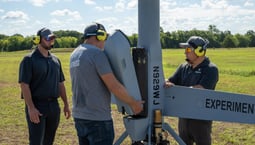
Shield AI Teams
.jpg)


Shield AI Offices
Hybrid Workspace
Employees engage in a combination of remote and on-site work.

