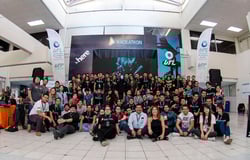
Build your brand. Tell your story. Take advantage of a rare opportunity to start from the ground up and build something great. We are looking for technology game changers to lead Stellantis into a fundamental transformation within the automotive industry. Technology is going to disrupt the automotive industry significantly in the next decade, and our organization is seeking high-potential candidates to transform the company with a focus on the customer experience. Stellantis's Software Organization (PDT) was created to build the most captivating experiences in the latest frontier of Automotive Technology.
As a hardware engineer, you will be responsible for designing, developing, and optimizing software solutions for microcontroller units (MCUs) used in automotive applications. You will work closely with hardware engineers, system architects, and other software developers to implement firmware and software components that meet the functional, performance, and safety requirements of automotive electronic control units (ECUs).
The main job responsibilities will be:
- Software Design and Development: Design, implement, and maintain software modules and drivers for automotive MCUs & SOC, ensuring compliance with industry standards and best practices.
- Embedded Firmware Development: Develop embedded firmware for automotive ECUs, including startup code, peripheral drivers, and low-level hardware abstraction layers (HALs).
- Real-Time Operating Systems (RTOS) Integration: Integrate real-time operating systems such as FreeRTOS or Zephyr into the MCU & SOC software architecture to support multi-tasking and real-time scheduling requirements.
- Linux/QNX BSP and Android Guest OS Enablement: Port and customize BSP and Android GVM for automotive platforms.
- Enable display, audio, camera, and serial interfaces in the SOC. Perform system performance profiling and optimization.
- Communication Protocol Implementation: Implement communication protocols (e.g., CAN, LIN, Ethernet) and networking stacks to facilitate communication between automotive ECUs and external devices.
- Integration and Testing: Collaborate with hardware engineers to integrate software components with hardware platforms, and conduct unit testing, integration testing, and validation to ensure software reliability and functionality.
- Documentation and Compliance: Create and maintain software design documents, interface specifications, and test plans. Ensure compliance with automotive industry standards and regulations, such as MISRA C and ISO 26262
Basic Qualifications:
- Bachelor’s degree in Electrical Engineering, Computer Engineering, or related field.
- A minimum of 5 years of experience in MCU & SOC design for automotive applications, with a proven track record of successful projects and product launches.
- Proven experience in embedded software development, with a focus on automotive ECUs.
- Proficiency in programming languages commonly used in embedded systems development, such as C and C++.
- Familiarity with automotive communication protocols and standards, including CAN, LIN, and Ethernet.
- Experience with real-time operating systems (RTOS) and software development tools (e.g., compilers, debuggers, IDEs) for embedded systems.
- Knowledge of automotive software development processes and standards, such as ISO 26262, and ASPICE.
- Strong problem-solving skills and attention to detail, with the ability to analyze complex system requirements and implement robust software solutions.
- Effective communication skills and ability to collaborate with cross-functional teams in a dynamic work environment.
Preferred Qualifications:
- Experience with automotive functional safety concepts and methodologies, including software FMEA and safety analysis techniques.
- Familiarity with embedded security principles and protocols, such as secure boot, cryptographic algorithms, and secure communication protocols.
- Knowledge of automotive networking protocols and standards, including TCP/IP, UDP, and Automotive Ethernet
- Experience with automotive development tools and platforms, such as Vector CANoe, or similar.
- Understanding of software-defined automotive architectures and emerging technologies, such as connected vehicles, autonomous driving, and electrification.
Critical Character Traits to Ensure Success:
- Be curious to ask the right questions
- Ability to expand depth and breadth expansion
- Ability to expands to domain(s)
- Ability to own feature design & implementation
- Self-starter with the ability to work independently, given minimal supervision/direction
- Ability to communicate effectively in complex scenarios
- Ability to develop as a mentor
- Ability to work in a team environment and be both a team player and task leader
- Respect and understanding of the Customer/Supplier relationship while embracing partnership
Skills Required
- Bachelor's degree in Electrical Engineering or Computer Engineering
- 5 years of experience in MCU design for automotive applications
- Experience in embedded software development
- Proficiency in C and C++
- Familiarity with automotive communication protocols (CAN, LIN, Ethernet)
- Experience with RTOS and software development tools
- Knowledge of automotive software development processes and standards (AUTOSAR, ISO 26262)
- Strong problem-solving skills
- Effective communication skills for collaboration
- Experience with automotive functional safety concepts
- Familiarity with embedded security principles
- Knowledge of automotive networking protocols
- Experience with automotive development tools (e.g., Vector CANoe)
- Understanding of software-defined automotive architectures
Stellantis Compensation & Benefits Highlights
The following summarizes recurring compensation and benefits themes identified from responses generated by popular LLMs to common candidate questions about Stellantis and has not been reviewed or approved by Stellantis.
-
Pay Growth & Progression — Contract-driven increases lifted hourly wages roughly 25% over 4.5 years and restored cost-of-living adjustments, pushing top rates near $42 per hour by the end of the agreement. Union hourly positions appear to have benefited most since the 2023 deal.
-
Affordable Benefits — UAW-represented hourly workers pay no premiums and about 3% of total healthcare costs while receiving comprehensive medical, dental, vision, and wellness coverage. This creates materially lower out-of-pocket costs for represented hourly roles.
-
Retirement Support — Post-2007 hourly hires receive a 10% employer 401(k) contribution and legacy workers saw defined-benefit improvements with retiree bonuses. Salaried roles also cite a 401(k) with employer match and contribution up to a maximum of 8%.
Stellantis Insights

What We Do
Our storied and iconic brands embody the passion of their visionary founders and today’s customers in their innovative products and services: they include Abarth, Alfa Romeo, Chrysler, Citroën, Dodge, DS Automobiles, Fiat, Jeep®, Lancia, Maserati, Opel, Peugeot, Ram, Vauxhall and mobility brands Free2move and Leasys. Powered by our diversity, we lead the way the world moves – aspiring to become the greatest sustainable mobility tech company, not the biggest, while creating added value for all stakeholders as well as the communities in which we operate.