


Dynatrace

Design and User Experience
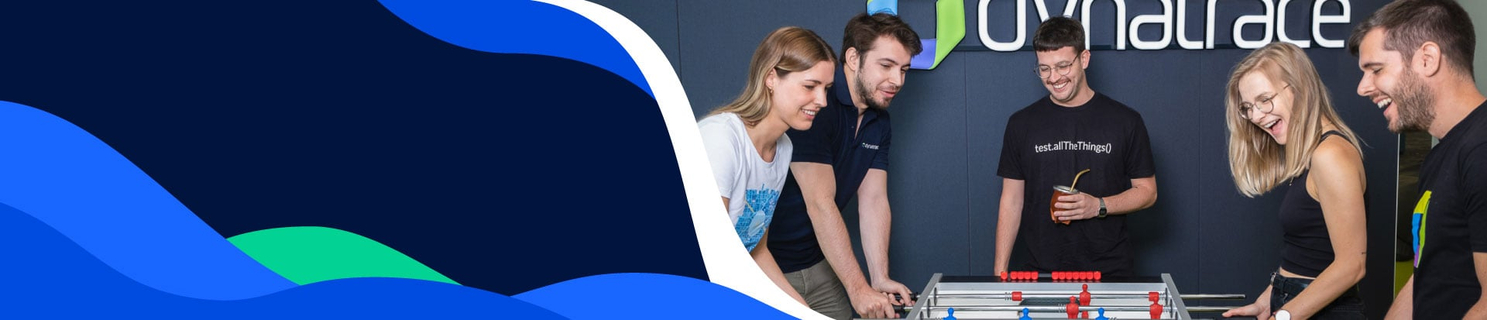
Dynatrace’s Design and User Experience team turns complex observability data into clear, usable experiences for more than 4,000 customers. The 70-plus-person global community includes product experience designers, content designers, user experience researchers, visual designers and design leaders. Team members work closely with product managers and engineers from research through delivery, using customer insight, prototyping, the Strato Design System and technical knowledge to simplify data-heavy workflows across the platform.
Team FAQs
What's it like to work in Design and User Experience at Dynatrace?
What's it like to work in Design and User Experience at Dynatrace?
Dynatrace’s Design and User Experience team works on a technical enterprise platform that processes millions of observability events every second, so much of the job involves making large amounts of data understandable and actionable. The 70-plus-person global community includes product experience designers, content designers, user experience researchers, visual designers and design leaders. Designers are typically embedded with product managers and engineers, giving them responsibility from early research and problem definition through prototyping, delivery and iteration rather than limiting their role to producing screens at the end of development.
- Product experience designers stay involved from discovery through production: A typical week can include talking with users, exploring product data, defining the problem, designing an end-to-end flow, prototyping ideas and working with engineers as those ideas move into production. Designers are expected to understand the problem before moving into a solution and remain involved after the initial design work is complete.
- Technical fluency is an important part of the role: Observability is a specialized field, and designers are encouraged to understand the product and technical domain deeply enough to participate meaningfully in engineering conversations. One senior product experience designer said the scale of Dynatrace’s data visualization and the amount of data processed were among the things that initially attracted him to the company.
- The work spans several design specialties: Product experience designers focus on end-to-end product interactions, user experience researchers build understanding of users, content designers create clarity through language and visual designers develop foundational systems. The Visual Design team, for example, developed DT Flow, the custom typeface used across the Dynatrace platform.
- AI is changing both what designers build and how they work: Designers use AI to accelerate routine parts of their process while reserving more time for discovery, judgment and craft. They also design AI-assisted customer experiences, including deciding when AI should surface information, how users can understand what it is doing and how those experiences can remain trustworthy in high-pressure technical workflows.
- External signals:
Bottom line: Working in Design and User Experience at Dynatrace means designing for deeply technical users and large amounts of data while remaining involved throughout the product-development process. The experience is likely to fit designers who enjoy complexity, technical collaboration, strong craft standards and enough ownership to influence what gets built rather than simply how it looks.
What's the Design and User Experience leadership like at Dynatrace?
What's the Design and User Experience leadership like at Dynatrace?
Leadership in Design and User Experience combines formal people leadership with design leadership from senior and principal individual contributors. Designers work within product teams but are also connected to a broader global design community, creating several places for guidance and feedback. As employees become more senior, leadership increasingly includes setting the craft standard, influencing product direction, mentoring other designers and helping engineers and product managers make stronger user experience decisions.
- Senior designers are expected to lead through their craft: Principal-level roles include setting the design bar for an area, influencing how difficult interaction problems are approached and helping engineers make better design decisions. That creates leadership opportunities for experienced designers who want broader influence while remaining hands-on.
- Design leadership happens inside cross-functional teams: Product experience designers work alongside product managers and engineers as peers, so leadership often involves explaining the reasoning behind a design, questioning assumptions and building alignment rather than relying on direct authority. Designers are expected to bring their own point of view and help shape what gets built.
- Constructive critique creates another layer of design leadership: The design community uses critique sessions to share work, examine the problem and goal, discuss the process and provide feedback. That creates regular opportunities for experienced designers to strengthen the work of others while earlier-career employees gain exposure to different approaches.
- People managers are responsible for development as well as delivery: Leaders are expected to identify and develop talent, coach employees, provide feedback and set clear priorities. Those responsibilities support designers as their scope grows, whether they are building deeper expertise or preparing for people leadership.
- Designers can build leadership without leaving the individual contributor path: The primary design career path allows employees to remain hands-on while taking on greater influence, shaping design direction, sharing knowledge and supporting other people. A separate people-leader path exists for designers who want direct management responsibility.
- External signals:
- Management receives positive employee feedback: Employees rate management 4.0/5, while support from managers and a supportive environment are among the recurring workplace positives. (Indeed)
- Employees report substantial ownership in their roles: 95% say people are given a lot of responsibility, reinforcing an environment where employees are trusted to make meaningful decisions. (Great Place To Work)
Bottom line: Design and User Experience leadership is not limited to managers. People leaders coach and develop employees, while senior designers can lead through craft, mentoring and influence over product decisions. That gives designers room to build leadership skills while staying close to the work if they prefer an individual contributor career.
What's the work–life balance like in Design and User Experience at Dynatrace?
What's the work–life balance like in Design and User Experience at Dynatrace?
Work-life balance in Design and User Experience combines hybrid and flexible work with the demands of cross-functional product development. Designers spend time collaborating with product managers and engineers but also need uninterrupted periods for research, design and prototyping, making flexibility useful for balancing different types of work. Design roles include hybrid arrangements and flexible hours, while companywide Wellness Days and location-specific time-off programs provide additional ways to step away from work.
- Hybrid work is available across current design roles: Senior product experience design positions in Austria use a hybrid model, allowing employees to combine office collaboration with work from home. Flexible working hours provide additional control over when focused design work, meetings and personal responsibilities fit into the day.
- Design work naturally moves between collaboration and independent focus: Designers spend substantial time embedded in product teams, but a typical week can shift between research, discovery, prototyping and building. That variety creates periods that benefit from close collaboration as well as periods where uninterrupted individual work is important.
- Wellness Days create shared time away from normal product work: Employees receive four company-designated extra paid days off to recharge. Because the days are shared across the organization, designers can disconnect without the same concern about missing product meetings or returning to a full day of internal activity.
- The experience can support a full life outside work: One senior visual designer described adapting to the local approach to work-life balance after relocating to Austria and building a schedule filled with activities outside work. Another senior product experience designer who relocated to Linz highlighted the social community she found among local and international colleagues.
- Location can shape the experience: At the Linz research and development headquarters, designers have access to collaborative workspaces, an in-house barista cafe and a gym, while employees moving internationally can receive relocation support. Benefits and exact work arrangements vary by location and role.
- External signals:
- Product design feedback specifically points to flexibility: One senior product designer highlighted good work-life balance and flexibility as positives, while another product designer specifically cited flexible work and the ability to work from home. (Glassdoor)
- Work-life balance is one of the strongest-rated parts of the broader employee experience: Employees rate work-life balance 4.4/5, and time and location flexibility is a recurring positive theme. (Indeed)
- Employees report strong access to time away: 95% say they can take time off when they think it is necessary. (Great Place To Work)
Bottom line: Design and User Experience involves substantial collaboration and technically demanding work, but hybrid arrangements, flexible hours and dedicated time away give designers room to organize that work around their lives. Employee feedback also points directly to flexibility and work-life balance as strengths of the design experience.
What's the culture like in Design and User Experience at Dynatrace?
What's the culture like in Design and User Experience at Dynatrace?
The Design and User Experience culture is collaborative, technical and focused on craft. Designers are connected through a global community of more than 70 people while also working directly inside product teams with engineers and product managers. Employees are expected to share their perspective, question existing approaches and stay curious about both users and technology. Quality matters, but so does knowing when to move quickly, making judgment around that tension an important part of the work.
- Design is not treated as an isolated function: Product experience designers are embedded in product teams and work closely with engineering and product management from problem definition through delivery. This creates a culture where designers need to understand technical constraints and product goals rather than producing work separately and handing it off later.
- Open critique is part of how the team improves its work: Design critiques give employees a regular forum to explain the problem they are solving, their goal, their process and the resulting design. Teammates provide constructive feedback, question decisions and brainstorm new approaches, making peer feedback part of the normal workflow.
- Designers are encouraged to challenge assumptions: Strong performers are expected to bring a point of view, question how something is currently done and remain comfortable when a problem has not been fully defined. Senior roles put particular emphasis on judgment about which problem is worth solving rather than only executing against predetermined requirements.
- Craft and systems thinking both matter: The team works with Strato, its design system, to create consistency at scale while leaving designers responsible for deciding what information should be surfaced, simplified or removed. Visual designers also work on shared foundations such as typography, color, iconography and reusable assets that influence experiences across the platform.
- The community extends beyond project work: Designers work across countries and offices, and employees who relocate can build connections with both local and international colleagues. One senior product experience designer who moved to Linz said colleagues regularly meet outside work and that the city came to feel like home.
- External signals:
- Design employees highlight their peers as a strength: One senior product designer described colleagues as highly intelligent, collaborative and supportive while also praising the complexity of the work and design systems. (Glassdoor)
- Employees report strong relationships across the wider workplace: 93% say people care about one another, while 90% say Dynatrace is a great place to work. (Great Place To Work)
Bottom line: Design and User Experience culture combines strong individual craft with an expectation that designers share work, invite critique and collaborate deeply with technical teams. The strongest fit is likely someone who enjoys solving difficult problems with others, can defend a design decision without becoming attached to it and wants to keep improving through feedback.
What's the career growth like in Design and User Experience at Dynatrace?
What's the career growth like in Design and User Experience at Dynatrace?
Career growth in Design and User Experience does not require moving away from design work and into management. The primary path is an individual contributor track where designers can progress while remaining hands-on, taking ownership of more complex problems and expanding their influence over design direction. A separate management path is available for employees interested in leading people, giving designers a choice between deeper craft expertise and formal people leadership as opportunities emerge.
- Designers can advance while staying hands-on: As employees move through the individual contributor track, they are expected to drive more of their own work, understand the product more deeply and shape design direction. Progression includes greater influence and responsibility rather than requiring employees to give up day-to-day design work.
- Senior roles include leadership through expertise: Senior and principal product experience designers can set the craft bar, tackle harder interaction and visualization problems, mentor others and help engineers make stronger design decisions. This creates a visible route toward leadership without direct reports.
- People leadership remains a separate option: Designers who want to manage teams can move into a people-leader track focused on building teams, connecting team goals with company strategy and managing performance. The professional and people-leader tracks are intended to carry comparable career levels and room for progression.
- The variety of design disciplines creates opportunities to broaden skills: The community includes product experience design, content design, user experience research, visual design and design leadership. Designers can also gain exposure to design systems, data visualization, AI-assisted experiences and increasingly code-based prototyping as the team’s work evolves.
- Career ownership is supported by formal resources: Career frameworks, development plans, coaching guides and mentoring help employees understand where they are, identify skills they want to strengthen and consider potential next steps. Knowledge sharing within the global design community provides another way to build visibility and broader influence.
- External signals:
- Design work provides opportunities to build specialized expertise: One senior product designer highlighted exposure to complex, high-scale technical challenges and robust design and product systems. (Glassdoor)
- Employees receive meaningful responsibility as they develop: 95% say people are given a lot of responsibility, providing a positive signal for employees who want opportunities to stretch their skills through ownership. (Great Place To Work)
Bottom line: Career growth in Design and User Experience can mean becoming a stronger and more influential hands-on designer, moving into a different design specialty or pursuing people leadership. The individual contributor track is particularly notable because designers can keep increasing their scope and influence without treating management as the only route to advancement.
What training and learning resources does Dynatrace offer its Design and User Experience team?
What training and learning resources does Dynatrace offer its Design and User Experience team?
Learning in Design and User Experience combines formal development resources with continuous learning through product work, technical collaboration and peer critique. Designers need to understand a complex observability platform, work with large amounts of data and keep up with changing areas such as AI-assisted experiences, so development is closely connected to everyday design responsibilities. Companywide courses, mentoring and external learning are supplemented by team practices such as design critiques and designated learning days.
- Design critiques create recurring peer learning: Team members regularly share the problem, goal, process and final design with other designers. Constructive feedback and brainstorming expose employees to different approaches while helping them strengthen the reasoning behind their own work.
- Designated team learning days create dedicated development time: Current senior design openings include designated learning days alongside broader company learning programs. That gives designers protected opportunities to develop skills instead of expecting all learning to happen around normal project responsibilities.
- Formal learning extends well beyond design-specific topics: Employees can access thousands of on-demand courses, self-paced activities, facilitated learning, peer programs and support for certifications, conferences and external education. That can help designers deepen user experience skills while also building technical, communication or leadership capabilities.
- Mentoring connects designers with expertise outside their immediate team: The Global Mentoring Program connects employees across regions and functions, providing another way to learn from people with different specialties. The broader career framework and coaching resources can then help employees translate that learning into career goals.
- Technical immersion is part of development: Designers are expected to learn the observability domain, understand users and become comfortable discussing technical constraints with engineers. AI adds another learning area: designers are both using AI in their own workflows and working out how AI should appear in customer experiences, making judgment and product thinking increasingly important skills.
- External signals:
Bottom line: Learning in Design and User Experience happens through a combination of formal courses, mentoring, dedicated development time and day-to-day design work. Peer critique and technical immersion are especially important because designers are expected to keep improving their craft while building enough domain knowledge to simplify some of the most complex parts of the Dynatrace platform.
Dynatrace Employee Perspectives
Designers work with large amounts of technical data and complex product workflows, making data visualization an important part of the Design and User Experience team’s work. The scale and depth of the Dynatrace platform give designers opportunities to solve problems that go beyond a standard consumer interface, particularly when users need to understand complicated systems quickly.
“What initially called my attention about Dynatrace is how fancy the data visualization tools are here. … After I joined, I wasn’t disappointed.”
What People Are Saying About Dynatrace
-
Team Support: Collaboration across product, engineering, and design is described as central, with designers embedded in cross-functional teams and supported by a mature design system. Feedback suggests peers share ideas openly, run critiques, and partner from discovery through implementation.
-
Autonomy: End-to-end ownership and an outcome-focused mindset are emphasized, with designers expected to influence problem framing and stay involved through delivery. Feedback suggests the culture values curiosity, constructive challenge, and learning from mistakes, creating room to shape solutions.
-
Career Growth: An individual-contributor path allows designers to increase influence and remain hands-on rather than moving into management. A sizable, multidisciplinary design community and explicit guidance on senior-to-staff/principal expectations signal room to develop expertise.
What People Are Saying About Dynatrace
-
Team Support: Collaboration across design, product, and engineering is described as core to how work gets done, with designers encouraged to share ideas and constructively challenge approaches. This setup fosters accessible, supportive partnerships when navigating complex enterprise UX problems.
-
Autonomy: Designers are expected to own problems from discovery through implementation and have an individual-contributor growth path, signaling meaningful influence over product direction. This emphasis on ownership indicates real day-to-day decision latitude within cross-functional teams.
-
Learning & Development: The environment emphasizes continuous learning in domains like observability, data visualization, and AI, supported by critique rituals and a global design community. These practices create ongoing opportunities to deepen skills through real product challenges.

