


Carbon Robotics

Carbon Robotics Leadership & Management
Frequently Asked Questions
Managers at Carbon Robotics lead with trust, accountability and a strong bias for action. They give employees room to act independently, make practical decisions and learn through iteration, while holding a clear standard of doing what they say they are going to do. Managers support growth by actively listening, challenging people with new goals and broader responsibility, and creating opportunities for employees to stretch into leadership. That approach has helped team members move from individual contributor roles into management and has reinforced a culture where high performance and follow-through are rewarded.
Support is highly hands-on and closely connected to the work itself. Managers help employees build across disciplines, work directly with customers and farmers, and test ideas quickly in real-world conditions so teams can solve problems fast and improve the product continuously. The environment is no-nonsense, engineering-first and collaborative, with open communication, cross-functional teamwork and flexibility across in-office, field and remote work. Carbon Robotics also backs that experience with strong benefits and internal growth support, signaling a real investment in employee wellbeing and long-term development.
Leaders at Carbon Robotics set direction through clear goals, fast iteration and direct accountability. The company runs with a bias for action, and trusts people to make practical decisions. Leadership creates alignment around a mission that is specific and tangible: building AI-powered agricultural tools that help farmers reduce costs, increase yields and farm more sustainably. That strategic vision is reinforced by an engineering ethos of iterating quickly, working closely with customers and delivering products that can be manufactured at scale.
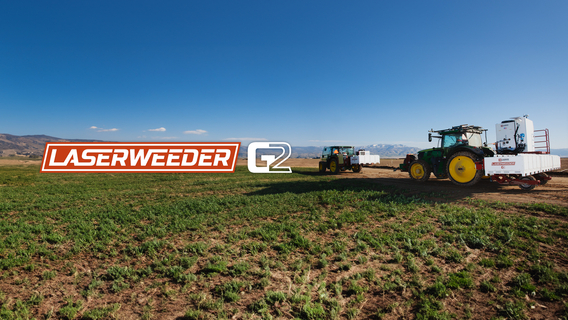
Leadership also keeps strategy grounded in real-world execution. Teams work closely with farmers, gather direct field feedback and use it to shape product decisions, which has already led to major product evolution from the original Autonomous LaserWeeder to newer systems like the current LaserWeeder and Carbon Autonomous Tractor Kit. Leaders give employees room to take risks, learn from mistakes and step into bigger responsibilities, while maintaining a no-nonsense standard of doing what they say they are going to do. The result is a culture where vision is not abstract — it is translated into fast decisions, cross-functional teamwork and products that solve urgent problems for growers.
Carbon Robotics Employee Reviews

What People Are Saying About Carbon Robotics
-
Strategic Vision & Planning: Company direction is clearly articulated as building “physical AI” for agriculture, with concrete pillars like LaserWeeder and tractor autonomy. Product and platform elements are presented as connected under a coherent plan rather than as disconnected initiatives.
-
Open & Transparent Communication: Company messaging is consistent across leadership, company, product, technology, and hiring pages, reinforcing the same strategy. Careers and homepage materials repeat priorities such as building physical AI and solving real farm problems.
-
Collaborative & Aligned Leadership: Executive roles are organized around scaling an AI hardware/software agriculture company, signaling aligned leadership on the stated direction. Leadership materials explicitly tie the team to “building the future of physical AI for agriculture.”
Carbon Robotics's Benefits
Hosts in-person all-hands meetings
Hosts in-person revenue kickoff meetings
Implements team-based strategic planning
Open office floor plan to encourage communication and collaboration
Uses an OKR operational model to clearly define goals and priorities
Utilizes an open door policy that encourages accessibility
