
Speed defines the tech industry. But when speed compromises employee well-being, the “winners” can find themselves at the tail end of the race to the top.
That’s why many companies implement policies and practices that help employees maintain sustainable workloads and prioritize well-being, ensuring they have the energy to return to work — and win.
At Cox Enterprises, which operates a multinational portfolio of brands spanning the automotive, cleantech and agricultural industries, a sustainable pace isn’t rooted in a single policy. Rather, it’s upheld by a system of decisions that compound over time.
That’s according to Marvin Chan, senior manager of software engineering. He said that the company’s engineering team implemented a 12/7 on-call model last year, which prevents engineers from grinding through a full day after fighting fires at 2 a.m. Engineers are also highly encouraged to take PTO when needed and are given dedicated time for exploration and learning.
How does Chan know these practices work? He sees it in the tenure of his team members.
“During my time as a software engineering manager, I’ve coached 10 engineers into leadership roles,” Chan said. “People do not stay or grow in environments where the pace is unsustainable.”
Meanwhile, leaders at RethinkFirst, a company that provides affordable treatment solutions for children with special needs, regularly discuss workloads, competing priorities and capacity to ensure the company’s clinicians avoid burnout while supporting families.
Kristin Bandi, senior director of clinical and family services, said that employees’ high levels of engagement proves that these practices work. Employees collaborate frequently and feel comfortable sharing both successes and failures.
“We see a culture where asking for help is normalized rather than delayed until burnout occurs,” Bandi said.
Below, Chan, Bandi and leaders from four other companies share how they help employees maintain sustainable workloads, how they support employee well-being and how they gauge the success of these efforts.
Featured Companies


Cox Enterprises operates a multinational portfolio of brands spanning the automotive, cleantech and agricultural industries. These brands include Autotrader, Kelley Blue Book, BrightFarms and Mucci Farms.
Share your principle for sustainable pace — and the signal that proves it works for your team.
A sustainable pace isn’t built on one thing. It’s a system of decisions that compound over time. It starts with knowing the “why” behind the “what.” When engineers understand context, they can prioritize intelligently instead of just executing orders. From there, team input carries real weight on deadlines. We don’t hand down dates; we negotiate them.
“When engineers understand context, they can prioritize intelligently instead of just executing orders.”
We protect our capacity deliberately. We implemented a 12/7 on-call model last year, so no one is grinding through a full day after being paged at 2 a.m. PTO is encouraged and actually taken.
We also carve out time for learning, exploration and engineering operations work, because if developers are always shipping and never improving the system they work in, the pace becomes unsustainable by design. And, we close the loop through retros. Feedback is heard, changes are made and people see it happen.
The signal it works: The tenure of careers at Cox. During my time as a software engineering manager, I’ve coached 10 engineers into leadership roles. People do not stay or grow in environments where the pace is unsustainable. The retention and leadership growth are the proof.
Which policy or norm makes flexible working arrangements succeed — and how do you measure its impact?
Two things: outcomes and trust.
I don’t measure hours online or whether someone is physically present. I measure delivery, impact and collaboration. If you’re hitting your commitments and showing up for your teammates, how you structure your day is up to you.
We protect core collaboration hours so there’s always overlap for meetings, pairing and decision-making. Outside of that, flexibility is real here, not just something we say. We also lean on AI to summarize meetings and surface action items. If you can’t make a meeting, you can get the context you need, and the team keeps moving.
The measure is consistency. Sprint velocity holds, attrition stays at zero, and people continue to grow. Flexible work only works if delivery and development both remain strong. Ours do.
Which wellness resource do people actually use — and what improvement have you seen on your team?
A few things have worked really well. We offer PTO, but without the guilt. Everyone needs time to recharge, be with family and decompress. The only ask is to coordinate on-call coverage with teammates. That one boundary actually promotes ownership and accountability.
Rewards and recognition: Good work doesn’t go unnoticed here. I’ve partnered with product stakeholders to make recognition a joint effort, from callouts in the moment to quarterly award nominations. People work hard. They should know you see it.
I’m also big on team events — lunch outings, bowling, escape rooms and even hosting the whole team at my house. Breaking bread and sharing culture outside of work builds something you can’t manufacture in a meeting. It builds real relationships.
The improvement I’ve seen comes down to three things. Psychological safety: People are open, willing to ask hard questions and give honest feedback without hesitation. Engagement: They show up for each other, not just for work. And growth: I’ve had 10 engineers coached into leadership roles on my watch. People grow when the environment is designed to help them thrive.
.png)
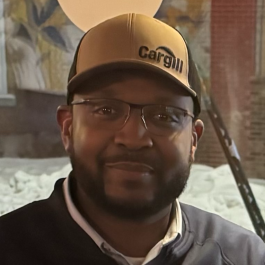
Cargill provides food, ingredients, agricultural solutions and industrial products across 125 markets worldwide.
Share your principle for sustainable pace — and the signal that proves it works for your team?
As a student of systems, I believe the human component is one of the clearest indicators of system health. In network engineering, we often measure health through uptime, incidents and delivery metrics, but the well-being of the engineers supporting those systems is also a signal. If the team is constantly reacting, unclear on priorities or unable to recover, the system around them needs adjustment.
My principle for sustainable pace is clarity, fairness and recovery. My team supports networks across roughly 77 countries and more than 1,100 sites, so demand is continuous: incidents, expansion, M&A/JV activity, enterprise projects and daily operations. My role is to distinguish true urgency from noise, clarify priorities and design better ways of working through product discipline, automation and clearer ownership.
I know it is working when engineers raise risks earlier, collaborate across functions, take ownership without waiting for direction and deliver higher-quality outcomes without everything becoming an escalation.
Which policy or norm makes flexible working arrangements succeed — and how do you measure its impact?
The norm that makes flexible work successful is trust with accountability. Flexibility cannot simply mean working from anywhere without structure. It works when people understand the outcome, communicate clearly, stay responsive to business-critical needs and are trusted to determine the best way to deliver.
Because my team supports a global environment, distributed collaboration is already part of how we operate. While people have differing work styles, I find in-office time valuable for relationship-building, team-driven problem-solving, onboarding, mentoring, planning and conversations that build trust. I also appreciate the flexibility of remote work for focused engineering work, documentation, design and problem-solving.
I measure the impact through outcomes: quality of delivery, responsiveness, collaboration, ownership and whether the team continues to build trust while delivering business results. When engineers are treated as leaders in their domains, they often create the right connection points organically because they understand what the work requires.
“When engineers are treated as leaders in their domains, they often create the right connection points organically because they understand what the work requires.”
Which wellness resource do people actually use — and what improvement have you seen on your team?
Cargill offers a variety of benefits and programs that support physical, mental, financial and social well-being to help us take care of ourselves and our loved ones
However, in my experience, the wellness resource people use most is not always a single formal program. It is the leadership system around the employee: flexibility, PTO planning, manager check-ins, honest workload conversations, and a culture where people believe they can speak up before issues become overwhelming.
Well-being is a shared responsibility. Individuals have to understand what recovery means for them, but leaders also have to design clarity, trust and accountability into the work environment. Our employee engagement insights point to the importance of role clarity, development, feeling heard, and seeing tangible improvements based on employee input. These are factors that impact well-being, even when they do not always show up under the label of wellness.
The improvement I have seen is more honest feedback, better collaboration, stronger team connection, and more ownership of growth and outcomes.


RethinkFirst offers families, educators and behavioral healthcare providers affordable treatment solutions for children with special needs.
Share your principle for sustainable pace — and the signal that proves it works for your team?
Our principle for sustainable pace is that quality support is more important than simply maximizing volume. We encourage clinicians to manage their caseloads in a way that allows them to be fully present for each family and employee while also maintaining time for collaboration, documentation and professional development. We regularly discuss workload, competing priorities and capacity so adjustments can be made before someone becomes overwhelmed.
“We regularly discuss workload, competing priorities and capacity so adjustments can be made before someone becomes overwhelmed.”
The signal that it works is that our team remains highly engaged and connected. Attendance and participation in meetings are strong, team members regularly collaborate with one another and people feel comfortable sharing both successes and obstacles. We see a culture where asking for help is normalized rather than delayed until burnout occurs.
Which policy or norm makes flexible working arrangements succeed — and how do you measure its impact?
The norm that makes flexible working arrangements successful on our team is trust, supported by open communication and clear expectations. Team members have flexibility in how they structure their schedules, including utilizing our flexible PTO policy, while remaining accountable for client needs and team commitments. We also place a strong emphasis on work-life balance and encourage employees to take time off when needed.
We measure the impact through engagement, reliability and outcomes. Team members consistently meet their responsibilities, maintain strong attendance and participation in meetings, provide high-quality support to clients and openly communicate when they need support or adjustments. The fact that our team remains highly collaborative and engaged while working flexibly demonstrates that the approach is working.
Which wellness resource do people actually use — and what improvement have you seen on your team?
Our team actively utilizes a variety of wellness resources, including our employee assistance program, wellness initiatives through Cigna and our own RethinkCare resources. One resource that has been particularly meaningful is access to RethinkCare’s library of resources and consultation support. Team members have used these services to strengthen executive functioning skills such as organization, prioritization, time management and maintaining work-life boundaries.
The improvements have been noticeable in both individual well-being and team engagement. Employees report feeling more equipped to manage competing responsibilities, reduce stress and maintain focus throughout the workday. As a team, we continue to see strong participation in meetings, active collaboration and a willingness to support one another, all of which contribute to a healthy and productive work environment.

Basis is a global provider of automation software designed specifically for enterprise marketers.
Share your principle for sustainable pace — and the signal that proves it works for your team?
At Basis, sustainable pace comes down to two ideas we hold together: “Breathe” and “Work Ethic Wins.” We hire smart, capable adults, and we’re clear about what we need them to accomplish. From there, we trust them to determine how and when the work gets done, because we genuinely believe results matter more than where someone is sitting or what hours they’re keeping. That belief shows up in how we operate, from not having a “clock-in, clock-out” culture, to “Flex Fridays,” to “Ferris Bueller Days” for when life happens, to generous FTO and sabbaticals.
When it comes to knowing whether it’s working, we look closely at our internal engagement scores and pulse surveys throughout the year, because they tell us how our people are actually experiencing flexibility, autonomy and trust. The external recognition has been just as meaningful. We’ve been named a Best Place to Work by Ad Age three years in a row, one of Purpose Jobs’ Best Remote Companies for 2026, and Most Committed to Work-Life Balance by Digiday two years running. We don’t do this for the awards, but when others confirm the culture we’re building, that means a great deal to us.
Which policy or norm makes flexible working arrangements succeed — and how do you measure its impact?
The most important thing for us is that we’re a remote-first company built on the belief that flexibility has to work in both directions, where we flex with our people and trust that they’ll flex with us when the business needs it. I couldn’t point to one single policy because it’s really about how we operate together, setting clear expectations, coaching managers to coordinate closely with their teams and making sure work is always covered no matter who is out. Our FTO is the clearest example because it’s genuinely generous and rooted in trust, but it’s not unlimited, and every request goes through a manager we’ve coached to balance their people’s needs with the business. For impact, I look at a few things together. Our engagement data tells us how people feel about flexibility, manager trust and their own productivity, and it consistently shows flexibility helps rather than hurts.
Which wellness resource do people actually use — and what improvement have you seen on your team?
The two resources I’d call out are our sabbatical and “Flex Funds” programs, both of which get used because they give our employees real ownership over what taking care of themselves looks like. Our sabbatical gives people three full weeks to unplug, and while we ask people to plan ahead so their teams are covered, the time itself is genuinely theirs to rest, travel, or step away and return with a clearer head. On my team, when one of my leaders took her sabbatical, someone else stepped into a stretch project and ran with it. When she came back, she was rested and creative, and we also had a teammate who’d proven she was ready for more.
“Our sabbatical gives people three full weeks to unplug, and while we ask people to plan ahead so their teams are covered, the time itself is genuinely theirs to rest, travel, or step away and return with a clearer head.”
Flex Funds get used so widely because it’s a flexible lifestyle spending account our employees can put toward whatever well-being means in their own life, from a gym membership to professional development to fitness classes. We try hard not to dictate what wellness has to look like. An honorable mention goes to Headspace, which is free for every employee and combines meditation, sleep support and on-demand coaching in one app, making it one of the perks our employees enjoy the most!


Sprout Social’s social media management software is designed to enable teams to plan and schedule content, engage with customers, analyze their performance and more.
Share your principle for sustainable pace — and the signal that proves it works for your team?
Sustainable pace isn’t just something we talk about at Sprout; it’s something we protect. We look for people who are motivated by the work itself, who bring energy because they care about the outcome. That comes with a high bar, and we pair it with the clarity and support to meet it: clear outcomes, strong partnerships and leaders who are invested in clearing the path.
The proof is in what doesn’t happen. Messages sent outside working hours carry no expectation of immediate response, which leadership actively reinforces. People respond when they’re next working and have the space to focus. This allows for sharper thinking and problem-solving that actually moves the needle. That’s what sustainability looks like here.
“Messages sent outside working hours carry no expectation of immediate response, which leadership actively reinforces.”
Which policy or norm makes flexible working arrangements succeed — and how do you measure its impact?
No single policy makes it work. It’s a system where every piece reinforces the same idea: Trust people to own their time, then build the structure so that trust scales.
Our “Focus Days” are the backbone. Since 2018, Wednesdays have been designated as “no-meeting days” companywide. Deep work isn’t something we squeeze in around everything else; it’s built into how we operate.
“R&R Days” are strategic days off where everyone can disconnect, rest, and recharge. Sometimes, this looks like a companywide pause. Other times, we intentionally schedule an R&R Day to extend a holiday weekend, or build in another day of rest between local holidays. That shared pause is what makes rest actually restorative.
How do we know it works? Focus Days have held for more than eight years. R&R Days are treated like holidays, not suggestions. These norms attract and keep people who do their best work here.
Which wellness resource do people actually use — and what improvement have you seen on your team?
Our mental health platform is the resource I’m most proud of. Every employee globally gets free access to enrollment — no waiting period, no cost.
What matters most is that it’s there before people need it. Someone navigating a career transition, preparing for a difficult conversation, or just trying to build better habits outside of work can access support without having to justify it or wait for a hard moment. That accessibility is what we were going for when we built it and is what makes it actually useful.
We pair that with a quarterly Lifestyle Spending Account, which people use for fitness, mindfulness, hobbies or whatever recharges them. There are also region-specific programs that round out the support depending on where you’re based.
The improvement isn’t one metric. It’s how teams show up. When well-being resources are genuinely accessible, people bring more energy and resilience to their work. They have support systems in place before the pressure hits. That’s the whole point of setting a high bar and investing in the support to clear it.


Openly aims to revolutionize the home insurance process with its platform, which is designed to streamline every step of the process for independent agents and their customers.
Share your principle for sustainable pace — and the signal that proves it works for your team?
When reading this question, my mind immediately goes to the tale of the tortoise and the hare. On my team, we aim for the perfect middle ground: merging the hare’s speed with the tortoise’s steadiness. Sustainable pace is about balancing energy, time and capacity. We recognize that operating at redline leads to burnout, while feeling under-utilized leads to lack of purpose. We want our team to be engaged and find genuine fulfillment in their work.
To maintain this balance, we have Open(ly) conversations about workload and capacity. We recognize that our team members have meaningful lives beyond work and believe balance is essential to long-term success. Through clear communication, mutual respect and a culture of Open(ly)ness, we help one another stay connected, supported and aligned.
The results speak for themselves. Strong employee engagement, productivity, retention and morale are evidence that Openly sets a high bar for workplace culture. This approach is helping us reach our goals at a sustainable pace. It’s an ongoing process though. If these indicators ever shift, we’ll take a step back, reassess, and adjust our workflow to keep our team healthy.
“Strong employee engagement, productivity, retention and morale are evidence that Openly sets a high bar for workplace culture.”
Which policy or norm makes flexible working arrangements succeed — and how do you measure its impact?
When our founders set out to build a great company, their goal was to hire the best people, no matter where they lived. They wanted to make sure employees would have a nice balance to work and family. Regardless of how you define your family, if they’re important to you, that’s what matters. That mindset is a big part of why Openly started as a 100 percent remote company and has remained that way.
Making remote work actually work takes a bit of effort. Our IT team plays a big role in helping employees stay connected and productive, and we provide stipends for internet, phone and home office setups so people have what they need to do their jobs effectively. We also prioritize connection through tools like Zoom, regular manager one-on-ones, and open communication to ensure people feel supported and aligned with their teams.
We keep an eye on how we’re doing through surveys, feedback, retention and business goals, but the real highlight is hearing from the team. Knowing that someone didn’t have to miss an important life event because of their work schedule is what we consider a win. So far, we’ve found that being flexible doesn’t just make a happier team – it makes a more productive one, too.
Which wellness resource do people actually use — and what improvement have you seen on your team?
When I first joined Openly, our wellness resources were fairly limited. Since then, we’ve worked to grow that list into something that actually reflects how our team lives and what they need to feel supported. Today, we offer resources like paid well-being and volunteer days, a preventative care campaign, 100 percent short-term disability coverage, and webinars on everything from chair yoga to retirement planning.
While it’s great to see strong engagement across these resources, the favorites tend to be the ones that offer the most flexibility and personal choice. Paid well-being days help employees manage the curveballs life inevitably throws at them, while our preventative care campaign serves as a helpful reminder to stay on top of annual check-ups and proactive health needs.
Our “Be Well program,” an enhanced lifestyle spending account, is probably the most personal. It offers employees a way to fund self-care that is unique to them, like camping, surfing, an art class, meditation app or even elder care or pet sitters. As Openly has grown, it’s been rewarding to see our support for employees grow across so many dimensions as well.
And the impact? Recharged and focused employees, ready to tackle the day.