At Relativity Space, we’re building rockets to serve today’s needs and tomorrow’s breakthroughs. Our Terran R vehicle will deliver customer payloads to orbit, meeting the growing demand for launch capacity. But that’s just the start. Achieving commercial success with Terran R will unlock new opportunities to advance science, exploration, and innovation, pioneering progress that reaches beyond the known.
Joining Relativity means becoming part of something where autonomy, ownership, and impact exist at every level. Here, you're not just executing tasks; you're solving problems that haven’t been solved before, helping develop a rocket, a factory, and a business from the ground up. Whether you’re in propulsion, manufacturing, software, avionics, or a corporate function, you’ll collaborate across teams, shape decisions, and see your work come to life in record time. Relativity is a place where creativity and technical rigor go hand in hand, and your voice will help define the stories we’re writing together. Now is a unique moment in time where it’s early enough to leave your mark on the product, the process, and the culture, but far enough along that Terran R is tangible and picking up momentum. The most meaningful work of your career is waiting. Join us.
About the Team
The Interplanetary Sciences Program was established to expand access to scientific exploration across our solar system. Its mission is to make planetary research faster, more affordable, and more capable than ever before by rethinking how science missions are designed, built, and operated. The program aims to enable scientists to send instruments to distant worlds without decades of development or prohibitive costs. By creating a sustainable model for interplanetary exploration, we are transforming space science from an occasional event into a continuous process of discovery that accelerates knowledge, broadens participation, and inspires the next generation of explorers.
About the Role
At Relativity Space, we set audacious goals. The Mars 2028 mission is designed to transform how we conduct interplanetary science missions, bringing AI models to run on the spacecraft in Mars orbit. The instrument suite will sense the atmosphere to inform weather models and probe the surface with radar to understand the location of ice. Mission operations will be equally ground-breaking, with automation across the whole stack to enable autonomous science collection.
As the FDIR / Fault Management Engineer, you will be the responsible engineer for fault detection, isolation, and response (FDIR) across all Relativity Space systems on the Mars 2028 mission. These are the safeguards that keep a spacecraft hundreds of millions of kilometers away safe every time a command is sent or a fault occurs.
This is a high-ownership role that spans design and hands-on implementation, and deep collaboration with internal teams and external partners. You will both architect the fault-management approach and build meaningful parts of the software that realizes it.
What You'll Do
- Own FDIR for Relativity Space systems: serve as the responsible engineer for fault detection, isolation, and response across RF communications, optical communications, compute, and the science instruments from requirements through implementation, test, and operations
- Define and help build command-checking software: design and build the system-level command validation and constraint-checking software that verifies commands are safe before they are executed
- Own the flight rules: Coordinate with other teams to define and maintain the mission's flight rules. This drives the operational constraints and safing logic that govern how the instruments, the communications systems, and compute are commanded and protected
- Partner across teams and instrument providers: collaborate with mission operations, GN&C, flight software, communications, and ground systems teams inside Relativity Space, as well as external instrument providers, to translate fault-management needs into verifiable behavior
- Support operations: support real-time operations on console during critical phases and anomalies, including fault investigation, recovery, and post-event updates to flight rules and FDIR logic
During critical mission phases including launch, commissioning, cruise maneuvers, and early operations this position will require shift work and on-call availability. Schedule flexibility will be needed as operational needs evolve. Occasional travel (<10%) to partner institutions and mission integration sites may be required
About You
- Bachelor's degree in Aerospace Engineering, Electrical or Computer Engineering, Computer Science, or a related field, or equivalent practical experience
- 7+ years of engineering experience with spacecraft, flight systems, or other safety- or mission-critical systems
- Direct experience with fault detection, isolation, and response (FDIR) or fault management. Spacecraft or flight-system experience is strongly preferred; adjacent safety-critical domains (aviation, defense, nuclear, autonomous systems) will be considered
- Strong systems-engineering judgment paired with hands-on software proficiency in Python, or a comparable language. Comfortable both owning the design and building the software (with agentic assistance) yourself
- Experience authoring or owning operational safeguards such as flight rules, system-level command checking, limit and telemetry monitoring, or safing logic
- Experience defining and negotiating external-facing interfaces (ICDs, APIs, schemas, protocol definitions) with other teams or organizations, ideally with a hardware or spacecraft bus provider
- Willingness to support occasional real-time operations on console and on-call during critical mission phases
- Experience with agentic development tools (e.g., AI coding agents/assistants) as part of a professional engineering workflow, including knowing when and how to verify their output in a mission-critical context
Why This Role Matters
When a spacecraft is hundreds of millions of kilometers away, fault management is what stands between a recoverable glitch and a lost mission. The FDIR, command-checking software, and flight rules you own are the safeguards that let us command the Mars 2028 spacecraft and its instruments and communications systems safely and confidently, every time. This role carries direct accountability for keeping the mission safe while maximizing the science it returns.
At Relativity Space, we are committed to transparency and fairness in our compensation practices. Actual compensation will be determined based on experience, qualifications, and other job-related factors.
Compensation is only one part of our total rewards package. Relativity Space offers competitive salary and equity, a generous PTO and sick leave policy, parental leave, an annual learning and development stipend, and more! To see some of the benefits & perks we offer, please visit here.
We are an equal opportunity employer and value diversity at our company. We do not discriminate on the basis of race, religion, color, national origin, gender, sexual orientation, age, marital status, veteran status, or disability status.
If you need a reasonable accommodation, please contact us at [email protected].
Please note: Relativity Space does not accept unsolicited resumes, candidate profiles, or referrals from recruitment agencies or search firms. Any unsolicited submission - via email, our website, social media, or directly to an employee - will be deemed the property of Relativity Space, and no fee will be owed absent a current, fully executed agreement with Talent Acquisition that specifically authorizes submissions for the applicable role.
Skills Required
- Bachelor's degree in Aerospace Engineering, Electrical Engineering, Computer Engineering, Computer Science, a related field, or equivalent practical experience
- 7+ years of engineering experience with spacecraft, flight systems, or other safety- or mission-critical systems
- Direct experience with fault detection, isolation, and response or fault management
- Hands-on software proficiency in Python or a comparable programming language
- Experience authoring or owning flight rules, system-level command checking, limit and telemetry monitoring, or safing logic
- Experience defining and negotiating external-facing interfaces, including ICDs, APIs, schemas, or protocol definitions
- Willingness to support real-time operations on console and on-call during critical mission phases
- Experience with agentic development tools or AI coding assistants in a professional engineering workflow
- Spacecraft or flight-system experience
- Experience with hardware or spacecraft bus providers
Relativity Space Compensation & Benefits Highlights
How does Relativity Space ensure its pay and bonus plans are competitive?
Relativity Space approaches compensation through market-informed salary structures, equity ownership, pay transparency and rewards tailored to different roles. Its total rewards strategy is designed to attract and retain specialized talent across aerospace engineering, manufacturing, software and launch operations. By considering industry benchmarks, individual qualifications and internal pay equity, the company works to provide compensation that reflects employees’ expertise and contributions while offering opportunities to participate in its long-term growth.
- Market benchmarking helps keep salaries competitive: Relativity Space's compensation team evaluates salary surveys, peer-company benchmarks and job responsibilities to inform pay decisions, including for specialized aerospace positions that can be difficult to compare with traditional roles. Its compensation processes also account for geographic differences, technical skill requirements and evolving labor-market conditions. These practices help the company maintain salary structures that reflect the expertise needed to design, manufacture and launch advanced aerospace technology.
- Pay transparency supports fair and informed compensation decisions: Relativity Space publishes hiring ranges in its job descriptions and evaluates individual compensation based on experience, qualifications and other job-related factors. Its compensation team also reviews job classifications, salary structures and internal equity to help maintain consistency across departments. This approach gives candidates greater visibility into compensation expectations while helping managers make informed decisions as employees develop specialized skills and advance professionally.
- Equity and performance rewards connect compensation to long-term success: Relativity Space provides eligible employees with company equity, allowing them to share in the potential future value of the business as it advances its Terran R launch program. It offers equity grants for full-time employees that vest over four years, encouraging a longer-term connection to the company's development. The company's total rewards framework also incorporates incentive plans and performance-based recognition, although specific cash bonus eligibility and structures depend on the role and are not publicly detailed for all employees.
- Role-specific compensation and financial benefits add value beyond base pay: Relativity Space recognizes certain operational responsibilities through additional compensation. For example, designated second-shift manufacturing and logistics positions receive a 10% shift differential, with some roles also including scheduled overtime. Beyond immediate earnings, the company's 401(k) plan supports long-term savings, while company-paid life and disability insurance provide financial protection. Company-funded HSA contributions can also help employees manage healthcare expenses, extending the practical value of their overall compensation package.
- External signals:
- Positive benefits satisfaction: Relativity Space's employee benefits receive a 4.3/5 rating based on 67 reviews. (Glassdoor)
- Appreciated compensation package: One global supply specialist described the company's compensation and benefits as "impressive," highlighting its comprehensive healthcare and additional employee support. (Indeed)
- Highly rated healthcare: Relativity Space's health insurance receives a 4.7/5 employee rating. (Glassdoor)
Bottom line: Relativity Space supports competitive compensation through market-based salary evaluation, transparent pay practices, equity opportunities and role-specific rewards. Its approach combines immediate financial compensation with long-term ownership potential and financial protection, helping employees receive value from their work while contributing to ambitious aerospace programs.
Relativity Space Insights

What We Do
Relativity Space is on a mission to better connect humanity to space and the universe beyond our planet. Our medium-to-heavy lift reusable rocket, Terran R, will deliver customer payloads to orbit, meeting the growing demand for launch capacity. But that’s just the start. Achieving commercial success with Terran R will unlock new opportunities to advance science, exploration, and innovation, pioneering progress that reaches beyond the known.
Why Work With Us
Joining Relativity means becoming part of something where autonomy, ownership, and impact exist at every level. Here, you're not just executing tasks; you're solving problems that haven’t been solved before, helping develop a rocket, a factory, and a business from the ground up.
Gallery
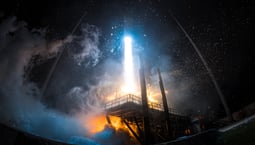

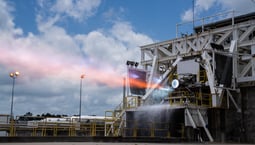
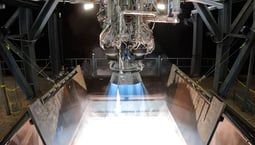
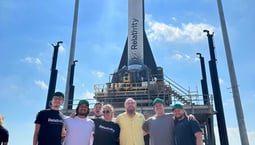


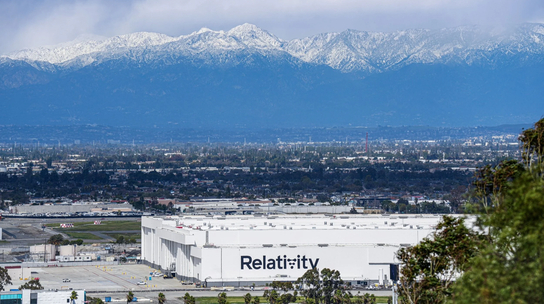
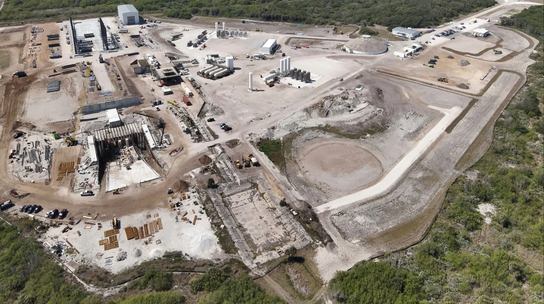
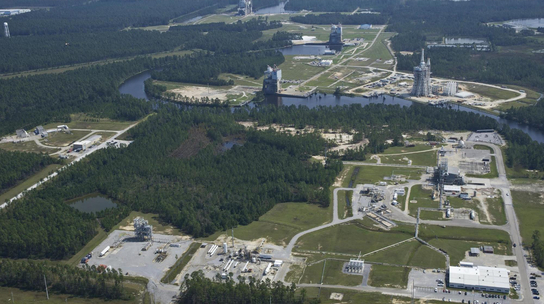
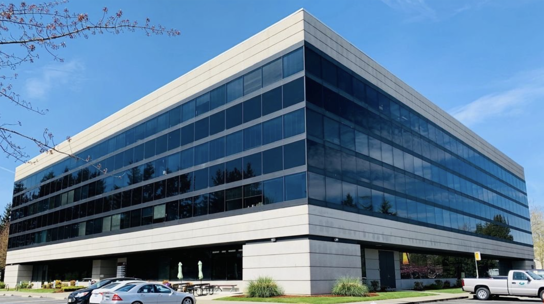
Relativity Space Offices
OnSite Workspace
At Relativity Space, we are an office-first company. We believe our best work happens in person—where collaboration is faster, problem-solving is sharper, and ideas flow more freely.