


The Hivemind Quality team is committed to ensuring our autonomy platform delivers a seamless developer experience and enables customers to build world-class autonomous systems. We focus on integrating, validating, and continuously improving the Hivemind ecosystem—spanning autonomy behaviors, sensor processing, multi-agent coordination, ground-control systems, and embedded platforms. Our mission is to ensure that autonomy developers can efficiently build, test, and deploy autonomous applications that meet real-world mission objectives.
We are seeking an experienced Software Integration Engineer passionate about autonomy development. In this role, you will become a power user of the Hivemind SDK, deeply understanding its capabilities and identifying gaps from a customer perspective. You will develop and validate customer use cases, evaluate the ease of use for autonomy developers, and provide actionable feedback to Engineering and Product teams. You will play a critical role in integrating new autonomy capabilities into the platform, assessing feature completeness, and anticipating novel customer workflows and edge cases. This position bridges the gap between engineering development and real-world autonomy applications—ensuring our platform empowers customers to build reliable, mission-ready autonomous systems.
What you'll do:
- Become a systems integration expert for autonomous robotics: Develop deep expertise in our AI-powered autonomy stack.
- Learn to configure, deploy, and integrate multi-agent systems across simulation, hardware-in-the-loop, and flight platforms.
- Understand the full system end-to-end—from sensor inputs to autonomous behaviors.
- Integrate new capabilities into the autonomy stack: Collaborate cross-functionally with development teams to bring autonomy algorithms, perception pipelines, middleware, and platform interfaces into the integrated product. Ensure seamless interoperability between components.
- Enable platform bring-up and validation: Lead the integration of autonomy software onto new robotic hardware platforms.
- Configure sensor drivers, communication interfaces, and platform adapters to enable full autonomy stack functionality on prototype and production vehicles.
- Develop integration tooling & infrastructure: Architect and implement integration frameworks, deployment scripts, and configuration management tools that streamline bringing new capabilities into Software-in-the-Loop (SIL), Hardware-in-the-Loop (HIL), and flight environments.
- Support cross-platform compatibility: Work with other integration engineers to ensure the autonomy stack operates reliably across all supported platforms, operating systems, and deployment configurations. Identify and resolve integration issues across system boundaries.
- Analyze system behavior and root-cause issues: Evaluate system logs, telemetry, and rosbag data to diagnose integration defects. Collaborate with developers to isolate issues to specific subsystems and drive resolution. Create analysis tooling to accelerate debugging.
- Optimize integration workflows and CI/CD: Partner with DevOps teams to streamline integration pipelines, reduce build-to-deploy cycle times, and ensure robust continuous integration of new features. Define integration checkpoints and criteria for release readiness.
- Validate system requirements and interface contracts: Work with engineers to ensure integrated capabilities meet product requirements and interface specifications. Assist in developing tooling to verify end-to-end system compliance and traceability.
Required qualifications:
- Typically requires a minimum of 7 years of related experience with a bachelor’s degree in CS, Comp Eng, Robotics, or a related field; or 6 years and a master’s degree; or 4 years with a PhD.
- Proficiency in programming languages including Python or C++.
- Experience with autonomous systems or middleware.
- Demonstrated experience designing integration workflows, communicating system dependencies, and triaging and reporting integration defects across subsystem boundaries.
- Proficiency with simulation tools and hardware-in-the-loop (HIL) testing environments.
- Strong expertise with CI/CD pipelines.
- Strong problem-solving skills and a proven track record of delivering high-quality software solutions.
- Excellent communication skills, capable of collaborating effectively across various teams and presenting to customers or technical leadership.
Preferred qualifications:
- Demonstrated experience building complex systems with a strong understanding of software architecture and design principles.
- Experience with hardware or embedded systems.
- Expert knowledge of Python.
- Experience with ROS.
- Experience with white box testing
- Familiarity with networking, operating-systems, and radio communications.
Skills Required
- Minimum experience: typically 7 years with a Bachelor's, or 6 years with a Master's, or 4 years with a PhD.
- Proficiency in Python or C++.
- Experience with autonomous systems or middleware.
- Designing integration workflows, communicating system dependencies, triaging and reporting integration defects across subsystems.
- Proficiency with simulation tools and hardware-in-the-loop (HIL) testing environments.
- Strong expertise with CI/CD pipelines.
- Strong problem-solving skills and proven track record of delivering high-quality software solutions.
- Excellent communication skills; ability to collaborate across teams and present to customers or technical leadership.
- Experience enabling platform bring-up and validating autonomy software on robotic hardware platforms (configuring sensor drivers, communication interfaces, platform adapters).
- Experience analyzing system logs, telemetry, and rosbag data to diagnose integration defects.
- Experience developing integration tooling, deployment scripts, and configuration management for SIL/HIL/flight environments.
- Familiarity with simulation, middleware integration, and multi-agent system deployment.
- Experience working with cross-functional teams to ensure interoperability between autonomy components.
What the Team is Saying


Shield AI Compensation & Benefits Highlights
-
Healthcare Strength — Company materials describe excellent medical, dental, and vision coverage alongside a mental‑health EAP. Site perks such as an onsite gym in DC and a gym discount in San Diego support a health‑focused offering.
-
Retirement Support — Careers materials highlight a 401(k) with company match as part of the standard package. A Total Rewards overview emphasizes retirement features within a broader, transparent compensation view.
-
Career-Linked Recognition & Rewards — Compensation for in‑demand technical and senior go‑to‑market roles is described as competitive, with visible engineering ranges and top‑end packages. This points to meaningful upside tied to role, level, and scarce skills.
Shield AI Insights

What We Do
Founded in 2015, Shield AI is a venture-backed deep-tech company with the mission of protecting service members and civilians with intelligent systems. Its products include the V-BAT and X-BAT aircraft, Hivemind Enterprise, and the Hivemind Vision product lines. With offices and facilities across the U.S., Europe, the Middle East, and the Asia-Pacific, Shield AI’s technology actively supports operations worldwide.
Why Work With Us
What makes Shield AI special is our people. We unlock the power of autonomy, and in the face of overwhelming odds and challenges, we find ways to win and make a difference for our customers. We bring together software, AI, and aerospace engineering disciplines to deploy the most intelligent aviation capabilities in the world.
Gallery
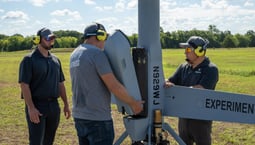
Shield AI Offices
Hybrid Workspace
Employees engage in a combination of remote and on-site work.
