Hotplate exists to enable anyone to start and scale a local food business without a brick and mortar.
The traditional brick and mortar restaurant model is broken: it requires six figures in upfront capital and comes with high operating costs. Within their first year, 2/3 of all restaurants and bakeries close.
The next wave of food entrepreneurship is emerging. These chefs and bakers run businesses from home, commissary kitchens, or mobile pop-ups. They generate hype and buzz on Instagram and run almost entirely on pre-orders. The result is 50-80% profit margins, over 10x the traditional 5% margin of a brick and mortar.
But today’s e-commerce tools weren’t built for this way of selling food. Without Hotplate, chefs and bakers hack together DMs, Google Forms, Square, and Shopify. They spend more time managing logistics than growing their business.
We support the top pop ups in the country, many of which are recognized by the New York Times, Infatuation, Eater, etc. and recently crossed 5,000 businesses and $80M paid out on the platform, but we're just getting started.
By building the foundational tool for this new model, we have the opportunity to fundamentally change the food industry for the better: increasing the diversity and accessibility of food by making it possible for anyone to start a food business.
If you want to read more to make sure Hotplate is a good fit, check out our philosophies on hiring, fundraising, and our values.
The roleAs a full stack engineer at Hotplate, you'll build end-to-end features that will directly impact how thousands of chefs' and bakers' businesses run their businesses. You'll get to stretch across a range of work like building scalable systems & infrastructure to handle ticketmaster-style food drops, Chef-facing features that will provide powerful ways to manage and grow their business, and consumer-facing storefront and buying experiences that delight.
This role is best suited for someone who likes to participate in the full process of building features, from supporting on ideation and design to executing features independently.
What you will need to be successfulExtremely comfortable working full stack
A high bar for delivering clean, intuitive, UX experiences
A love for designing products and features from scratch
Have worked in early to mid-stage startups before, with experience taking projects from 0 to 1 independently
Comfortable with our stack: React, Next.js, TypeScript, Node, Express, PostgreSQL, AWS
3+ years of product-focused, full-stack engineering
Hotplate's engineering team is small, and as we scale we want to keep it that way. Every engineer operates in a full stack capacity. Features are owned by individuals, so even though we all have our strengths, each of us pushes code to all layers of the app. We find this increases our velocity, results in better decision-making before and during feature development, and is a forcing function for us to grow as full stack contributors.
Our teamWe are a lean, mission-driven team. We exist to enable the next million chefs and bakers to scale local food businesses outside the brick & mortar model.
We operate with high ownership, laser focus on the impact we have for our chefs and bakers, and commitment to take on projects that push us out of our comfort zones.
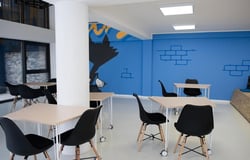
We’re a tight-knit crew. We jam with a daily shared playlist, often hang for team lunch and happy hours, and always have snacks on the table (made by the team or a Hotplate Chef). We love working in a place where we all have a connection, and think it helps us work better as a team.
BenefitsComprehensive medical, dental, and vision coverage for you and dependents
401(k) retirement plan
Unlimited PTO (that people actually take)
Parental leave
Monthly budget to spend on Hotplate
Hotplate is an equal opportunity employer. We do not discriminate in hiring or any employment decision based on race, color, religion, national origin, age, sex (including pregnancy, childbirth, or related medical conditions), marital status, ancestry, physical or mental disability, genetic information, veteran status, gender identity or expression, sexual orientation, or other applicable legally protected characteristic.
Skills Required
- 3+ years of product-focused, full-stack engineering

What We Do
Running a food business is hard, too hard. About 2/3 of brick and mortar restaurants and bakeries fail within their first year, putting these types of businesses in the same risk category as startups. It is insane that that is the case. However, during COVID, as people were stuck at home, a new model for selling food emerged: people making and selling food in their home through social media via pre-order pickup. These new businesses opened pre-orders for a brief period at the beginning of the week and had their customers come to pickup their food at the end of the week. This seemingly small change has massive implications. By running on a pre-order pickup model, these chefs and bakers solved many of the problems traditional brick and mortars faced: - No ingredient waste or need to forecast demand. - Significantly less labor needed, a single creator can take the orders, make them, and hand them off to the customer over the course of the week. - No need for an expensive lease: customers can pickup from the creator's house or a local business they partner with. - Zero startup cost, anyone can start small and organically grow without needing to invest over $100,000 to start a traditional brick and mortar. As we saw this trend develop, we spoke to the people behind these businesses and found out that many of them were making upwards of 50% margins on their food sales, 10x the average of 5% for a standard brick and mortar. However, there was one big problem: no product existed to sell food this way. These businesses were taking orders via DMs, Google Sheets, or hacking the functionality of a Square or Ecommerce website to post their sales. They were spending most of their time trying to organize orders, remind customers about pickups, chasing down venmo payments, and tabulating spreadsheets. They were hitting a glass ceiling. By building the foundational tool for this new model, we have the opportunity to fundamentally change the food industry for the better.