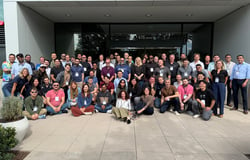
Digantara is building the world’s first maps for space, Space-Mission Assurance Platform™ (Space-MAP™). Space-MAP™ represents a revolutionary end-to-end infrastructure for sustainable space operations, offering a comprehensive space situational awareness solution that simplifies and strengthens satellite operations in the face of the rapidly expanding commercialization of space.
Space-MAP™ is powered by accurate data gathered by advanced ground/space-based cameras and LiDARs. These sensor systems are built using a suite of reliable high-speed digital boards with CMOS, FPGAs, lasers and detectors.
Digantara seeks a highly skilled Embedded Software Engineer for the design and development of embedded software solutions for onboard data processing and related functions. You will leverage your expertise to enable the development of state-of-art embedded software with applications such as tracking objects from both space and ground.
Why Us?Competitive incentives, galvanising workspace, blazing team, frequent outings—pretty much everything that you have heard about a startup + you get to work on satellites.
Hustle in a well-funded startup with a flat hierarchy that allows you to take charge of your responsibilities and create your own moonshot.
Design, develop, and implement embedded software for real-time image processing for satellite payload applications.
Translate and optimize image processing algorithms to FPGA/SoC platforms to achieve low-latency and high throughput.
Collaborate with system level designers, hardware designers and generate software functional requirements, architecture and ensure seamless integration of software and hardware.
Collaborate effectively with cross-functional teams to conceptualize, design, and implement optimal embedded software solutions for the image processing.
Define and implement interface and communication protocols for data handling between the satellite payload and bus systems.
Develop clean, well-structured, maintainable code and execute comprehensive testing as per the space industry standards (e.g: ECSS software engineering standard).
Implement rigorous software quality assurance practices, including static analysis, code coverage analysis, and other verification techniques
Develop efficient embedded software for high-performance embedded systems with the ARM Cortex processor architecture.
Leverage AMD-Xilinx/Microchip EDA tools (e.g: Vivado/Vitis IDE, Libero SoC design suite) to develop efficient embedded software solutions.
Troubleshoot and resolve embedded software defects and hardware interface issues.
B.Tech/B.E in Electronics Engineering or M.Tech/M.E or PhD degree in Embedded systems/VLSI.
5+ years of experience in Embedded software design and development, with a strong focus on image processing and experience in handling communication protocols.
Strong proficiency in bare-metal and RTOS programming for embedded systems, with expertise in real-time scheduling, interrupt handling, and device drivers.
Proven ability to optimize embedded software implementation, including code optimization, memory management, and power efficiency techniques.
Proficiency in Embedded C, C/C++ programming languages.
Strong understanding in data communication protocols such as I2C, UART, SPI, CAN, Gigabit Ethernet, LVDS, RS422 etc.
Working knowledge with software configuration management tools and defect tracking tools.
Experience with oscilloscopes, logic analyzers and lab equipment.
Prior experience in embedded software implementation in the areas of satellite imaging payload or ground-based imaging systems is highly preferred.
Working knowledge of FPGA/SoC based embedded systems designed for the image processing applications is highly valued.
Experience in hardware-related programming of FPGA interfaces and high-level synthesis.
Knowledge of implementing fault-tolerant embedded systems for satellite applications.
Familiarity with digital image processing and implementation.
Experience in Python programming language and knowledge of Verilog/VHDL.
Experience with camera interfaces such as USB3, CoaXPress, CameraLink, PCIe, Gigabit ethernet etc.
Ability to work in a mission-focused, operational environment.
Ability to think critically and make independent decisions.
Interpersonal skills to enable working in a diverse and dynamic team.
Maintain a regular and predictable work schedule.
Writing and delivering technical documents and briefings.
Verbal and written communications skills as well as organizational skills.
Travel occasionally as necessary.
Location: Hebbal, Bangalore
Skills Required
- B.Tech/B.E. in Electronics Engineering, or M.Tech/M.E. or PhD in Embedded Systems or VLSI
- 5+ years of experience in embedded software design and development
- Experience with image processing and communication protocols
- Proficiency in bare-metal and RTOS programming
- Experience with real-time scheduling, interrupt handling, and device drivers
- Ability to optimize code, memory management, and power efficiency
- Proficiency in Embedded C and C/C++
- Understanding of I2C, UART, SPI, CAN, Gigabit Ethernet, LVDS, and RS422 protocols
- Working knowledge of software configuration management and defect tracking tools
- Experience with oscilloscopes, logic analyzers, and laboratory equipment
- Experience with satellite imaging payloads or ground-based imaging systems
- Working knowledge of FPGA/SoC embedded systems for image processing
- Experience programming FPGA interfaces and using high-level synthesis
- Knowledge of fault-tolerant embedded systems for satellite applications
- Familiarity with digital image processing implementation
- Experience with Python and knowledge of Verilog/VHDL
- Experience with USB3, CoaXPress, CameraLink, PCIe, or Gigabit Ethernet camera interfaces
- Ability to work in a mission-focused operational environment and make independent decisions
- Technical documentation, briefing, communication, and organizational skills

What We Do
Digantara is an Indian company specializing in space situational awareness, intelligence, and surveillance. It develops infrastructure and data solutions for monitoring objects and traffic in Earth orbit, and is expanding its capabilities into missile defense.