


Location: Mountain View, CA (On-site)
OverviewMost of today's AI is built for text, images, and video.
Enterprise data isn't.
At Granica, we're building Large Tabular Models (LTMs)—foundation models that learn natively from structured and relational enterprise data.
Our research, led by Prof. Andrea Montanari (Stanford), explores how generative AI can learn more efficiently from enterprise data through better representations, data selection, augmentation, and compression.
As a Research Engineer, you'll bridge research and production—turning new ideas into scalable machine learning systems that power the next generation of enterprise AI.
This is not an LLM application engineering role. We're looking for engineers who enjoy implementing machine learning algorithms, building ML systems, and working closely with researchers to bring new ideas into production.
What You'll Work OnBuild scalable training, evaluation, and inference pipelines for machine learning systems.
Implement and optimize algorithms for structured and tabular data.
Develop benchmarks, datasets, and evaluation frameworks for new research ideas.
Improve training efficiency, memory usage, and inference performance.
Prototype new ML systems and rapidly validate research ideas.
Collaborate closely with Prof. Andrea Montanari and Granica's research team to translate research into production systems.
BS, MS, or PhD in Computer Science, Machine Learning, Mathematics, or a related field.
Strong software engineering and machine learning fundamentals.
Experience building production ML systems or ML infrastructure.
Hands-on experience with PyTorch or JAX.
Strong programming skills in Python.
Experience developing evaluation frameworks, ML pipelines, or distributed systems.
Ability to translate research ideas into reliable, production-quality software.
Experience with representation learning, structured or tabular data, probabilistic modeling, distributed training, or ML systems optimization is particularly relevant.
Experience working closely with research teams.
Experience optimizing training or inference at scale.
Experience with CUDA, C++, or Rust.
Contributions to open-source ML systems.
Publications or research experience in machine learning.
Competitive salary, meaningful equity, and performance bonus for top performers
401(k) with company match, comprehensive health coverage, and unlimited PTO
Daily catered meals in our Mountain View office
Support for research, publication, and conference participation
At Granica, you'll help build the next generation of enterprise AI—from exabyte-scale data infrastructure, Large Tabular Models (LTMs), and stateful AI agents. Together, we're creating the infrastructure that enables enterprises to own their data, own the intelligence built on it, and scale both efficiently.
Skills Required
- Strong background in machine learning, probabilistic modeling, optimization, or large-scale ML systems
- Experience building algorithms for structured, relational, tabular, or graph data
- Hands-on experience with PyTorch, JAX, TensorFlow or similar ML frameworks
- Strong programming skills in Python
- Experience building large-scale ML pipelines, evaluation frameworks, or distributed systems
- Proven ability to turn research ideas into performant, reliable code with strong experimentation discipline
- Experience with systems languages such as Rust, C++, or CUDA
- Familiarity with data systems, query engines, or large-scale data pipelines; structured representation learning or graph ML experience
Granica Compensation & Benefits Highlights
-
Healthcare Strength — Policies advertise premium medical, dental, and vision coverage with mental‑health benefits and FSAs. Some materials indicate fully paid employee coverage with meaningful dependent support.
-
Leave & Time Off Breadth — Time off includes unlimited PTO paired with quarterly recharge days, alongside paid holidays and sick time. Guidance encourages multi‑week annual rest to reduce burnout.
-
Strong & Reliable Incentives — Compensation highlights include quarterly performance bonuses for all roles in addition to competitive salary. Feedback suggests these incentives are a consistent part of the total‑rewards design.
Granica Insights

What We Do
Our mission is to remove inefficiency from the foundation of AI. By combining new research in information theory, probabilistic modeling, and distributed systems, we’re creating self-optimizing data infrastructure that continuously improves how information is represented and used by intelligent systems.
Why Work With Us
We’re a tight-knit team combining --> * Fundamental research in compression, data systems, and information theory * World-class systems engineering across storage, infrastructure, and research led by our Chief Scientist & Stanford Prof. Andrea Montanari * A shared obsession with performance, scale, and clean design
Gallery
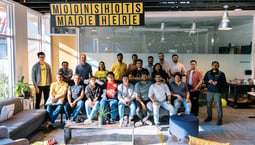




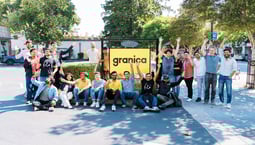
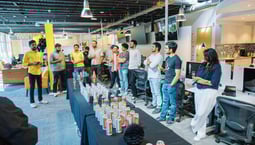


Granica Offices
Hybrid Workspace
Employees engage in a combination of remote and on-site work.
