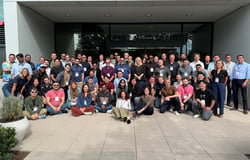
Redica Systems is the Intelligence Cloud for life sciences, transforming regulatory complexity into connected, proactive intelligence. Redica's platform helps the world's leading Pharmaceutical and MedTech companies stay inspection-ready, manage supplier risk, and keep pace with evolving global regulations. Built on the Redica Catalyst Platform and powered by Redica ID, Redica unifies the industry's most complete regulatory and inspection datasets, sourced from hundreds of global health authorities, into trusted intelligence for quality and regulatory teams. The Redica Intelligence Cloud brings data together to anticipate risk, accelerate compliance, and enable smarter, faster decisions across the enterprise.
More information is available at redica.com.
Job DescriptionWe’re looking for an AI Engineer to join our team as we continue to develop the first-of-its-kind Quality and Regulatory Intelligence (QRI) platform for the life sciences industry.
In this role, you will help build and deploy AI-powered capabilities that extract insights from complex regulatory datasets, inspection reports, and government data sources. You will work closely with product managers, data engineers, and software engineers to integrate LLM-powered systems into the Redica platform.
The ideal candidate maintains a high bar for engineering quality while remaining hands-on in the code, building scalable AI services and applications that operate reliably in production environments.
Core Responsibilities
- Build and deploy AI-powered applications using large language models and generative AI frameworks.
- Develop conversational systems and intelligent workflows using LLMs and agentic frameworks.
- Integrate AI capabilities into existing platform services and APIs.
- Design and implement backend APIs and services supporting AI functionality using Python and FastAPI.
- Develop microservices that enable scalable AI inference and data processing.
- Integrate AI services with other platform components to deliver end-to-end product capabilities.
- Work with structured and unstructured regulatory datasets to power AI-driven insights.
- Implement hybrid search and retrieval workflows using vector databases and graph databases.
- Integrate AI models with data pipelines and data stores to support scalable inference.
- Deploy and maintain AI systems in production environments.
- Contribute to testing, monitoring, and performance optimization of AI services.
- Assist in troubleshooting production issues related to AI systems and model inference.
- Work closely with product managers and engineering teams to translate product requirements into AI-powered solutions.
- Participate in engineering discussions, code reviews, and sprint planning.
- Contribute to continuous improvement of AI development practices and system performance.
About you
- Tech Savvy: Demonstrates strong technical proficiency in AI technologies and modern development tools, and actively adopts emerging technologies that improve system performance and engineering productivity.
- Manages Complexity: Works effectively within complex systems involving AI models, data pipelines, and distributed services.
- Plans and Aligns: Executes development tasks within defined scopes and aligns work with product and engineering priorities.
- Collaborates: Works effectively with cross-functional teams and contributes constructively toward shared goals.
- Manages Ambiguity: Adapts to evolving datasets, model approaches, and product requirements while maintaining steady development progress.
- Engaged: Shares our values and possesses the essential competencies needed to thrive at Redica, as outlined here: https://redica.com/about-us/careers.
- 3+ years of experience as an ML Engineer developing and productionizing traditional ML models and/or Generative AI applications.
- Hands-on experience in Python.
- Strong experience in building and deploying LLM and Generative AI applications at scale.
- Extensive hands-on experience with third-party LLM provider APIs (OpenAI, Google, Anthropic, Amazon Bedrock) and open-source LLMs (Llama, Mistral).
- Experience in building conversational systems using LLMs and agentic frameworks (LangChain, LlamaIndex, LangGraph, CrewAI).
- Hands-on experience with microservices architecture and orchestration, including building backend APIs using FastAPI.
- Experience with vector databases (e.g., Pinecone), graph databases (e.g., Neo4j), and hybrid search.
- Hands-on experience working with SQL (e.g., Postgres, Snowflake) and NoSQL (e.g., DynamoDB) databases/warehouses.
- Bachelor's degree in Computer Science, Computer Engineering, or a related technical field.
Bonus Points
- Familiarity with lightweight UI design using Python/JavaScript frameworks (Streamlit, ReactJS) and integration with ML model backends.
- Hands-on experience with container orchestration services on AWS (e.g., ECS and EKS) and ML deployment on AWS (AWS SageMaker).
- Experience with both batch and event-driven application architectures and ML inference methods.
Top Pharmaceutical Companies, Food Manufacturers, MedTech Companies, and Service Firms from around the globe rely on Redica Systems to mine and process government inspection, enforcement, and registration data. This enables them to quantify risk signals from their suppliers, identify market opportunities, benchmark against peers, and prepare for the latest inspection trends.
Our data and analytics have been cited by major media outlets, including MSNBC, The Wall Street Journal, and The Boston Globe.
Skills Required
- 3+ years of experience as an ML Engineer developing and productionizing traditional machine learning models and/or generative AI applications
- Hands-on experience with Python
- Strong experience building and deploying LLM and generative AI applications at scale
- Extensive hands-on experience with third-party LLM provider APIs, including OpenAI, Google, Anthropic, or Amazon Bedrock
- Experience with open-source LLMs such as Llama or Mistral
- Experience building conversational systems using LLM and agentic frameworks such as LangChain, LlamaIndex, LangGraph, or CrewAI
- Hands-on experience with microservices architecture and orchestration
- Experience building backend APIs using FastAPI
- Experience with vector databases such as Pinecone, graph databases such as Neo4j, and hybrid search
- Hands-on experience with SQL databases or warehouses such as PostgreSQL or Snowflake
- Hands-on experience with NoSQL databases such as DynamoDB
- Bachelor’s degree in Computer Science, Computer Engineering, or a related technical field
- Familiarity with Streamlit, ReactJS, or other lightweight UI frameworks
- Hands-on experience with AWS container orchestration services such as ECS and EKS
- Experience with machine learning deployment on AWS SageMaker
- Experience with batch and event-driven application architectures and machine learning inference methods

What We Do
Redica Systems is a data analytics platform to help regulated industries improve their quality and stay on top of evolving regulations. Our proprietary processes transform one of the industry’s most complete data sets, aggregated from hundreds of health agencies and unique Freedom of Information Act (FOIA) sourcing, into meaningful answers and insights that reduce regulatory and compliance risk. With human expertise, machine learning, and automation, we assimilate, normalize, and organize large amounts of unstructured data to make sure all entities are represented and connected. The RedicaID provides a real-time view into evolving data by tracking inspections, enforcement actions, regulatory publications, and M&A activity. In a complex landscape that’s always in flux, the RedicaID is a reliable constant. Founded in 2010, Redica Systems serves over 200 customers in the pharma, biopharma, medtech, medical device, and food and cosmetics industries, including 19 of the top 20 pharma companies and 9 of the 10 top medical devices companies. The FDAzilla store is a wholly-owned subsidiary of Redica Systems. Redica Systems’ headquarters are in Pleasanton, CA. More information is available at www.redica.com.