
With rapid advancements in AI, tech teams are moving faster than ever.
Wired found that three in four coders use AI at least once a week and engineers overwhelmingly mentioned the words “time” and “faster” when asked how AI has changed their job.
But rather than leading to chaos, the following employers are figuring out how to harness this technology across teams to drive collaboration and innovation. We spoke with product, data, sales and engineering professionals from 13 companies that are scaling quickly, adopting new tools and frameworks and empowering their teams to turn big ideas into measurable impact.
FEATURED COMPANIES


Vantor is forging the new frontier of spatial intelligence to unlock a more autonomous, interoperable world.
What new technologies or frameworks are helping your teams move faster and build smarter?
The most useful thing we’ve built isn’t a single tool. It’s a learning loop.
We use AI throughout the development process, from writing code to reviewing and testing it. But the bigger opportunity is making sure the system learns from what goes wrong. If a bug makes it into production, we don’t just fix that bug. We ask why our process didn’t catch it and put a new check in place so we’re less likely to make the same mistake again.
We also use different AI models to check one another’s work. The AI that writes code is often different from the AI that reviews it, which gives us another independent review before a person ever sees it.
Over time, those lessons become part of how we build software, so each project benefits from what we learned on the one before it. Engineers spend less time repeating routine checks and more time on architecture, trade-offs and the hard technical decisions that require human judgment.
We think of this as compounding engineering: every project should make the next one a little smarter. The AI models themselves will continue to change and improve. What becomes really valuable is everything our engineering system has learned along the way — the defects it has seen, the decisions the team has made and the failure modes it now knows how to prevent.
How do you balance experimentation with reliability in your development process?
We don’t see experimentation and reliability as opposites. The safer we can make experimentation, the easier it is for teams to try new things.
The key is matching the level of oversight to the risk. AI can have more freedom with something low-risk and easily reversible, like documentation or routine maintenance. When we’re talking about feature code, security, credentials or permissions, the controls become much tighter and people stay directly involved.
We also automate as much of the verification as we can before work reaches a human reviewer. AI can test the code, look for failure scenarios and check whether it actually does what was intended. That gives the reviewer better information, but the final decision still belongs to a person.
We have another simple rule: if we can’t tell whether an experiment worked, we shouldn’t be running it. And if the AI keeps struggling with a problem or different models can’t reach agreement, the process stops and a person is brought in.
The goal isn’t to generate as much code as possible. It’s to help our teams test ideas faster, reduce rework and get reliable capabilities into use sooner.
What role does collaboration play in turning innovative ideas into products?
One of the best things we’ve learned is to watch people do the work before trying to build technology for them. Sit with the people doing the job and find out where the time and mental effort actually go, because it is often not where an engineer would guess.
That’s how Storyline™, an AI tool we’re developing for analysts, started. Our product managers saw how much effort analysts spent pulling together imagery, detections and previous reporting before they could reach a conclusion. The hardest part wasn’t finding the information. It was bringing it together into something concise, defensible and trustworthy.
That insight shaped the product. Storyline helps gather relevant information, connect it to previous observations and draft outputs, while keeping the supporting evidence attached so analysts can see where a conclusion came from.
The principle is simple: automate the time-consuming work, not the judgment. The analyst still owns the final conclusion.
Storyline is now being piloted with analysts and their feedback continues to shape what we build. For me, that’s real collaboration: not showing someone a finished product and asking what they think, but bringing them in early enough to shape the product itself.

Navan is a corporate travel and expense software company that makes travel and expense easy.
What new technologies or frameworks are helping your teams move faster and build smarter?
Claude Code is my best friend when it comes to AI coding. I also run Cursor on a self-hosted pool so it can handle tasks in the background while I’m away from my computer. On the infrastructure side, we rely on Braintrust for AI logs, monitoring and evals. I even have a Cursor automation set up to periodically pull Braintrust metrics, identify areas where our AI features could improve and refine the prompts or code accordingly. For us, the fastest and smartest work happens when multiple tools operate together in a flywheel.
How do you balance experimentation with reliability in your development process?
Reliability is what enables our experimentation and ability to move fast. We run extensive evals upfront to prove a concept works, roll it out behind feature flags and run continuous evals in production to make sure nothing drifts. We also always keep a human in the loop. Combining that with background automations that monitor metrics and refine prompts automatically gives the team total freedom to experiment without risking production.
What role does collaboration play in turning innovative ideas into products?
Just like our AI features rely on feedback loops to get smarter, our product development process runs on the exact same model (and we’ve been doing it since before LLMs were a twinkle in our eyes). Since the early days of Navan, we’ve held open product requirements and design reviews where literally anyone in the company, from sales and customer success to engineering, accounting, finance and product, can jump in. Attendance is completely optional, yet dozens of people show up every time to voice their opinions and stress test ideas. Having those diverse perspectives in the room early catches blind spots before we write a single line of code, turning rough concepts into products our customers actually love.


Prolaio is a clinical intelligence company dedicated to unlocking continuous, predictive and shareable heart data to liberate patients from hospital-based reactive care and accelerate every new therapy.
What new technologies or frameworks are helping your teams move faster and build smarter?
At Prolaio, we are building an AI-native, cloud-first clinical intelligence technology environment that helps teams turn complex clinical and real-world data into useful, trustworthy products that advance clinical research and heart care. Our engineers are applying generative and agentic AI, retrieval-augmented generation, model context protocol, intelligent search, workflow copilots, conversational interfaces and automation to solve practical problems and not experiment for experimentation’s sake.
We pair these capabilities with API-first platform services, modern data pipelines, observability and reusable AI architecture patterns so teams can move quickly without rebuilding foundational components for every use case. The goal is to shorten the path from a promising prototype to a secure, scalable capability used by clinical, quality, operations and product teams in a regulated environment. For technologists, this means the opportunity to work across the full lifecycle: identifying an unmet need, designing and testing a solution and improving it through real user feedback with patient centricity.
How do you balance experimentation with reliability in your development process?
We treat experimentation and reliability as complementary disciplines. In clinical intelligence technology and platform, speed matters, but trust and quality are non-negotiable. We encourage teams to prototype rapidly, test assumptions early and use measurable success criteria to determine which ideas deserve to move forward. Then we deliberately harden the strongest concepts through production engineering, data-access controls, monitoring, evaluation and user feedback loops to deliver quality work.
For AI-enabled capabilities, that includes retrieval grounding, guardrails, human review where appropriate and ongoing attention to hallucination, bias, performance and adoption. We also build security and compliance into delivery workflows through DevSecOps, automated controls, infrastructure-as-code and continuous monitoring rather than treating governance as a late-stage gate. This gives teams room to explore boldly while ensuring that products supporting clinical, quality and health-data workflows are secure, auditable and dependable throughout the research journey.
What role does collaboration play in turning innovative ideas into products?
Collaboration is how innovative ideas become scalable products that help clinical research teams move with greater speed and confidence. At Prolaio, medical, clinical operations, data science, engineering, product, quality and security teams work together from the earliest stages.
Clinical research raises recurring questions about the patient journey. Where are patients experiencing friction? What signals may indicate a risk to adherence? How are sites and sponsors progressing against study milestones? Medical and clinical operations teams identify and prioritize the questions that matter most to researchers, sponsors and sites. Data science defines the data and analysis needed to answer them responsibly, while engineering and platform enable governed access to high-quality, interoperable data.
Product works alongside these teams to turn validated insights into useful capabilities, such as sponsor and site views that help teams monitor patient progress and identify adherence risks earlier. This collaboration means we are not simply building dashboards or AI features; we are creating trusted, scalable tools grounded in real clinical-research workflows.


Grow Therapy is a healthtech company that helps independent therapists launch and grow in-network private practices through software that assists with credentialing, referrals, billing, insurance claims and more.
What new technologies or frameworks are helping your teams move faster and build smarter?
The biggest shift for us has been treating AI as part of the engineering workflow. We are deep into a beta of background coding agents that open and land routine pull requests, paired with AI-assisted code review so engineers spend their time owning harder problems end to end instead of boilerplate. Underneath that, the quiet enabler is ephemeral preview environments: every pull request spins up a full, testable version of the app, which lets engineers and stakeholders validate changes in isolation before anything merges. We operate in mental healthcare, so the interesting problem was never whether AI can write code. It’s how we capture that speed without ever compromising the trust patients and providers put in us. Building for that constraint is what actually made us faster.
How do you balance experimentation with reliability in your development process?
For us, reliability is what earns the right to experiment. The agent rollout is the clearest case. Letting agents open and land pull requests is the bold part; the bar we held them to was throughput at the same or better quality, measured in fewer regressions, not just more pull requests landed. So we’re rolling out deliberately instead of all at once: started the beta with three teams, expanding to six now, going broader in quarter four, checking quality metrics at each step before widening access. That only works because the safety net came first: test coverage, preview environments, eval harnesses to measure agent output, AI-assisted review and above all the rule that whoever ships the code owns its quality and carries the pager for it. Change is the job here, so we’d rather run many small reversible experiments than a few big swings we can’t walk back.
What role does collaboration play in turning innovative ideas into products?
In our domain no single function has the whole picture, so ideas that don’t cross functions tend to die. Coach, our AI support tool for mental health, is a good example. Clinically grounded AI between sessions only shipped because engineering, clinical experts and our safety and eval teams built it together from day one: clinicians defined what safe guidance looks like, engineers turned that into architecture, guardrails, eval systems that could measure it at scale and none of them could have shipped it alone. We run the internal work the same way. The agent beta went from three teams toward six because each cohort’s feedback changes what the next one gets, which is also how we caught issues early instead of at scale.


Mastercard is a payments technology company that runs a global network helping consumers, banks, merchants, businesses and governments make digital payments safely and easily.
What new technologies or frameworks are helping your teams move faster and build smarter?
The biggest impact I have seen with AI based on my experience is actually happening at the very start of the product development lifecycle, in the concept and research phase. AI is helping teams build faster, but its greatest impact may be helping teams decide what to build in the first place.
Work that used to take months, like competitive intelligence, concept testing, SWOT analysis, or pressure-testing an idea from different perspectives, can now happen in days. We can use AI and agents to evaluate ideas from different perspectives, whether that’s a customer, competitor, investor, or even the person in the room who’s going to tell you why your idea won’t work. It’s like having a very opinionated focus group available on demand!
That does not completely replace real research, customer conversations, or human judgment, but it does help teams narrow a broad set of ideas down to the ones most worth investing in.
At Mastercard, we are investing heavily in AI enablement and agentic capabilities and employees have access to tools that help reduce repetitive work and speed up decision-making. We’re also seeing gains in engineering productivity and prototyping, although I’m a bit more cautious there. In areas like security and fraud, accuracy matters and moving faster only creates value if you’re still getting the answer right.
How do you balance experimentation with reliability in your development process?
At Mastercard, trust is foundational to everything we do. It is not something we add at the end of the process; it is a core feature we embed into products from the start.
In addition, innovation requires speed. We enable the two by being thoughtful about where and how we experiment. Rapid prototypes, proofs of concept and smaller-scale pilots with partners who value both innovation and security allow us to test ideas, learn quickly and understand what has real potential before we make larger investments.
What makes that possible is having a disciplined product development approach behind the scenes, that Mastercard has invested heavily in. There are frameworks, controls and review processes that ensure trust, security and reliability are considered at every step of development while still enabling teams to move quickly.
For me, the goal is not to choose between innovation and reliability. The best teams design for both from day one and that is what makes our work so exciting.
What role does collaboration play in turning innovative ideas into products? Please share an example.
I am a strong believer that the best ideas do not necessarily come from collaboration, but the best products do. An idea can come from one person, but it usually takes a village to turn that idea into something customers can actually use, buy and trust.
I also think we should be honest that collaboration is not always easy. Different teams often have different priorities, incentives and measures of success. That can create friction and sometimes the hardest part is not the technology problem, it is getting people aligned around a shared outcome. This is where leadership matters. It is easy to tell teams to collaborate; it is much harder to create the trust, accountability and clarity needed to make collaboration practical and productive.
One example from my own experience is recently working on products in the post-transaction space while partnering with teams focused on pre-transaction authorization. At first, we were looking at different parts of the payment lifecycle. But by bringing those perspectives together, we saw an opportunity to build solutions that connected across the full customer journey. That made the product strategy stronger and the go-to-market story much clearer because it matched how customers actually think about solving their problems, not how we happen to be organized internally. It took us some time to come to shared objectives but it was worth every second we spent on coming up with those.

Blissway is a transportation tech company founded by Stanford grads that uses machine learning and IoT to simplify the collection of tolls and improve road safety.
What new technologies or frameworks are helping your teams move faster and build smarter?
Honestly, our biggest speed advantage isn’t a specific tool (not even agentic AI), it’s culture. We have a brilliant, yet low-ego team willing to learn and adapt. If someone finds a better way to model the data or handle networking, we don’t cling to what was, we iterate and rebuild.
We’re often exploring new options like low-light image sensors, or newer segmentation models and embeddings for our computer vision pipeline. Experimentation is built into the calendar itself with periodic "cool-down weeks" where engineers can explore something outside their usual tasks. That open mindset, backed by the budget to experiment and the room to fail along the way, lets our lean team punch above its weight.
How do you balance experimentation with reliability in your development process?
We’re big believers in strong backstops. We strive to get to milestones we trust and have heavily tested and once that foundation is solid, it gives us room to take real risks in the next iteration. If a risk doesn’t pay off, we have a safe landing to fall back to. If it succeeds, it becomes the new backstop and we push again from there.
This matters a lot for us because reliability isn’t optional. We build systems tied to roadside toll infrastructure and when something breaks, it could mean lost toll revenue or billing the wrong vehicle. So there’s a constant tension: what ships to customers has to be rock solid, but the work happening between milestones needs room to be messy, fast and occasionally wrong. Finding that line isn’t a problem we solve once, it’s a constant give and take with every iteration.
What role does collaboration play in turning innovative ideas into products?
Almost every meaningful product idea here starts as a breakroom theory and ends up crossing three or four disciplines before it ships. A good recent example: one of our electrical engineers, while thinking about the challenges of automatically reading plates, revisited a classic signal-processing concept, the matched filter. It detects a known signal shape buried in noise by correlating the incoming signal against a template of what you expect to find. The better the incoming signal matches the template, the stronger the response.
He realized a license plate’s character string could be treated the same way. Each character has a known shape and the "noise" is everything working against it (shadows, dirt, camera angle or image quality). If you correlate the image against predicted character templates, you get a much stronger signal for what the plate actually says, even when the raw image is messy. He worked out the theory, then partnered with a machine learning engineer to build a prototype, then brought in the software engineers who own our plate-identification tools and got input from a data scientist to help evaluate its impact.


Carbon Robotics is an agricultural tech company that builds automatic robots, like the LaserWeeder.
What new technologies or frameworks are helping your teams move faster and build smarter?
Once upon a time, companies wrote their own software to manage their customers, their inventory and in fact, all their processes. In time, most of these ideas turned into commercial software packages — creating a huge IT industry — and businesses could no longer justify building the software themselves. For many decades we have largely had to conform to the capabilities of what IT services we could afford.
With the ease at which AI allows us to build software, we can aim it at a wide variety of internal functions, simplifying and creating new digital workflows. Examples are custom quoting tools which integrate with manufacturing and finance; a sales and revenue forecaster tailored to Carbon which aligns sales, CEO and CFO; a comprehensive suite of manufacturing tools for tracking changes and validation; field inventory and mobile support apps and more. Nearly every week new ideas are being prototyped and explored, across all business functions.
Across the engineering team tools like Claude and Codex are being used extensively, but the most pleasant surprise is how every business function has suddenly become capable of creating simple software. It is an internal IT tool revolution.
How do you balance experimentation with reliability in your development process?
In many ways, experimentation and reliability are not necessarily related. We experiment primarily when we need to empirically determine a technical direction to proceed. The experimentation helps convince us that it is worth engineering a reliable solution in that direction. We then iterate our way to reliability by starting with reasonable requirements: operating conditions, runtime expectations, repair allowance — then we race to put a design in the field.
It is often the requirements themselves which must evolve as we improve how effectively we can provide a compelling solution. As requirements crystalize, so does initial design and component selection - we can then begin focused testing around expected environmental and shock conditions, but in the end, there is no substitute for time spent in-situ. Reliability, in the end, is a compromise between initial cost, impact to operations and ongoing cost.
A startup must be willing to ship when the product is still embarrassing — the first goal in any product company is to find product/market fit as quickly as possible, which is often at odds with initial reliability.
What role does collaboration play in turning innovative ideas into products?
At Carbon, collaboration is critical.
It requires so many specialities across engineering and manufacturing, to say the least, to deliver a LaserWeeder — itself a marvel of collaboration across hardware, software and computer vision.
Each group further decomposes to expose more collaboration — distinct software groups, such as systems and mobile; distinct hardware groups, such as electrical and mechanical.
There are no problems at Carbon in which a single engineer, if confined to a single discipline, could solve. This is the nature of physical AI and robotic systems — to build great products requires great depth and breadth of engineering. In addition to that, it requires a close relationship with the product and sales teams, to ensure that the vision and requirements are well understood.


JumpCloud’s mission is to provide simple, secure access to an organization’s technology resources from any device, or any location.
What new technologies or frameworks are helping your teams move faster and build smarter?
As with most organizations we’re heavily leveraging AI and improved processes to dramatically speed things up. While AI is certainly helpful, we’ve found that you get the most impact out of it when you rethink how a product is built from the ground up. We overhauled our product design lifecycle to pull left a lot of the work that was otherwise being done later in the process. PMs for example, do a lot of iteration of a new design on their own using a toolset that we’ve developed in-house to get fully functioning PoCs in the hands of others in the company and even customers before any engineer starts work. This way we can remove a lot of the iterations that would otherwise be required as the product and engineering teams refine the feature set of what they are working on.
How do you balance experimentation with reliability in your development process?
This is a great question and something that we’ve been constantly tweaking as we’ve been iterating on this process. Even with all the new tooling that’s available, the same basic precepts hold true, they just may be in a different order. We let our product and UX teams go bananas on the prototypes and proof of concepts. They can explore pretty much any ideas that they want and we’ve given them a safe sandbox that they can do this in all hosted in the cloud so it’s easy to share with others. However, once the product and UX ideation is over, none of that code goes to the engineering teams. The engineering process starts with a detailed product requirements document, a pixel perfect UX design and the technical documentation already written. The developers then have everything they need to quickly work on the project without having to wait on questions being answered by the product team. This keeps the actual development process strictly within the confines of our software development lifecycle and lets us follow a lot of well traveled paths.
What role does collaboration play in turning innovative ideas into products?
As a fully remote and global company, we spend a lot of time ensuring that good collaboration can happen at the right time. Part of the changes we’ve made to our product design lifecycle has been to allow smaller teams to work asynchronously without having to wait on others. That’s not to say we don’t value collaboration, but more that we want to make sure that teams aren’t blocked. Our product is becoming increasingly matrixed and work on a particular feature may span a number of teams to ensure the integration that we’re looking for, but now that we can easily pass around fully functional proof of concepts, each team can be clear on what the product is supposed to do and what they need to build.


Spectrum is a connectivity company that creates, develops and operates mobile services, internet service, live TV app and WiFi for nearly 100 million users.
What new technologies or frameworks are helping your teams move faster and build smarter?
At Spectrum, our e-commerce team is driving innovation with cutting-edge AI, personalized digital experiences, data insights, experimentation platforms and a modern technology foundation. We are contributing to one of the company’s most important transformations: building faster, more effective and more intuitive digital experiences for millions of customers. That work depends on close collaboration across product management, engineering, UX and architecture to design and launch new digital experiences across our Residential, Mobile and Business services. The focus is not just on speed, but on making informed decisions based on customer needs and measurable outcomes.
How do you balance experimentation with reliability in your development process?
Experimentation drives our work forward, but reliability is a core requirement. The experiences we build shape how millions of customers interact with our brand, so every innovation must be both well-designed and dependable. We encourage our team to test new approaches, evaluate emerging technologies and think in new ways, balancing creativity with quality. Whether we’re helping customers find and purchase the right connectivity solutions, or simplifying complex online shopping journeys, we rely on real-time data, testing and validation to assess ideas before release. This approach allows us to innovate while maintaining accountability.
What role does collaboration play in turning innovative ideas into products?
Collaboration is central to how we work. Product leaders, engineers, designers, strategists, merchandisers and digital operators work together to move ideas from concept to execution. This cross-functional teamwork solves challenges faster and enables us to deliver solutions that truly resonate with our customers. This model also creates opportunities for team members to learn from one another, contribute across disciplines and improve the overall customer journey. For someone interested in working on meaningful initiatives with modern tools and technologies, the e-Commerce team offers the chance to shape the future of digital commerce.


Bevi has grown into the leading connected beverage platform, combining hardware, data and beverage innovation to deliver premium still, sparkling, flavored and enhanced drinks on demand.
What new technologies or frameworks are helping your teams move faster and build smarter?
Like many teams and companies, we’ve been leaning hard into AI as a working tool in support of each of my teams’ goals. Over the past few months, we’ve rolled out role-based AI enablement designed around how our product managers, product marketers, physical and digital designers and researchers actually spend their time. That’s been important because the opportunity looks different across each of these disciplines and generic training rarely changes how people work day to day. We’re also evolving the way we structure product development, or “how we build,” with a greater focus on validating ideas before committing full execution resources. The goal is to spend less time creating documents about what might work and more time building, testing and learning what actually does — especially when it comes to thinking about our next generation machines and beverages, which we formulate in house.
How do you balance experimentation with reliability in your development process?
Specifically on the digital and software side of my team, the cost of experimentation can be relatively low and the feedback loop is fast. Our squad model gives teams like the one working on our drinker experience (the “Bevi screen”) the ability to test ideas quickly and use real behavior to inform where to focus. We select certain sites to test at and rapidly get feedback to figure out the best way to pivot or persevere with features. It isn’t lost on me that the Bevi screen is a critical part of how someone interacts with a Bevi machine every day. This touchpoint IS our product for our drinkers. That means the reliability bar changes significantly as an idea gets closer to the customer. Early exploration should be fast, flexible and learning focused. Once a feature is ready to go live, the process becomes more rigorous. Our stage gates intentionally get tighter as the cost and impact of failure increase. And we’re getting both quantitative and qualitative feedback on anything we’re pushing out to help us get better every day.
What role does collaboration play in turning innovative ideas into products?
I know it may be cliché, but collaboration is everything. A new Bevi beverage never comes together within one function alone. It takes product, beverage science, program management and manufacturing working from the same table. A flavor that meets key requirements and claims and tastes great in the lab also has to be manufacturable at scale and resonate with real customers. Our process starts with in-house tastings where those teams come together to pressure-test ideas early. That helps us surface roadblocks before we are deep into development — such as identifying whether something will be difficult to scale, does not fit the product line, or simply is not delivering the experience we intended. From there, we take the most promising ideas into the field and taste them with real customers. That gives us a much clearer signal on what has potential before we commit the resources required to fully build it out. That tight loop between cross-functional judgment and real-world feedback is what helps us move quickly without relying on assumptions.
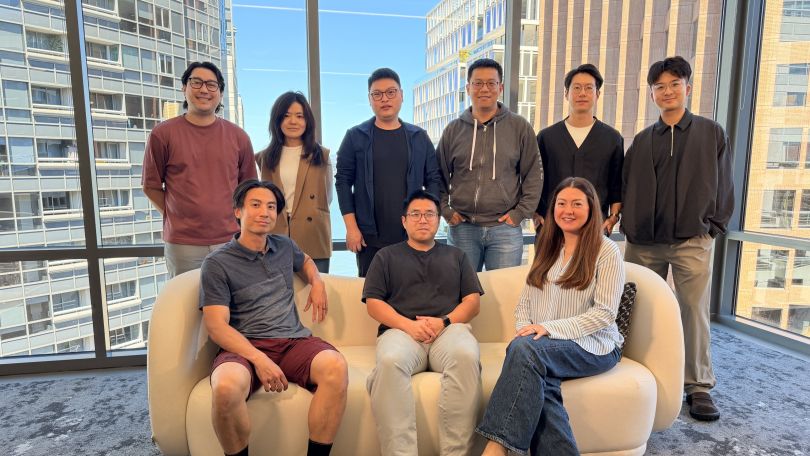


Airwallex provides companies with its global payments and financial platform. One of Airwallex’s AI goals is to build Agentic Finance and move beyond SaaS, delivering not just finance infrastructure, but actual finance work.
Which new technologies or frameworks are helping your teams move faster and build smarter?
We are building specialized AI agents across the research process. Knowledge agents continuously monitor key economic events, industry, policy and academic developments, maintain and update a structured knowledge base and identify emerging signals and relationships worth investigating. Analytics agents perform first-pass data exploration, generate and test hypotheses and present findings that warrant deeper investigation.
That frees data scientists and economists to focus on the judgement like identifying the questions that matter, assessing whether an empirical strategy is credible and deciding which findings are interesting and robust enough to go after.
Quality comes from layered verification throughout the process. Outputs are checked against source data wherever possible, validated at each stage and backed by a complete audit trail. Human judgement remains the final gate before anything is shared externally.
How do you balance experimentation with reliability in your development process?
Experiment fast, evaluate continuously. Internally, we experiment quickly with new data, hypotheses, methodology or models that can be tested in days because we can iterate and course-correct rapidly. Every AI-assisted analysis goes through an evaluation framework that provides continuous feedback throughout the iteration process, which helps us understand where AI is reliable, where expert judgement is essential and how both the technology and our research process should evolve over time.
The bar rises with exposure. Anything carrying Airwallex’s name, whether it’s a report, regulatory analysis, or the Economic Index, must be transparent, reproducible and able to withstand scrutiny from regulators, journalists and academics and customers. Automated evaluation provides scalable quality assurance, while expert review remains the final check on methodology, interpretation and publication decisions. That lets us move quickly without compromising reliability.
What role does collaboration play in turning innovative ideas into products?
Cross-functional by design. Her team sits at the intersection of commercial teams, finance, product, communications, government affairs and compliance, with high leadership visibility. Everything we produce, whether it's an internal strategy analysis, external report, index or dataset, is built with those teams from day one, not handed over after the fact.
AI strengthens that collaboration by synthesizing insights across teams, surfacing unexpected connections and generating alternative hypotheses that broaden the range of ideas the team explores. It accelerates early stage innovation, while people provide the judgement, context and domain expertise that turn promising ideas into credible products.
A concrete example: economic impact publications. We work on publications that combine data scientists and economists’ analysis with communications and government affairs' knowledge of what matters to regulators, lawmakers and broader audiences. Together, we turn rigorous research into a continuous stream of publications that showcase Airwallex's economic impact and contribute to industry, data-informed policymaking and scientific knowledge.

Graphcore is a team of semiconductor, software and AI experts, with deep experience in creating the complete AI compute stack — from silicon and software to infrastructure at datacenter scale.
What new technologies or frameworks are helping your teams move faster and build smarter?
Hardware development is still largely a sequential — or waterfall-oriented — process. Physical builds, component lead times, testing and validation create dependencies that cannot easily be accelerated. However, AI is helping us streamline knowledge work surrounding that process, for example to develop first drafts of specifications, summarize technical discussions, prepare program updates and tailor complex information for different audiences.
They do not replace technical review or engineering judgment, but they significantly reduce the time spent starting documents, synthesizing information and handling routine communication. The result is more time for the work where engineers create the most value — collaborating across disciplines, resolving complex problems, evaluating tradeoffs and applying sound engineering judgment.
How do you balance experimentation with reliability in your development process?
Balancing experimentation with reliability is always challenging, particularly when there is pressure to move quickly. We approach it through risk-based decision-making: using the team’s collective experience and engineering judgment to identify where experimentation is appropriate and where the consequences of failure require greater rigor.
Early prototypes and controlled experiments allow us to test assumptions and learn before committing to a design. At the same time, clearly defining the minimum viable product helps distinguish the capabilities that are essential from those where we can retain flexibility. Safety, core functionality, regulatory requirements and critical performance remain non-negotiable, while lower-risk features can evolve through iteration.
Ultimately, a minimum viable product should represent minimum viable scope — not minimum acceptable reliability. By concentrating testing and validation on the highest-risk areas, we can move quickly where the cost of failure is low and proceed more deliberately where reliability matters most.
What role does collaboration play in turning innovative ideas into products?
Collaboration is what turns an innovative idea into a product that can actually be built, tested and delivered. No single person or team sees every aspect of a complex engineering problem, so bringing together different disciplines, experiences and perspectives is essential.
One example is how our current development efforts bring together Graphcore teams in the United Kingdom, Poland, India and the United States. A challenge that may initially appear to belong to one discipline often has implications across hardware, software, validation and system integration. By involving specialists from these areas early, sharing findings openly and iterating on solutions together, we identify risks and improve decisions faster than any one team could independently.
That global collaboration is about more than distributing work. It allows each team to contribute its particular strengths while maintaining shared ownership of the outcome. Bringing together people across geographies, backgrounds and areas of expertise is ultimately what enables promising ideas to become great products.


Vercel is the platform where humans and AI agents build, ship and scale software together.
What new technologies or frameworks are helping your teams move faster and build smarter?
One of the ironies I’ve found in the current moment of agentic programming is I can get away with using so much less and accomplishing a lot more. Selecting the right tools, languages and infrastructure used to be a heavy, upfront cognitive tax. Every new project meant hand-rolling boilerplate: test environments, CI/CD, deployment pipelines, infra config which are all necessary, but none of it is the actual idea.
At Vercel, that tax is mostly gone. Our engineers give agents authenticated access to Vercel and GitHub and the agents start spinning up environments, deploying on demand, provisioning temporary infrastructure, writing their own integration tests to prove the work is correct, often without being asked. That autonomy is bounded by the same security model we use for human teams, so agents can move quickly while staying inside the guardrails. The result is I can focus on the core research behind my ideas and guide the agents on implementation, knowing that the agent will create the necessary feedback loops to prove its success.
How do you balance experimentation with reliability in your development process?
The honest answer is now 90 percent of my development process is experimentation, not a phase before the “real” work starts. There used to be a nagging pull to ship something just because I’d already spent the time building it. That pull is gone. I don’t hesitate to try an implementation or an API design because it’s so easy, in terms of time, to try it again in a different way.
That loop, build, evaluate, discard if it’s not right, is what lets me judge the result honestly instead of feeling obligated to defend a path just because time went into it. Reliability isn’t something I bolt on after experimentation; it’s the output of running that loop enough times that only the strongest version survives.
That’s the standard we hold ourselves to — fast iteration isn’t in tension with reliability, it’s how we get there.
What role does collaboration play in turning innovative ideas into products?
As implementation gets cheaper, expertise stops being the bottleneck for who gets to contribute. We no longer need to lean as heavily on the one person who happens to have deep technical knowledge in a given area. Instead, we can collaborate at a broader layer, with people who may not know how to build something technically complex but know exactly how it should work for a customer, a workflow, or a team. So we let the best idea win, regardless of where it comes from.
For example, Eve, our new open-source agent framework, is designed so building an agent is about defining what it does, not standing up the infrastructure around it. We’re seeing people outside of traditional engineering roles come together to build and ship internal agents.
Overall, fewer gates and more surface area for good ideas to reach production, no matter who they come from.