“When someone gets promoted at Smartly, no one is surprised,” Sales Director Simone Bocedi said.
Throughout his time at the AI-powered advertising platform provider, Bocedi has noticed a common thread when it comes to promotions: concrete evidence. He said that employees who earn promotions have made a tangible impact within their own team or across the company largely because they’re given a clear understanding of what a “good” and “great” work ethic looks like.
By giving employees a clear path toward growth, Smartly not only boosts team members’ levels of trust and satisfaction but encourages them to continue excelling in their roles.
At SailPoint, Senior HR Business Partner Kathleen Habeeb has benefited from many of the company’s transparent professional development initiatives, including a continuous self-assessment, which she collaborated on with her manager. With her manager’s feedback, she was able to hone in on a specific competency while leveraging an individual development plan.
“After working through a development plan in that way, I felt more confident to propose new ideas or untested hypotheses to solve bigger, more strategic problems,” Habeeb said.
For employees at Smartly, SailPoint and other companies including Dropbox and Qualtrics, clear, equitable frameworks for growth empower team members to achieve their professional ambitions and inspire others around them to do the same. Read on to learn how these seven companies take a transparent approach to career growth.
Featured Companies


Dropbox provides cloud-based solutions for file storage, sharing and collaboration, leveraging AI to transform knowledge work for over 700 million users.
What makes promotion criteria feel fair and clear — and what evidence supports it?
In all things performance management, clarity builds trust. When expectations are clear, employees know what “good” looks like in their current role and what actually changes as they move to the next level. Role definitions and level frameworks take the guesswork out of growth. They make the step change between levels concrete and observable rather than subjective or dependent on who your manager happens to be.
“Role definitions and level frameworks take the guesswork out of growth.”
When the performance review and calibration process is documented, employees can see how decisions are made, who’s involved and how consistency is maintained across teams. And when people can look at past promotions and clearly connect performance to the criteria, the system feels fair and credible.
The benefit to this clarity is engagement. Gallup’s research shows that employees who strongly agree they understand what’s expected of them are far more likely to be engaged and performing at a high level. Remember that, while promotion matters, it is not the only signal of growth. Expanded scope, lateral moves, stretch assignments or stepping into new and ambiguous problems all reflect real development, even when the title stays the same.
Which program most improved your capability in your role — and what changed after?
Early in my career, I worked for the consultant and academic who developed the Situational Leadership II framework, and it fundamentally shaped how I think about leadership. I saw firsthand that great leadership isn’t about having a single “right” style. It’s about paying attention to what a person actually needs in the moment.
Situational Leadership II gave me a simple, powerful way to do that. The model focuses on adjusting the balance of direction and support based on someone’s skill level and confidence for a specific task. Seeing the model applied in real situations helped me understand why people struggle or thrive under different managers and how small shifts in approach can dramatically change outcomes.
That lesson has stayed with me throughout my career. The model works because it meets people where they are. It prevents over-managing capable people and under-supporting those who are still learning. It continues to shape how I lead, coach, and develop others today.
What manager or mentor behavior consistently accelerates growth?
In my experience working with managers at every level, coaching makes the biggest difference. I’ve seen new managers, senior leaders and highly technical individual contributors grow the fastest when their managers help them think, not just execute. The best managers ask good questions and give timely, specific feedback. They create space to reflect on what’s working, what’s not and what skills need to be built next. That shows up in consistent one-on-ones, real-time feedback and follow-through that signals genuine investment in growth.
Research backs this up. Studies show that coaching-oriented managers drive higher performance, engagement and adaptability. Employees with managers who coach effectively are more likely to develop new skills, take ownership, and perform at higher levels over time.
Sponsorship comes next, and it’s just as critical. I’ve seen talented people stall not because they lacked skill, but because no one advocated for them. Strong managers don’t only coach behind the scenes. They put their people forward for visible projects and stretch opportunities, using their influence to open doors. Coaching plus sponsorship accelerates growth by pairing development with real opportunities.
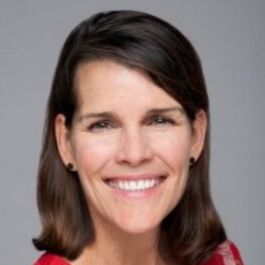

Qualtrics’ AI-powered platform is designed to enable brands to optimize employee and customer experiences and perform strategy and research.
What makes promotion criteria feel fair and clear — and what evidence supports it?
At a global company of our scale, how you get promoted matters as much as the promotion itself. We use the SCARF model to make the process transparent and respectful. Promotion criteria feels fair when it’s clear, stable and grounded in three non-negotiable pillars: business need (aligned with strategic workforce plans), role scope (higher responsibility and impact), and employee readiness (demonstrated results and leadership aligned with our values). This clarity removes “black boxes” and builds certainty.
We empower employees to own their growth using the 70/20/10 development model: 70 percent experiential learning, 20 percent relational mentorship and 10 percent formal training, turning promotions into an active journey via individual development plans.
Fairness also depends on strong manager-employee relationships. We invest heavily in enabling managers to have honest, trust-based conversations about current performance and gap closure needed for promotion.
Our promotion process is treated like a core product, refined regularly using quantitative and qualitative data. The true evidence lies in clear conversations: When employees clearly understand where they stand, it reduces anxiety and fosters accountability and long-term growth.
“Our promotion process is treated like a core product, refined regularly using quantitative and qualitative data.”
Which program most improved your capability in your role — and what changed after?
Early in my tenure as a director at Microsoft, I attended a week-long immersive HR leadership program through the National Training Laboratories Institute for Applied Behavioral Science that proved nothing short of transformational. Unlike typical training, the program had no fixed agenda; instead, eight to 14 participants engaged in deep, real-time interactions, pushing me far outside my comfort zone and reshaping how I lead. The experience focused on rarely practiced but crucial skills: self-awareness (understanding my impact on others), authenticity in relationships (beyond corporate politeness), and deep listening and feedback (creating a cycle of continuous learning).
Before this program, I led primarily through strategy and objectives. Afterward, I shifted to leading through genuine connection, developing emotional intelligence to read group dynamics and adapt in the moment. I stopped fitting a “director persona” and started leading authentically.
The program also deepened my approach to diversity, equity, inclusion and belonging by focusing on human interaction, not just policy, and helped me build stronger trust through vulnerability with my global team. Even decades later, these lessons persist: Leadership isn’t about knowing all answers but guiding the group with awareness and empathy toward collective solutions.
What manager or mentor behavior consistently accelerates growth?
Managers who truly accelerate growth don’t just manage tasks — they manage meaning through deep clarity and authentic connection.
Deep clarity means removing ambiguity, which the brain views as a threat that distracts from work. Effective managers identify specific skill gaps rather than giving vague feedback and co-create robust, experiential development plans with targeted stretch projects. They move beyond mentoring to sponsoring, using their influence to secure high-visibility roles for employees and shifting from “talking to you” to “talking about you” in leadership discussions, which accelerates growth.
Deep connection involves maintaining an honest, frequent feedback cadence focused on the “messy middle” of projects. Great managers normalize discussing “misses” alongside “wins,” creating psychological safety that fosters discovery and learning. They prioritize insight-based coaching by asking questions that prompt employees to find their own breakthroughs, making the learning stick. They also facilitate skip-level meetings and cross-functional exposure, increasing visibility and a sense of belonging across the organization.
Together, this blend of clarity and connection creates a culture of mutual accountability where employees feel both challenged and supported, transforming their entire professional trajectory.


SailPoint offers a suite of products designed to safeguard enterprise identities, improve IT efficiencies, reduce operational costs and mitigate cyber risks.
What makes promotion criteria feel fair and clear — and what evidence supports it?
Best-in-class promotion criteria is fair and clear when everyone can understand what is required to be promoted, and in turn, that criteria is then reliably used to evaluate and make promotion decisions about employees across teams, demographics and managers.
Data from the Great Place to Work Institute found that when criteria for promotions is unclear, the workforce does not believe that promotions are fairly awarded. At SailPoint, we intentionally provide multiple streams of information and support materials to ensure our promotion criteria is front and center for our crew and is consistently utilized by leaders across the company when making promotion decisions.
“At SailPoint, we intentionally provide multiple streams of information and support materials to ensure our promotion criteria is front and center for our crew and is consistently utilized by leaders across the company when making promotion decisions.”
Which program most improved your capability in your role — and what changed after?
The most impactful capability enhancement for me was doing continuous self-assessment against the competencies defined as most imperative for my role and having conversations about that assessment with my manager. He provided feedback and a viewpoint on my competencies, and we discussed how I could work to build a particular competency with the help of an individual development plan. Working through the structure of a development plan — having a guide in place with projects I proposed that should lead to a particular growth outcome — kept me engaged and focused on continuously looking for opportunities to build those key competencies. After working through a development plan in that way, I felt more confident to propose new ideas or untested hypotheses to solve bigger, more strategic problems.
What manager or mentor behavior consistently accelerates growth?
When managers provide immediate feedback with clear and specific examples about what was impactful, that can drive motivation and heighten engagement for crew to continue making similar strides when timely, positive feedback is shared, or course correct quickly when adjustments need to be made. These regular touchpoints with managers and mentors offer real-life opportunities to grow in a meaningful way.
We talk a lot about radical candor at SailPoint. The concept, coined by Kim Scott, is designed to help people build stronger relationships by caring personally while also challenging directly. When a manager can consistently be intentional about an employee’s growth by saying the hard thing and making sure that person knows it comes from a place of care, individuals are much more able to take on that feedback and grow from it.

Corporate Tools LLC’s entity management software is designed to help businesses more effectively handle legal and administrative tasks.
What makes promotion criteria feel fair and clear — and what evidence supports it?
Promotion criteria feels fair and clear when employees understand what’s being evaluated and why it matters. The evidence shows up in stronger ownership and more productive conversations. Employees come to growth discussions with clear examples of their impact and managers are aligned on what readiness looks like. That shared clarity builds trust in the process and helps employees focus their energy on making meaningful contributions.
Which program most improved your capability in your role — and what changed after?
The most impactful program has been pairing structured role levels with ongoing coaching and feedback. Having clearly defined expectations for each level, combined with regular check-ins, changed how managers coach and how employees take ownership of their growth.
“Having clearly defined expectations for each level, combined with regular check-ins, changed how managers coach and how employees take ownership of their growth.”
The result was better clarity and alignment across the organization. Employees have a clearer path for growth and make stronger contributions in their roles. Development conversations centered around expanding impact and future opportunities.
What manager or mentor behavior consistently accelerates growth?
Growth accelerates fastest when managers approach development as an ongoing responsibility, not a once-a-year conversation. The most effective leaders provide clear expectations, offer timely and specific feedback, and regularly discuss how an employee’s current work aligns with future growth opportunities.
When managers consistently reinforce what success looks like and help employees understand how to build toward the next level, development becomes intentional and sustainable. This consistency helps employees take greater ownership of their progress.


Smartly is the AI-powered advertising technology company transforming ad experiences for brands and their consumers. The company’s comprehensive advertising platform seamlessly integrates the capabilities of media, creative and intelligence.
What makes promotion criteria feel fair and clear — and what evidence supports it?
When someone gets promoted at Smartly, no one is surprised. When everyone knows what “good” looks like and what “great” looks like, then promotions are fair for everyone. You can usually trace promotions back to concrete evidence: the impact these people have had within their team, how they raised the bar for everyone else at Smartly, and for many, how they’ve shown up with external stakeholders.
Which program most improved your capability in your role — and what changed after?
Two programs helped me change the most: a leadership coaching course and a negotiation training. Leadership coaching forced me to look in the mirror: how I show up, how my energy lands and also how to listen and ask the right questions. Negotiation training sharpened the sales basis: structure, clarity and the confidence to hold value under pressure. After that, I close better deals with clients, but also with peers and executives. If you can, always continue learning.
3 Manager Behaviors That Accelerate Growth at Smartly
- “Trust (before proof): giving you space to stretch into the role. Learn, fail, then succeed.”
- “Direct, frequent feedback. Great managers tell you when to fly, when to stop, when to reassess and when to push. Receiving and learning to appreciate feedback is what can help you grow.”
- “Being your biggest cheerleader. Good managers are your biggest fans. By trusting you and pulling you into rooms you didn’t even know existed, they allow you to shine, and you feel motivated to make them happy time and time again.”
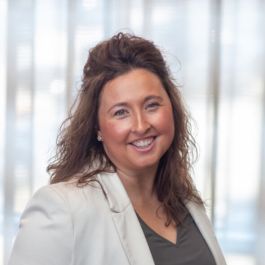

Workhuman’s employee recognition platform enables organizations to acknowledge work anniversaries, celebrate life milestones, provide performance feedback and more.
What makes promotion criteria feel fair and clear — and what evidence supports it?
I think promotion criteria should always be as clear and direct as possible. When something feels ambiguous or leaves room for personal interpretation, then it doesn’t feel like there is a level playing field. When a business provides clear outlines for each level of the business and what the actions are that need to be taken to get promoted, then you complete those actions, you are essentially in the running for that opportunity. When new roles are created, I think it is essential that a clear list of skills is part of the job description along with expected outcomes from the role. This ensures that it doesn’t feel like it’s just simply “created for someone” but rather is meeting a business need, and if you meet the skills criteria, you are in the running for the role.
Which program most improved your capability in your role — and what changed after?
I couldn’t speak to a specific program, but I can speak to a specific leadership action. I was enabled by my leadership team to take on projects outside my current role and demonstrate some of my skills that were not currently being utilized. I was encouraged and supported in my work with other teams and with project ownership, which led me to feel like I was in control of my own fate. If they had given me the keys, it was up to me to open the door. I also felt that, in taking on project management and working with different internal teams, it allowed me to better understand various areas of the business and how our work impacted each other. It allowed me to lead with more empathy and a commitment to not only self-improvement but business improvement.
“I was encouraged and supported in my work with other teams and with project ownership, which led me to feel like I was in control of my own fate.”
What manager or mentor behavior consistently accelerates growth?
In my own personal experience as well as in a coaching capacity, I think it almost always comes down to asking for what you want. I think that the more direct you are, even a few months into a current role, about what your ambitions are, good leaders will make a plan to support you in this growth. They will encourage you to seek out partnerships across the business and take advantage of learning and development opportunities both within the business and outside of it. I always encourage my team to stretch their arms wide to find people who can support them in their career goals. Sometimes, those people might be in the most unexpected places.


SOPHiA GENETICS’ AI-powered platform enables healthcare organizations to garner insights from complex multimodal datasets and share knowledge with other institutions across the industry.
What makes promotion criteria feel fair and clear — and what evidence supports it?
I joined SOPHiA GENETICS as a marketing intern and left as head of talent management. Over the years, I grew both horizontally and vertically, taking on new roles as the company evolved. I moved from marketing to sales enablement, and later from sales enablement to talent management, each time expanding my skills and scope, sometimes as an individual contributor and sometimes as a people leader.
Along the way, I was promoted several times as my responsibilities increased. Strong performance in the current role and attitude are key criteria in promotions: Living the Seven Virtues of SOPHiA GENETICS is absolutely essential for career growth, as they define what great looks like and are intertwined with one’s ability to deliver results.
People at SOPHiA GENETICS grow hand in hand with the company. The more SOPHiA GENETICS grows, the more opportunities for new roles and extended scopes open, which creates real opportunities for people to develop and progress both personally and professionally, just as it was the case for me.
Which program most improved your capability in your role — and what changed after?
The internship program at SOPHiA GENETICS changed my life. In just three months, it gave me a strong foundation in marketing and, more importantly, a unique opportunity to work directly with the head of sales and the CEO on the company’s very first pitch.
“The internship program at SOPHiA GENETICS changed my life.”
Back in 2015, we didn’t yet have a well-rounded pitch that truly unified the sales team. I spent hours working side by side with the CEO to shape the right story and capture SOPHiA GENETICS’ vision in a way that would resonate and grab attention. It worked. As a result, I was asked to train the entire sales team on mastering the pitch, which is how I found my way into sales enablement.
From that moment on, I was drawn to helping people grow. It started with supporting sales and later evolved into supporting people across the entire organization. In my role, I also had the opportunity to take the internship program to the next level in my role. Today, we have over 30 interns, with 100 percent of them reporting their willingness to continue working at SOPHiA GENETICS full-time after their internship. This is possible because tutors and managers at SOPHiA truly invest the time to train, support, and mentor the next generation.
What manager or mentor behavior consistently accelerates growth?
I observe a clear pattern at SOPHiA GENETICS: The managers who build the strongest teams are those who create space for honest feedback and, as a result, for growth. They are not afraid to speak the truth to their team members and peers, always with the genuine intention of helping them develop. I find this approach both rare and invaluable, and it reflects our shared mantra, We Care. We care for our customers, for the growth of our company, and first and foremost, for our people.
This culture is lived daily on the job rather than driven by a specific program. It is deeply ingrained in how we work and enables each individual to identify and pursue opportunities for growth. Personally, this environment has significantly accelerated my development: My best managers helped me adapt my communication style and project confidence, even when I initially lacked it.