
How Internal Mobility Supports Career Growth at Ericsson

When Anubhav Jain, head of technical authority for the cloud, thinks about his career journey at Ericsson, one phrase immediately comes to mind.
“True leadership isn’t about climbing the ladder; it’s about building a stronger ladder for everyone behind you,” Anubhav said.
What Does Ericsson Do?
Founded in 1876, Ericsson is a communications technology company that supports global mobile network infrastructure, cloud software and wireless connectivity. The company started in telecommunications and is now a leader in everything from IoT systems to 5G networks.
Anubhav has spent 13 years with Ericsson, building a career that has taken him across continents and through several very different roles. He started in the field as a support engineer, and overtime, developed what he calls a “Swiss army knife” of IT skills through his vast data center and cloud work.
“I wasn’t just learning tech; I was learning how different businesses actually breathe,” Anubhav said.
Earlier in his career, he was obsessed with mastering resilient infrastructures — making sure systems stayed up and running.
“It was all about how things worked,” he said. “Now, I spend more time thinking about ‘why’ and how it impacts customers and the business.”
A big part of that shift came from stepping beyond the boundaries of his role.
“I didn’t wait for the next title. I looked where I could add value,” Anubhav said.
Today, as an operations manager, Anubhav’s priorities have shifted toward building up his direct reports.
“I realized it was time to give back what my mentors gave me — tailored guidance and a map for career navigation,” Anubhav said. “I try to provide my team with a mix of shared experience, industry insights and just the right pinch of honest feedback to help them grow.”
Anubhav is just one of the leaders shaping a culture of continuous development at Ericsson, where employees grow through mentorship, hands-on projects and internal mobility.
How Ericsson Uses Hands-On Projects to Build Technical Skills
Career growth at Ericsson is supported by formal systems like customized development tracks, paid industry certifications and mentorship programs.
But ask employees what really stands out, and many point to hands-on projects and the people around them.

Alina Rica, automated operations engineer, saw this firsthand.
She joined Ericsson in 2023 in a support role while also pursuing a bachelor's degree.
“It quickly became more than just my first job; it was the place where everything I had learned started to come to life in practice,” Alina said.
Alina said she was able to put her operations and problem-solving skills into action immediately. By coordinating with IT teams and performing troubleshooting on Linux-based systems, she soon found herself working on projects that stretched her technical and communications skills.
“The support from the team, along with Ericsson’s learning programs, played an important role in my growth,” Alina said.
She described it as a work environment where growth comes naturally, driven by strong support and constant opportunities to learn.
“From the very beginning, I’ve been encouraged to ask questions, take initiative and learn by doing, which helped me build confidence step by step,” she said.
What Does Learning and Career Development Look Like in Action at Ericsson?
“My development has been supported by a mix of hands-on experience and the learning resources available within Ericsson. In addition to that, I’ve always had access to internal learning platforms and training sessions. Being able to learn at my own pace and apply that knowledge in real scenarios made a big difference.”
— Alina Rica, automated operations engineer
Another important factor in Alina’s career development? Support from peers and more experienced team members.
“Whether it was guidance, feedback or simply sharing knowledge, this kind of informal mentorship played a key role in my growth,” Alina added.
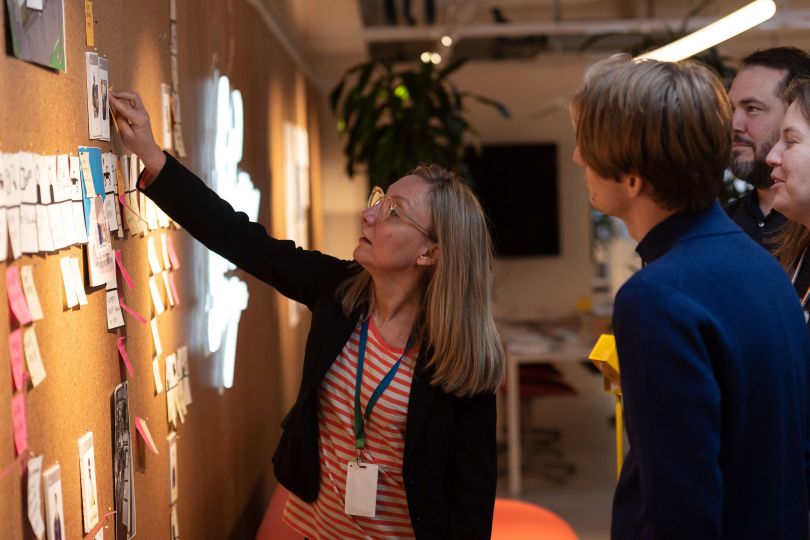
How Ericsson’s Leadership Drives Employee Development
For Dorna Eriksson Shafiei, head of talent and development, Ericsson leaders have a long history of supporting employee development — through formal programs just as much as daily behaviors.

“Our leadership principles set a clear expectation that leaders actively develop people — by coaching, sponsoring talent, creating stretch opportunities and enabling movement rather than holding on to talent,” Dorna said.
At Ericsson, leaders are accountable for accelerating talent and encouraging employees to take ownership of their development, she said. This is made possible through the company’s culture of transparency, which hinges on shared expectations and open career conversations.
And when employees do advance, Dorna said the whole business wins.
“Our leadership principles set a clear expectation that leaders actively develop people.”
“At Ericsson, employee growth is central to how we build future capability and deliver on our strategy,” Dorna said. “In a fast-evolving technology and business environment, our success depends on having people with the right skills, experiences and mindset at the right time.”
By creating space for continuous development and meaningful career movement, Ericsson strengthens its ability to innovate, adapt and stay competitive — while also supporting long-term, sustainable careers for its people, she added.
“They say a career isn’t a straight line; it’s a jungle gym,” Anubhav said. “Looking back at my journey, I’d go a step further — it’s been a high-speed roller coaster. Honestly? I’ve loved every second of it.”
Frequently Asked Questions
How does Ericsson support career growth?
Ericsson supports career growth through hands-on projects, internal mobility, mentorship, leadership support and formal development systems. Employees are encouraged to step beyond the boundaries of their roles, take initiative, learn by doing and have open career conversations with leaders who are accountable for helping talent grow.
What learning resources does Ericsson offer employees?
Ericsson offers customized development tracks, paid industry certifications, mentorship programs, internal learning platforms and training sessions. Employees also highlight informal mentorship, peer guidance and hands-on project experience as important parts of how they build skills.