
Richard Ewing
Product advisor at Entrepreneurs of Tomorrow
Expertise: Product management
Education: ITT Technical Institute-Seattle; City University of Seattle
Richard Ewing is The AI Economist, founder and CEO of Exogram.ai and CareerWin.ai, creator of RichardEwing.io, and an advisor on enterprise AI strategy, governance and product innovation. Through his companies and research, he explores how intelligent systems are designed, governed and scaled, helping organizations build AI that is secure, economically sustainable and ready for production.
Sort By
Most Recent
17 Articles
I ran an experiment by handing off a bunch of chores to autonomous agents. The results were surprising.
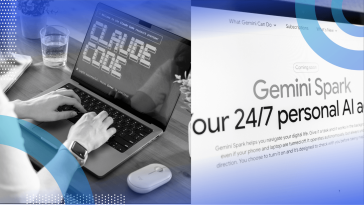
Claude won the terminal. Google is betting on the background.

A frontier model is an AI system operating at the current leading edge of capability. The category isn’t fixed: as newer systems solve harder problems, what was considered frontier can quickly become ordinary software.

None of the existing roles in a business are equipped to handle AI agents in production. You need a systems governor.

The next AI coding battle isn’t about autocomplete. It’s about which tool can handle the whole task.

I used both Cursor and Google Antigravity to build a business. Six months of late-night error messages taught me a lesson I didn't expect.

I put each model through a series of everyday tasks. Here’s what I learned about what they’re good at.

Inference is probabilistic; execution must be deterministic. You need a three-gate pipeline that protects databases and APIs from unauthorized AI agent actions.
AI agent architectures have a serious flaw because they collapse of deterministic boundaries between inference and execution. That makes a breach hard to detect until it’s too late.

The common approach to AI agent security is based on guardrails that amount to guesses. A real security program needs rigid rules, not probabilistic predictions.
Most AI features are money sinkholes subsidized by venture capital. I developed the Evergreen Ratio to ensure your unit economics actually work.
AI coding assistants have redefined the work of the software developer. Our expert explains what the job will look like going forward.