


Shield AI is a venture-backed defense-tech company with the mission of protecting service members and civilians with intelligent systems. Its products include Hivemind autonomy software, V-BAT and X-BAT aircraft, and Aechelon simulation and synthetic reality technologies. With offices and facilities across the U.S., Europe, the Middle East, and Asia-Pacific, Shield AI’s technology actively supports operations worldwide. For more information, visit www.shield.ai. Follow Shield AI on LinkedIn, X, Instagram, and YouTube.
About the role:
Shield AI is seeking a Staff Manufacturing Infrastructure Engineer to own the systems infrastructure for our new 400,000 sq ft manufacturing facility in the Seattle-Tacoma area, home to our newest flagship product. You will design, build, and operate the compute, virtualization, storage, and backup and recovery platforms that run the factory, support the site’s Active Directory services as part of Shield AI’s enterprise environment, and own the infrastructure behind manufacturing systems such as MES, ERP, PLM, quality, and test, from build-out and commissioning through ramp to high-rate production.
This is a hands-on technical leadership role. You will set the systems architecture and standards for the site and partner with the Manufacturing Infrastructure team, including the manufacturing network team, as well as Manufacturing Engineering, Operations, Facilities, Cybersecurity, and Cloud Platform, to keep production running.
This position is based on site in the Seattle, Tacoma, or surrounding SeaTac, WA area.
What You’ll Do:
Architecture and Build
Own the end-to-end systems architecture for the facility: compute, virtualization, storage, and backup and recovery, plus site identity services integrated with the enterprise, sized for build-out, commissioning, and production ramp.
Support and operate site Active Directory services, including domain controllers, DNS, Group Policy, authentication, and replication, as an extension of Shield AI’s enterprise Active Directory and Entra ID environment, in partnership with the enterprise teams that own them.
Design and operate virtualization and Windows and Linux server platforms (for example VMware, Hyper-V, or equivalent) for production, engineering, and test workloads.
Design, administer, and optimize enterprise storage platforms (for example NetApp, Pure Storage, or Dell EMC), including capacity, performance, availability, replication, and lifecycle management.
Plan capacity and size infrastructure for the production ramp, new lines, and future site expansion.
Select vendors, develop BOMs, and drive procurement and delivery timelines for compute, storage, and backup platforms.
Manage infrastructure as code, with builds and configuration in Git and repeatable deployment patterns using Terraform, Ansible, PowerShell, Python, or similar tools.
Automate provisioning, patching, and compliance checks from day 0 through day 2 so the site can be rebuilt and replicated consistently for future lines and facilities.
Manufacturing Systems and Facility Readiness
Lead systems technology readiness from design through construction, commissioning, and production ramp, including cutover plans, acceptance testing, and handoff to operations.
Build and host the infrastructure for manufacturing systems such as MES, ERP and PLM integrations (including Teamcenter), quality, and test systems, in partnership with Manufacturing Engineering, controls teams, and equipment vendors.
Support servers and systems that sit alongside production, such as equipment-vendor and test-station servers, historians, and imaging, including patching and lifecycle rules for vendor-controlled systems, with Manufacturing Engineering and controls teams.
Design and deliver shop-floor and edge compute for production lines and test and inspection stations, including VDI and GPU-accelerated workloads where needed.
Lead the systems side of server room, MDF/IDF, and data center design reviews, including racks, power and cooling, capacity, hardware lifecycle management, and documentation, and coordinate with Facilities and contractors through construction and commissioning.
Operations, Security and Reliability
Operate site systems infrastructure to production-grade availability targets, and define uptime targets, change governance, and maintenance windows with Manufacturing Operations that fit production schedules.
Design, document, and test backup, replication, and disaster recovery for production systems, including RTO/RPO planning and DR exercises, in an environment where downtime affects output.
Build observability for servers, storage, backup, and capacity so issues are found before they affect production.
Serve as tier-3 escalation for production-impacting systems incidents; lead root-cause analysis and drive corrective actions.
Participate in on-call rotations, maintenance windows, and change management, supporting 24/7 production schedules.
Partner with Cybersecurity on hardening, patching, vulnerability management, and access controls aligned with NIST 800-171, CMMC, and ITAR requirements.
Work with the manufacturing network team on connectivity, segmentation, and dependencies, with the network team owning network architecture and devices and this role owning the systems that attach to them.
Leadership
Set systems standards, reference designs, and runbooks that can be reused for future lines and facilities.
Mentor engineers and technicians, review designs, and influence the roadmap across Manufacturing Infrastructure.
Required Qualifications:
Bachelor’s degree in Computer Science, Engineering, Information Systems, or a related field, or equivalent experience.
8+ years of experience engineering and supporting enterprise infrastructure in production environments, with direct experience supporting a manufacturing or production environment.
Hands-on experience deploying and operating on-premises data center or server room infrastructure, including rack-level deployments, power and cooling, and hardware lifecycle management.
Strong experience supporting Microsoft Active Directory in an enterprise environment, including AD DS, Group Policy, DNS, authentication, and replication.
Strong experience with enterprise compute, virtualization, and storage platforms, such as VMware, Hyper-V, KVM, NetApp, Pure Storage, Dell EMC, or equivalent.
Strong Windows Server administration experience and working proficiency with Linux systems such as RHEL or Ubuntu.
Experience designing and implementing backup, replication, disaster recovery, and business continuity solutions, including RTO/RPO planning and testing.
Experience with infrastructure automation and configuration management using tools such as Terraform, Ansible, PowerShell, Python, or Bash.
Experience supporting hybrid infrastructure across on-premises environments and AWS and/or Azure.
Familiarity with manufacturing systems such as MES, ERP, PLM, or quality platforms, and with how production equipment and infrastructure connect.
Demonstrated ability to lead complex technical initiatives, establish engineering standards, troubleshoot ambiguous problems, and mentor other engineers.
Effective written and verbal communication skills, with the ability to work with technical and non-technical audiences.
Ability to travel occasionally to other Shield AI locations.
This position may require access to export-controlled information, and employment may be contingent on U.S. person status or export authorization.
Preferred Qualifications:
Experience building or commissioning a greenfield manufacturing, data center, or large campus facility, including supporting a site through production ramp.
Experience in aerospace, defense, or other regulated manufacturing, including ITAR and CUI environments.
Experience with Siemens Teamcenter or other MES and PLM platforms.
Deep experience with enterprise storage and data protection ecosystems such as NetApp, Pure Storage, Dell EMC, or Cohesity.
Experience with Entra ID, VDI platforms (VMware Horizon, Citrix, or Azure Virtual Desktop), and GPU or high-performance compute for engineering workloads.
Experience with Kubernetes or containerized workloads and the underlying compute and storage requirements.
Familiarity with OT security guidance such as IEC 62443 and NIST 800-82, and industrial protocols such as OPC UA.
Relevant technical certifications such as VMware VCP, Microsoft, NetApp, AWS, Azure, CISSP, or ITIL.
Skills Required
- Bachelor's degree in Computer Science, Engineering, Information Systems, or a related field, or equivalent experience
- 8+ years engineering and supporting enterprise infrastructure in production environments, including manufacturing or production experience
- Experience deploying and operating on-premises data center or server room infrastructure, including rack deployments, power and cooling, and hardware lifecycle management
- Strong Microsoft Active Directory experience, including AD DS, Group Policy, DNS, authentication, and replication
- Experience with enterprise compute, virtualization, and storage platforms such as VMware, Hyper-V, KVM, NetApp, Pure Storage, or Dell EMC
- Strong Windows Server administration experience and working proficiency with Linux systems such as RHEL or Ubuntu
- Experience designing and implementing backup, replication, disaster recovery, and business continuity solutions, including RTO/RPO planning and testing
- Experience with infrastructure automation and configuration management using Terraform, Ansible, PowerShell, Python, or Bash
- Experience supporting hybrid infrastructure across on-premises environments and AWS and/or Azure
- Familiarity with MES, ERP, PLM, quality platforms, and production equipment infrastructure connections
- Ability to lead complex technical initiatives, establish engineering standards, troubleshoot ambiguous problems, and mentor engineers
- Effective written and verbal communication skills with technical and non-technical audiences
- Ability to travel occasionally to other company locations
- Experience building or commissioning a greenfield manufacturing, data center, or large campus facility through production ramp
- Experience in aerospace, defense, or regulated manufacturing, including ITAR and CUI environments
- Experience with Siemens Teamcenter or other MES and PLM platforms
- Deep experience with NetApp, Pure Storage, Dell EMC, Cohesity, or similar storage and data protection ecosystems
- Experience with Entra ID, VDI platforms, and GPU or high-performance computing workloads
- Experience with Kubernetes or containerized workloads
- Familiarity with IEC 62443, NIST 800-82, and OPC UA
- Relevant certifications such as VMware VCP, Microsoft, NetApp, AWS, Azure, CISSP, or ITIL
What the Team is Saying


Shield Compensation & Benefits Highlights
How does Shield ensure its pay and bonus plans are competitive?
Shield competes for high-performing talent through competitive compensation, company equity, retirement contributions and benefits that support employees’ health, families and wellbeing. Compensation is designed to recognize the level of skill, ownership and impact required to build advanced AI and aerospace systems.
- Competitive pay for specialized talent: Shield recruits engineers, operators and business professionals working across artificial intelligence, autonomy, robotics, aircraft development and manufacturing. The company offers competitive compensation to attract employees capable of solving technically difficult, mission-critical problems. Its hiring philosophy prioritizes sustained excellence, rapid learning, resilience and measurable results.
- Equity tied to long-term growth: Eligible employees receive company equity, allowing them to participate in Shield’s long-term success. That opportunity is supported by significant business momentum: Shield reached a $12.7 billion post-money valuation in 2026, more than doubling its previous investor valuation, and projected annual revenue of more than $540 million.
- Recognition for ownership and contribution: Shield’s culture rewards employees who take responsibility for difficult work and create meaningful impact. An employee said compensation and raises were “generous and fair,” while another reported that employees can pursue opportunities, demonstrate ownership and be rewarded for their contributions. A staff engineer also said that hard work was recognized and rewarded.
- Benefits that support life beyond work: Shield’s total-rewards approach is designed to give employees practical support across health, family, financial security and everyday flexibility. Medical coverage and mental-health resources help employees manage their wellbeing, while paid parental leave, pet insurance and flexible work hours recognize that responsibilities outside work look different for every person. Retirement matching, stock benefits and location-based fitness support add longer-term value, making the package more than a collection of perks—it is part of how Shield helps employees sustain demanding, mission-focused careers.
- External signals:
- Compensation sentiment: Employees surveyed externally describe pay increases and overall compensation as fair and generous. (Glassdoor)
- Performance recognition: Reviews connect rewards with ownership, strong output and demonstrated value. (Glassdoor)
- Business momentum: Employees point to rapid growth, strong customer demand and expanding product programs as positive long-term career and equity signals. (Glassdoor)
Bottom line: Shield supports competitive total rewards through salary, equity, retirement matching and broad benefits, while recognizing employees who take ownership and deliver meaningful results.
Shield Insights

What We Do
At Shield you won't wait years to see your work reach the field. You'll build hardware and software that operates in the real world right now, in the hands of the people who depend on it. Hivemind, our AI pilot, has been flying since 2018. It has flown more than 30 platforms, including an F-16, and it now sits under a U.S. Air Force production contract for Collaborative Combat Aircraft. When you write code or shape a system here, you contribute to technology with a proven flight record and a clear production future. V-BAT flies intelligence, surveillance, and reconnaissance missions with an operational record that stretches from Ukraine to the Indo-Pacific. It delivers eyes where they matter most, in the most demanding conditions on earth. The teams behind it watch their work get tested where the stakes are real. X-BAT takes its first flight this year. It's an AI-piloted fighter that needs no runway, built to operate where traditional aircraft can't. Join now and you help shape a program at its earliest, most formative stage. That's the kind of ground-floor work that defines a career. Do the most impactful work of your life, on problems that matter. Autonomy at this level asks a lot of you. You'll take on problems in perception, planning, and control that few teams anywhere are equipped to solve. You'll work across disciplines, from aerospace and robotics to machine learning and systems engineering, alongside people who hold themselves to an exacting standard and expect the same from you. Our mission is clear: protect service members and civilians with intelligent systems. That purpose runs through every decision, every design review, and every deployment. It's why the work here carries a weight you can feel. Ready to join our mission? Explore our open roles and find where you fit.
Why Work With Us
Founded in 2015 by a former Navy SEAL, Shield builds AI pilots and uncrewed aircraft. Veterans aren't an afterthought here, they're at every level. It's why the work carries weight: AI pilots and uncrewed aircraft flying real missions, from Ukraine to the Indo-Pacific, protecting service members and civilians.
Gallery
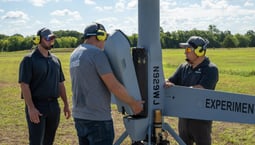


Shield Teams


Shield Offices
Hybrid Workspace
Employees engage in a combination of remote and on-site work.

