About the Team
Rapid7's AI Engineering team builds the AI that powers our security platform. We are AI engineers and applied scientists who take models from research to production, combining open-source and frontier LLMs, AI agents, and fast predictive models with more than 20 years of Rapid7 security expertise. Our work drives core use cases across Detection and Response, such as alert triage, threat investigation, and automated response, and Exposure and Remediation, such as vulnerability prioritization, attack surface risk assessment, and guided remediation. Together, these help customers stop threats faster and fix what matters most.
About the Role
As a Staff Engineer on the AI Infrastructure team, you will own the platform that trains, deploys, and runs our models in production. You will build the MLOps tooling and pipelines that let AI engineers move from experiment to production quickly and safely, and you will run model training and serving on cloud and managed GPU capacity. You will make the key calls on reliability, scaling, and cost, balance performance against spend, and stay hands-on with the hardest problems. Specifically your focus will be to:
- Build and operate the platform for training, fine-tuning, and serving models on cloud GPU capacity, including scheduling, autoscaling, and multi-tenant resource sharing across teams
- Manage GPU consumption and cost: choose instance types and purchasing models (on-demand, reserved, savings plans, and spot), evaluate managed services and GPU providers, forecast demand, and drive up utilization while keeping latency and reliability targets
- Build and maintain model serving infrastructure for open-source and custom models using vLLM, SGLang, or similar, including deployment, canary rollout, autoscaling, and rollback
- Build MLOps pipelines for the full model lifecycle: data and experiment tracking, training orchestration, model registry, versioning, evaluation gates, deployment, and retirement
- Run distributed training and fine-tuning jobs reliably, with checkpointing, fault tolerance, and recovery from preempted or interrupted capacity
- Monitor model and infrastructure health, including GPU utilization, latency, throughput, errors, cost per request, and model quality drift, with alerting and on-call practices that keep production stable
- Make evals a release gate in the deployment pipeline so no model reaches production without passing quality and safety checks
- Apply security practices to the AI stack, including access control for models and data, secrets management, supply chain controls for model artifacts and containers, and tenant isolation
- Write infrastructure as code and build self-service tooling that lets AI engineers launch training, evaluation, and serving workloads without platform team involvement
- Set standards for reliability, observability, and cost across AI workloads, and mentor Senior engineers
The skills and qualities you'll bring include:
- 8+ years of software or infrastructure engineering experience, including 3+ years building and operating ML platforms or MLOps systems in production
- MLOps: experience with model registries, experiment tracking, CI/CD for models, and automated evaluation and deployment pipelines
- Model serving: experience deploying and operating LLM or ML inference services, with knowledge of vLLM, SGLang, Triton Inference Server, or similar, and of batching, caching, and quantization trade-offs
- Cloud GPU workloads: experience running training and inference on cloud GPU instances or managed ML services, including capacity options, quotas, and cost management, without needing to own or operate GPU hardware
- Orchestration: strong experience with Kubernetes and container platforms, and with workflow or job tools for ML workloads (for example Ray, Kubeflow, Argo, or Airflow)
- Cloud: experience on AWS or a comparable cloud, including networking, storage for large datasets and checkpoints, IAM, and cost management
- Infrastructure as code and observability: experience with Terraform or similar, and with monitoring tools such as Prometheus and Grafana
- Working knowledge of PyTorch and distributed training concepts
- Strong Python fundamentals and proficiency in Go or a similar systems language
- Takes ownership of complex technical outcomes across teams, proactively managing risks and dependencies, following through on commitments and driving issues to resolution.
- A strong communicator who can explain complex technical concepts and trade-offs to technical and non-technical audiences, building alignment around engineering decisions
- Builds strong cross-functional partnerships across Engineering, Product and other teams to resolve dependencies, align technical approaches and deliver shared outcomes
- Translates customer needs into scalable AI solutions, balancing customer value, performance and the cost of developing and running AI systems to deliver commercially viable outcomes
- Embody our core values to foster a culture of excellence that drives meaningful impact and collective success.
Preferred Skills and Experience include:
- Experience with distributed training frameworks such as FSDP or DeepSpeed, and with fine-tuning pipelines for open-source LLMs
- Experience with managed ML platforms such as Amazon SageMaker or Bedrock, or with GPU cloud providers
- Experience with FinOps for AI workloads, including GPU cost attribution and chargeback
- Experience with GPU performance profiling and optimization, including CUDA, Triton, or TensorRT-LLM
- Experience with multi-tenant, regulated, or security-sensitive environments, and compliance frameworks such as SOC 2 or FedRAMP
- Security domain experience, such as detection engineering, SOC/MDR, or vulnerability management
- Experience supporting agentic AI workloads, including sandboxed execution and long-running workflows
- Ability to explain technical trade-offs to engineering, product, and leadership audiences
- Open-source contributions in ML infrastructure or MLOps
We know that the best ideas and solutions come from multi-dimensional teams. That's because these teams reflect a variety of backgrounds and professional experiences. If you are excited about this role and feel your experience can make an impact, please don't be shy - apply today.
#LI-CG1
About Rapid7
At Rapid7, our vision is to create a secure digital world for our customers, our industry, and our communities. We do this by harnessing our collective expertise and passion to challenge what's possible and drive extraordinary impact. We're building a dynamic and collaborative workplace where new ideas are welcome.
Protecting 11,500+ customers against bad actors and threats means we're continuing to push the envelope just like we' ve been doing for the past 20 years. If you 're ready to solve some of the toughest challenges in cybersecurity, we're ready to help you take command of your career. Join us.
Rapid7, Inc. is committed to fair and equitable compensation practices. A candidate's salary is determined by various factors including, but not limited to, relevant work experience, skills, and certifications. We evaluate compensation decisions on a case-by-case basis, and it is not typical for an individual to be hired at the very top of the salary range.
The annual salary range for this role, depending on location, is:
United States: $186,500.00 - 252,300.00 USD Annual
Salary ranges may vary based on geographical location. This range does not include variable/incentive compensation, equity and benefits (where applicable/eligible).
All qualified applicants will receive consideration for employment without regard to race, color, religion, sex, sexual orientation, gender identity, age, national origin, disability, protected veteran status or any other status protected by applicable national, federal, state or local law.
Skills Required
- 8+ years of software or infrastructure engineering experience
- 3+ years building and operating ML platforms or MLOps systems in production
- Experience with model registries, experiment tracking, model CI/CD, and automated evaluation and deployment pipelines
- Experience deploying and operating LLM or ML inference services, including batching, caching, and quantization trade-offs
- Experience with vLLM, SGLang, Triton Inference Server, or similar model-serving technologies
- Experience running training and inference on cloud GPU instances or managed ML services, including capacity, quotas, and cost management
- Strong experience with Kubernetes and container platforms
- Experience with ML workflow or job tools such as Ray, Kubeflow, Argo, or Airflow
- Experience with AWS or a comparable cloud, including networking, storage, IAM, and cost management
- Experience with Terraform or similar infrastructure-as-code tools
- Experience with monitoring tools such as Prometheus and Grafana
- Working knowledge of PyTorch and distributed training concepts
- Strong Python fundamentals and proficiency in Go or a similar systems language
- Ability to take ownership of complex technical outcomes across teams and drive issues to resolution
- Strong communication and cross-functional partnership skills
- Ability to translate customer needs into scalable, commercially viable AI solutions
- Experience with distributed training frameworks such as FSDP or DeepSpeed
- Experience with fine-tuning pipelines for open-source LLMs
- Experience with managed ML platforms such as Amazon SageMaker or Bedrock, or GPU cloud providers
- Experience with FinOps for AI workloads, GPU cost attribution, or chargeback
- Experience with GPU performance profiling and optimization, including CUDA, Triton, or TensorRT-LLM
- Experience with multi-tenant, regulated, or security-sensitive environments and compliance frameworks such as SOC 2 or FedRAMP
- Security domain experience such as detection engineering, SOC/MDR, or vulnerability management
- Experience supporting agentic AI workloads, including sandboxed execution and long-running workflows
- Open-source contributions in ML infrastructure or MLOps
What the Team is Saying





Rapid7 Compensation & Benefits Highlights
How does Rapid7 ensure its pay and bonus plans are competitive?
Rapid7 keeps pay and bonus plans competitive through market-aligned compensation, role-specific incentives and long-term rewards that give employees a stake in company performance. Rapid7's total rewards approach is competitive and equitable, with programs designed to support employees’ financial well-being and share in business success.
- Market-aligned pay structures: Rapid7’s compensation philosophy emphasizes benchmarking pay against market conditions and maintaining competitive compensation across roles. The company highlights pay transparency and offers a mix of salary, bonuses and role-specific incentive plans, with defined commission frameworks for eligible employees. This approach is designed to help attract and retain talent while supporting equitable compensation practices.
- Long-term ownership and wealth building: In addition to cash compensation, Rapid7 provides opportunities for employees to participate in the company’s long-term success through equity awards and an employee stock purchase plan.
- Financial well-being: Rapid7 supports employees beyond base pay through retirement and financial planning benefits. The company offers 401(k) plans, 401(k) matching, retirement planning tools and access to financial advisors to help employees build long-term financial security and manage their investments. These benefits reinforce the company’s broader strategy of supporting employees’ physical, mental, emotional and financial well-being.
- External signals:
- Compensation Confidence: Employee reviews frequently characterize compensation as competitive. (Comparably)
- Benefits and Financial Support: Employees also point to the breadth of benefits offerings. Reviews mention “excellent health benefits” and “good 401(k) match” as meaningful components of Rapid7’s total rewards package. (Indeed; Comparably; Glassdoor)
Bottom line: Rapid7 supports competitive pay through market-aligned compensation, performance-based incentives and long-term ownership opportunities. Its total rewards programs pair salary and bonus structures with equity, retirement benefits and financial planning resources.
Rapid7 Insights

What We Do
At Rapid7, our vision is to create a secure digital world for our customers, our industry, and our communities. We do this by harnessing our collective expertise and passion to challenge what’s possible and drive extraordinary impact. We’re building a dynamic and collaborative workplace where new ideas are welcome. Protecting 11,000+ customers against bad actors and threats means we’re continuing to push the envelope - just like we’ve been doing for the past 20 years. If you’re ready to solve some of the toughest challenges in cybersecurity, we’re ready to help you take command of your career. Join us.
Why Work With Us
With our products, research, and open source communities, we’re building a secure digital future for everyone. This means constantly learning and evolving in an industry that’s anything but stagnant. You’ll be faced with tough challenges, and given the support to find creative solutions that drive our business, and your career forward.
Gallery










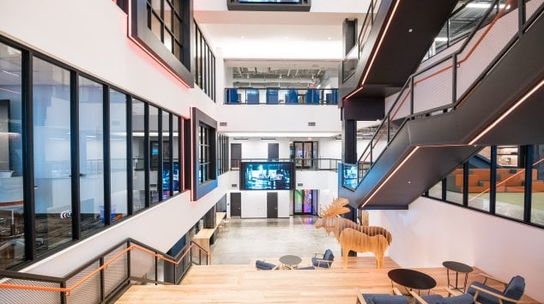
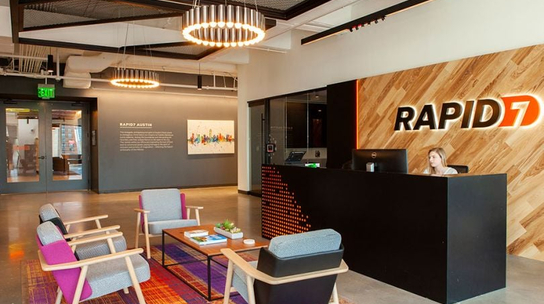
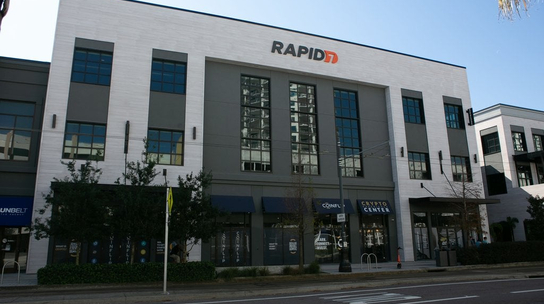
Rapid7 Offices
Hybrid Workspace
Employees engage in a combination of remote and on-site work.
Our default working model is hybrid, with employees working three days per week in the office. This approach underpins our commitment to flexibility and adaptability while supporting our dedication to development, teamwork and customer purpose.