Position Type: Regular - Full-Time
Requisition ID: 44959
Role Purpose
The HR Solution Architect operates at the intersection of HR strategy, process and experience design, enterprise data, and technology architecture. The role is the discipline-keeper for how HR ideas become solutions, ensuring that decisions begin with a clearly defined business problem and are evaluated through a consistent, evidence-based solutioning approach.
This role evaluates the full range of pathways, including process redesign, native SaaS capability, AI agents and automation, enterprise data platforms, API integration, custom applications, and hybrid approaches. It is platform-agnostic and vendor-neutral, with accountability for recommending solutions that are valuable, scalable, secure, responsible, human-centered, and aligned with enterprise standards.
The HR Solution Architect is a bridge role, not a platform administrator and not a pure enterprise architect. The role translates business needs into end-to-end workflows and architecture choices, builds the case for the recommended approach, and guides the solution through architecture, data, security, privacy, legal, and delivery governance. The role must communicate with equal credibility in an HR leadership discussion and a technical architecture review.
Guiding principle: Start with the business problem and the work to be redesigned, not the technology.
Core Responsibilities
Problem-First Solution Design
Lead structured discovery, blueprinting, and solution design engagements that define the business problem, intended outcomes, user needs, process constraints, data needs, and value measures before identifying technology options.
Evaluate process redesign, native SaaS capability, AI or agentic solutions, enterprise data platforms, custom applications, integrations, and hybrid approaches using a consistent framework for fit, value, risk, complexity, security, data readiness, and change impact.
Create clear solution recommendations, decision records, target-state designs, and business cases that explain why the selected path is preferred and what trade-offs were considered.
Dynamic Work and Experience Design
Analyze HR services and workflows end to end before recommending technology.
Map employee, candidate, manager, HR, and shared-service experiences across process steps, handoffs, channels, decisions, controls, and data flows.
Distinguish work that requires human judgment, empathy, accountability, or exception handling from work suited to automation or AI-led execution.
Design human-in-the-loop controls and escalation paths, especially where outcomes may materially affect employees or candidates.
AI Solutioning, Experimentation, and Orchestration
Assess AI opportunities across HR with practical rigor and responsible experimentation.
Determine whether a use case is best addressed through human-process redesign, embedded HCM AI, enterprise AI capabilities, third-party agents, internally developed agents, or a combination.
Define time-boxed proofs of concept with explicit success measures, data boundaries, security reviews, user validation, monitoring, and exit criteria before broader deployment.
Evaluate agent behavior and solution risks, including incorrect or fabricated outputs, bias, confidentiality, inappropriate autonomy, control failure, and performance drift.
Design how agents, applications, people, and data services work together across an end-to-end HR experience.
Integration and Interface Architecture
Own and evolve the integrated architecture for HR applications, data services, APIs, interfaces, events, automations, and agents.
Define solution patterns for secure interoperability, data exchange, orchestration, exception handling, observability, and lifecycle management.
Ensure proposals align with enterprise architecture, cyber security, privacy, identity, integration, infrastructure, and data standards.
Promote reusable interfaces and services that reduce duplication, point-to-point complexity, and vendor lock-in.
HR Data Governance and Responsible AI
Be a core architecture voice for protection and responsible use of employee and candidate data.
Embed privacy, security, data minimization, access control, retention, transparency, auditability, and regulatory requirements into solution design from the start.
Partner across HR, Data, IT, Cyber Security, Privacy, Legal, Risk, and Ethics to establish decision rights and ongoing governance for AI-enabled HR solutions.
Treat data quality, lineage, completeness, representativeness, and permitted use as prerequisites for AI and analytics deployment.
Ensure appropriate human review for high-impact HR decisions, including pay, performance, employment, discipline, and workforce actions.
Cross-Discipline Architecture Partnership
Act as the HR architecture partner to enterprise, security, data, integration, infrastructure, solution, and platform architects.
Represent HR requirements in the design of enterprise AI platforms, data products, integration services, identity models, and technology standards.
Participate in the Architecture Review Board and other governance forums, translating HR needs into architecture language and enterprise requirements into practical HR solution choices.
Enable product managers and delivery teams to design solutions that are extensible, reusable, secure, compliant, reliable, cost-conscious, operationally effective, and performant.
Business Translation and Stakeholder Partnership
Turn complex architecture choices into clear business language and decision-ready narratives.
Facilitate working sessions with HR leaders, centers of excellence, product managers, business users, technology teams, and vendors.
Explain the reason for a recommendation, expected value, data implications, risks, change impact, dependencies, and decision points in a way that supports informed leadership choices.
Use active listening, structured diagnosis, and influence without authority to navigate competing priorities and perspectives.
Architecture Evolution and Portfolio Roadmapping
Maintain a current and future view of HR solution architecture aligned to HR strategy, product roadmaps, enterprise technology direction, and the evolving AI landscape.
Monitor the current portfolio for aging technology, fragmented experiences, control gaps, duplication, weak interoperability, unmet business needs, and opportunities to simplify.
Maintain architecture documentation covering business capabilities, experiences, processes, applications, data, integrations, agents, standards, risks, and transition roadmaps in approved portfolio tools.
Monitor market and vendor direction without allowing a vendor roadmap to substitute for McCain business strategy or architecture judgment.
Key Qualifications and Capabilities
Experience and Education (Required)
15+ years of progressive experience in HR technology, enterprise technology, solution architecture, product management, technical consulting, or a closely related field, including delivery of large-scale or complex solutions.
5+ years of combined experience shaping solution architecture, technical roadmaps, enterprise designs, or cross-platform technology strategies.
Relevant degree or equivalent practical experience.
Technical and Architecture Acumen (Required)
Demonstrated experience across cloud, API and event design, integration architecture, data engineering fundamentals, identity and security principles, and AI or automation platforms.
Understanding of enterprise integration patterns, including REST APIs, event-driven integration, middleware, data pipelines, and emerging approaches for agent interoperability.
Ability to develop conceptual and logical architectures and evaluate solutions at design level. Software engineering depth is useful but not required.
Knowledge of solution delivery methods, including agile, DevOps, incremental delivery, prototyping, and the software development lifecycle.
HR Process, Experience, and Data Fluency (Required)
Working knowledge of end-to-end HR processes such as talent acquisition, onboarding, core HCM, workforce management, performance, learning, total rewards, employee services, and workforce analytics.
Ability to identify where process, policy, role, data, or experience redesign is needed before applying technology.
Strong understanding of the legal, ethical, privacy, security, and trust dimensions of employee and candidate data.
Solutioning and Judgment (Required)
Proven ability to evaluate multiple solution pathways without defaulting to a familiar platform, vendor, or technology.
Experience facilitating discovery, design thinking, blueprinting, architecture, or process redesign sessions with mixed business and technical audiences.
Sound judgment in balancing business value, user experience, scalability, interoperability, risk, total cost, speed, and operational sustainability.
Communication and Business Partnership (Required)
Exceptional ability to explain technical concepts and architecture recommendations in plain business language.
Comfort presenting to senior HR and IT leaders and facilitating decisions across stakeholders with different levels of technical knowledge.
Consulting-style skills in listening, diagnosis, facilitation, storytelling, negotiation, and influence without authority.
Responsible AI and Governance (Required)
Practical understanding of responsible AI principles in HR, including fairness, bias risk, output reliability, confidentiality, transparency, explainability, human oversight, monitoring, and drift.
Ability to embed governance, controls, and human checkpoints into AI-enabled workflows and to lead cross-functional design conversations on appropriate use.
Preferred Assets
Experience with application portfolio management and architecture tools such as LeanIX or an equivalent.
Architecture certification such as TOGAF or an equivalent.
Experience with AI agent orchestration, conversational solution design, or prompt engineering in an enterprise context.
Familiarity with enterprise data platform architecture and HR data product or integration requirements.
Experience with one or more platforms relevant to the current HR ecosystem, such as SAP SuccessFactors, ServiceNow HRSD, UKG, Phenom, or comparable solutions. Platform experience is valued but is not a substitute for platform-agnostic architecture judgment.
What Success Looks Like
HR opportunities are framed as clear business problems with measurable outcomes before solution selection begins.
Process and experience redesign precede automation, and human judgment is deliberately preserved where it matters.
Solution recommendations compare credible options and document value, risk, data, architecture, and change trade-offs.
AI-enabled HR solutions have defined governance, data boundaries, human oversight, monitoring, and accountable ownership.
HR applications, agents, data products, and interfaces operate as an intentional ecosystem rather than disconnected tools.
HR and IT leaders can understand and confidently act on architecture recommendations.
McCain Foods is an equal opportunity employer. As a global family-owned company, we strive to be the employer of choice in the diverse communities around the world in which we live and work. We recognize that inclusion drives our creativity, resilience, and success and makes our business stronger. All qualified applicants will receive consideration for employment without regard to race, religion, color, national origin, sex, age, veteran status, disability, or any other protected characteristic under applicable law.
McCain is an accessible employer. If you require an accommodation throughout the recruitment process (including alternate formats of materials or accessible meeting rooms), please let us know and we will work with you to find appropriate solutions.
Your privacy is important to us. By submitting personal data or information to us, you agree this will be handled in accordance with McCain's Global Privacy Policy and Global Employee Privacy Policy , as applicable. McCain leverages AI in the hiring process, though all final decisions are made by humans. You can understand our approach to AI and how your personal information is being handled here .
Job Family: Information Technology
Location(s): IN - India : Haryana : Gurgaon
Company: McCain Foods(India) P Ltd
Skills Required
- 15+ years of progressive experience in HR technology, enterprise technology, solution architecture, product management, technical consulting, or a closely related field
- Experience delivering large-scale or complex solutions
- 5+ years of combined experience shaping solution architecture, technical roadmaps, enterprise designs, or cross-platform technology strategies
- Relevant degree or equivalent practical experience
- Experience across cloud, API and event design, integration architecture, data engineering fundamentals, identity and security principles, and AI or automation platforms
- Understanding of REST APIs, event-driven integration, middleware, data pipelines, and agent interoperability
- Ability to develop conceptual and logical architectures and evaluate solutions at the design level
- Knowledge of agile, DevOps, incremental delivery, prototyping, and software development lifecycle methods
- Working knowledge of end-to-end HR processes, including talent acquisition, onboarding, core HCM, workforce management, performance, learning, total rewards, employee services, and workforce analytics
- Understanding of legal, ethical, privacy, security, and trust considerations for employee and candidate data
- Experience facilitating discovery, design thinking, blueprinting, architecture, or process redesign sessions with mixed business and technical audiences
- Ability to balance business value, user experience, scalability, interoperability, risk, total cost, speed, and operational sustainability
- Exceptional ability to explain technical concepts and architecture recommendations in plain business language
- Experience presenting to senior HR and IT leaders and facilitating cross-functional decisions
- Consulting-style skills in listening, diagnosis, facilitation, storytelling, negotiation, and influence without authority
- Practical understanding of responsible AI principles, including fairness, bias risk, output reliability, confidentiality, transparency, explainability, human oversight, monitoring, and drift
- Ability to embed governance, controls, and human checkpoints into AI-enabled workflows
- Experience with application portfolio management and architecture tools such as LeanIX or equivalent
- Architecture certification such as TOGAF or equivalent
- Experience with AI agent orchestration, conversational solution design, or prompt engineering in an enterprise context
- Familiarity with enterprise data platform architecture and HR data product or integration requirements
- Experience with SAP SuccessFactors, ServiceNow HRSD, UKG, Phenom, or comparable HR platforms
What the Team is Saying


What We Do
The power it has to uplift and bring people, Guided by our purpose - Celebrating real connections through delicious, planet-friendly food - we believe that working together with our teams, business and community partners will bring sustainable growth and positive change - today, tomorrow and for generations to come. As a privately owned family company with over 60 years of experience, a presence in over 160 countries and a global team of 22,000 people, our values and culture are at the heart of everything we do. Our product quality, people and customer dedication help us achieve global sales in excess of CDN $10 billion. Through our investment and innovation, we continue to be a global leader in prepared potato products, including our famous French Fries and appetizers. We are passionate about supporting and developing our people-providing opportunities to grow and learn in their roles, as well as building careers for the long term.
Why Work With Us
We are working to bring digital tools and data into our processes to drive efficiency, automation and data-driven insights. From connecting our business, enabling our supply chain, supporting our customers, to reinventing agriculture. So if you are a tech expert looking to join a company transforming technology, think of McCain.
Gallery









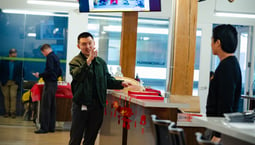
McCain Foods Offices
Hybrid Workspace
Employees engage in a combination of remote and on-site work.
In both our manufacturing plants and corporate offices, we believe connection brings out the best in our people. While in-office expectations will vary by role, flexibility is key. In our corporate offices, the hybrid standard is 3-days in office.