Passionate about precision medicine and advancing the healthcare industry?
Recent advancements in underlying technology have finally made it possible for AI to impact clinical care in a meaningful way. Tempus' proprietary platform connects an entire ecosystem of real-world evidence to deliver real-time, actionable insights to physicians, providing critical information about the right treatments for the right patients, at the right time.
About TempusTempus is on a mission to create the world’s largest integrated dataset of clinical and molecular data. We believe that, through data, we can make a lasting contribution to cancer research and treatment. At Tempus, products are owned and developed by small, autonomous teams of developers, designers, data scientists, and product managers who work together to build a platform that is both nimble and innovative.
The Role
As Senior Manager, Software Engineering, you will lead and mentor a small team of data engineers and data architects, and you will own the enterprise data model and the reliability of the data it represents. You will design how clinical records, genomics, next-generation sequencing (NGS) laboratory data, and radiology data are integrated, and you will ensure that the data are accurate, traceable, and suitable for critical applications such as machine learning and clinical decision-making.
You will establish modeling standards, implement quality gates in data pipelines, and develop the team through design review, code review, and ongoing coaching. You will use development tools assisted by artificial intelligence (AI) to accelerate design, testing, and delivery.
What You Will Do
- Lead and mentor a small team of data engineers and data architects by conducting design and code reviews, providing technical guidance, and fostering a culture of excellence in data architecture and data quality.
- Own and evolve an enterprise data model with engineers, product managers, scientists, and operators, integrating structured data from clinical records, genomics, the NGS laboratory, and radiology across relational and NoSQL data stores. Author and maintain entity-relationship diagrams, data dictionaries, API specifications, and data-translation documentation at the conceptual, logical, and physical levels.
- Apply modern data architecture best practices and patterns, and teach modeling standards, including third normal form, dimensional (star schema) design, and established healthcare data model standards such as FHIR, OMOP, and related standards.
- Evaluate the completeness of source-system models and partner data through profiling, and resolve structural inconsistencies before they reach downstream consumers.
- Design observability for the data ecosystem with BigQuery, dbt, Elementary, and Grafana, including monitors, alerts, dashboards, lineage, and traceability back to source systems.
- Partner with product managers and engineering leads to prioritize the backlog, estimate work, and translate complex requirements into actionable technical tasks. Advance the use of AI-assisted development, including Cursor, Claude, and GitHub Copilot, to accelerate modeling, testing, refactoring, and pipeline development.
Why We Are Looking for You
- You have a record of leading and mentoring a small team of data engineers and data architects, of setting standards, and of guiding design in a fast-paced environment. You can translate gaps in the data model and in data quality into clear recommendations for engineers, scientists, and other stakeholders.
- You are an expert in the modern data stack, particularly dbt, SQL, and Python, and you have demonstrated exceptional SQL skills in an enterprise data warehouse. You are proficient in the use of AI coding assistants such as Cursor, Claude, and GitHub Copilot.
- You have applied modern data architecture best practices and patterns, and you can guide a team in their use. You have strong experience with third normal form (3NF) and dimensional (star schema) modeling; with established healthcare data model standards such as FHIR, OMOP, and related standards; and with modeling tools such as Erwin, Vertabelo, or Lucidchart.
- You understand ETL/ELT and business intelligence (BI) architectures, and you can explain the long-term implications of choosing among relational, massively parallel processing (MPP), and NoSQL technologies. You have architected solutions across more than one of these technologies.
- You have practical experience with data observability (for example, Elementary and Grafana) and with profiling and correlation analysis to identify data-integrity problems.
- You have domain experience in healthcare and next-generation sequencing, including clinical and genomic data.
Preferred
- Deep knowledge of Google Cloud Platform (GCP) and BigQuery architecture.
- Experience modeling NGS data output.
- Experience in implementing master data, reference data, or metadata management.
Why Join Tempus
You will work at the intersection of software engineering and cancer research. In this role, you will lead a small team of data engineers and data architects and shape the data model and quality systems that make Tempus data reliable enough for research and clinical use.
$150,000 - $225,000
The expected salary range may vary for other locations. Actual salary may vary based on qualifications and experience. Tempus offers a full range of benefits, which may include incentive compensation, restricted stock units, medical and other benefits depending on the position.
We are an equal opportunity employer. We do not discriminate on the basis of race, religion, color, national origin, gender, sexual orientation, age, marital status, veteran status, or disability status.
Skills Required
- Experience leading and mentoring a small team of data engineers and data architects
- Experience setting data architecture and data quality standards
- Expertise in the modern data stack, particularly dbt, SQL, and Python
- Exceptional SQL skills in an enterprise data warehouse
- Proficiency with AI coding assistants such as Cursor, Claude, and GitHub Copilot
- Experience with third normal form and dimensional star-schema modeling
- Experience with healthcare data model standards such as FHIR and OMOP
- Experience with modeling tools such as Erwin, Vertabelo, or Lucidchart
- Understanding of ETL/ELT and business intelligence architectures
- Experience architecting solutions across relational, MPP, and NoSQL technologies
- Practical experience with data observability tools such as Elementary and Grafana
- Experience with data profiling and correlation analysis to identify data-integrity problems
- Healthcare and next-generation sequencing domain experience, including clinical and genomic data
- Deep knowledge of Google Cloud Platform and BigQuery architecture
- Experience modeling next-generation sequencing data output
- Experience implementing master data, reference data, or metadata management
What the Team is Saying












Tempus AI Compensation & Benefits Highlights
How does Tempus AI ensure its pay and bonus plans are competitive?
Tempus AI seeks to maintain competitive compensation through market-based pay practices, equity participation opportunities, performance-driven rewards, and a total rewards approach that combines compensation with benefits, career growth, and long-term financial opportunities.
- Competitive compensation in a highly specialized talent market: Tempus AI competes for talent across healthcare, artificial intelligence, software engineering, data science, genomics, diagnostics, life sciences, and commercial functions. To attract and retain employees in these highly competitive fields, the company offers compensation packages designed to align with market conditions and the specialized expertise required to build AI-enabled healthcare solutions. Tempus AI's continued growth and ability to attract talent from leading healthcare and technology organizations reflects its investment in competitive compensation practices.
- Performance-based rewards tied to impact: Tempus AI emphasizes a high-performance culture where employees contribute to advancing precision medicine, AI innovation, and healthcare outcomes. Many roles include incentive compensation opportunities, such as annual bonuses or sales commissions, that reward employees for achieving individual, team, and business objectives. This performance-oriented approach helps align employee contributions with company success while providing opportunities for additional earnings beyond base salary.
- Equity participation and long-term value creation: As a publicly traded company, Tempus AI offers eligible employees the opportunity to participate in equity programs, allowing employees to share in the company's long-term growth and success. Equity awards help align employee interests with company performance and provide an additional component of total compensation beyond salary and bonuses.
- Compensation supported by a broad total rewards package: Tempus complements salary, bonus opportunities, and equity programs with a comprehensive benefits package that includes medical, dental, and vision coverage, HSA and FSA programs, life and disability insurance, parental leave, pet insurance, commuter benefits, charitable matching, wellness resources, and retirement savings opportunities through a 401(k) plan. The company’s benefits are part of a broader commitment to supporting employees both personally and professionally.
- Growth opportunities that support long-term earning potential: Because Tempus AI continues expanding across precision medicine, diagnostics, AI, and healthcare technology, employees often have opportunities to take on new responsibilities and grow their careers alongside the business. Career development, increased scope, and leadership opportunities can contribute to employees' long-term earning potential while helping them build valuable expertise in rapidly growing fields.
- External signals:
- Compensation satisfaction signals: Employees on external review platforms cite compensation, equity opportunities, and benefits as positive aspects of the employee experience, particularly given the company's mission and growth trajectory. (Glassdoor)
- Benefits and rewards signals: External employee reviews highlight healthcare benefits, equity participation opportunities, and overall rewards as strengths of working at Tempus AI. (Comparably)
- Market competitiveness signals: Tempus AI competes for talent with leading healthcare technology, biotechnology, artificial intelligence, and software companies, and independent compensation platforms show compensation packages that are generally aligned with the highly specialized markets in which the company recruits.
Bottom line: Tempus AI supports competitive pay and bonus plans through market-based compensation practices, performance-driven rewards, equity participation opportunities, comprehensive benefits, and career growth opportunities that help employees share in both the company's success and their own professional development.
Tempus AI Insights

What We Do
We bring together one of the world’s largest libraries of multimodal clinical and molecular data with a robust suite of AI tools to help physicians personalize care in real time, connect patients with therapies and clinical trials, and enable partners to accelerate discovery and development of new treatments. With ~8 million de-identified research records and 350+ petabytes of data, Tempus partners with more than half of U.S. oncologists and the majority of the top 20 global pharma companies. Our teams are pioneering work across oncology, neurology, psychiatry, cardiology, and beyond—transforming how care is delivered and therapies are developed. At Tempus, every role contributes to our mission: to help each patient benefit from the experiences of those who came before. For more information, visit tempus.com.
Why Work With Us
We’re looking for people who can change the world. People who question the status quo and refuse to shy away from tough problems. For builders who are never done building, and the learners who are never done learning. Passionate individuals with undying curiosity who want to take on one of the greatest challenges humanity has ever faced—head on.
Gallery








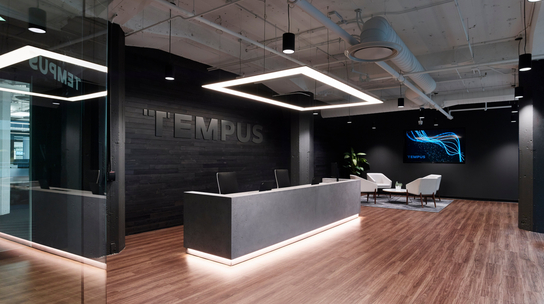
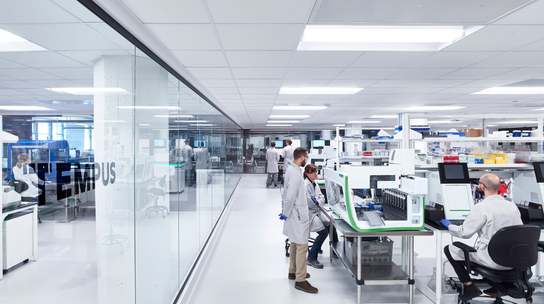
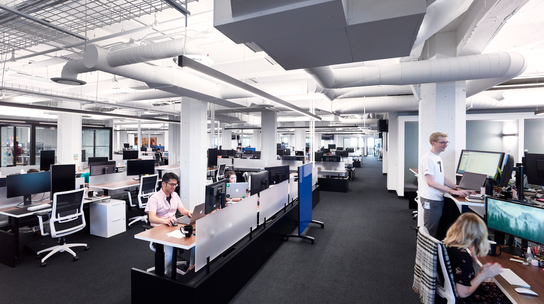
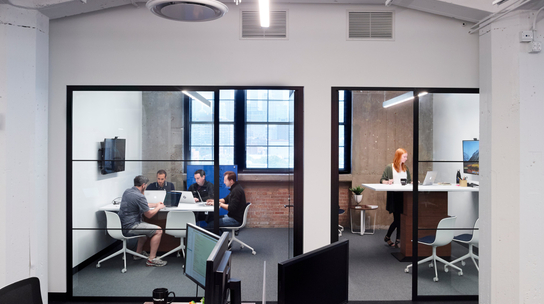
Tempus AI Offices
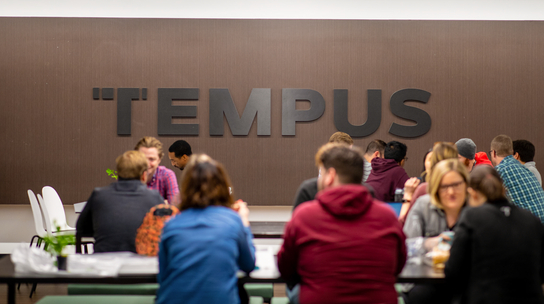
Hybrid Workspace
Employees engage in a combination of remote and on-site work.
Most of the team follows a hybrid policy, with some roles allowing for a fully remote arrangement and some roles being onsite only.