

Join a high-performing team at Sonatus that’s redefining what cars can do in the era of Software-Defined Vehicles (SDV).
At Sonatus, we’re driving the transformation to AI-enabled software-defined vehicles. Traditional automotive software methods can’t keep pace with consumer expectations shaped by the mobile industry—where features evolve rapidly, update seamlessly, and improve continuously. That’s why leading OEMs trust Sonatus to accelerate this shift. Our technology is already in production across more than 5 million vehicles on the road today and rapidly expanding.
Headquartered in Sunnyvale, CA, with 250+ employees worldwide, Sonatus combines the agility of a fast-growing company with the scale and impact of an established partner. Backed by strong funding and proven by global deployment, we’re solving some of the most interesting and complex challenges in the industry. Join us and help redefine what’s possible as we shape the future of mobility.
We are seeking a highly experienced Senior Cloud Operations Engineer to lead and optimize our cloud infrastructure, ensuring its reliability, scalability, and performance. In this role, you will be responsible for the design, implementation, and management of our cloud operations, playing a key role in maintaining a high-availability environment for our applications and services. You will collaborate with cross-functional teams to automate and streamline our operations, troubleshoot issues, and contribute to the overall architecture and strategy of our cloud infrastructure.
Role and Responsibilities:Cloud Infrastructure Design and Management:
Architect and manage highly available, scalable, and secure cloud infrastructure across multi-cloud environments (e.g., AWS, Azure, GCP).
Design and implement cloud-based solutions that align with best practices for performance, security, and cost-efficiency.
Manage cloud resources, including virtual machines, containers, databases, networking, and storage, ensuring optimal performance and reliability.
Automation and DevOps Practices:
Develop and maintain Infrastructure as Code (IaC) using tools such as Terraform, CloudFormation, or Ansible to automate the provisioning and management of cloud resources.
Implement and manage CI/CD pipelines to streamline the deployment process, ensuring fast and reliable application releases.
Automate routine operational tasks, such as monitoring, scaling, and backups, to improve efficiency and reduce manual intervention.
Monitoring, Incident Management, and Troubleshooting:
Set up comprehensive monitoring, logging, and alerting systems to proactively identify and resolve potential issues before they impact users.
Lead incident response efforts, including root cause analysis and remediation, to minimize downtime and ensure a stable environment.
Continuously optimize cloud infrastructure for cost-effectiveness and performance, identifying and eliminating bottlenecks.
Security and Compliance:
Implement and enforce cloud security best practices, including identity and access management (IAM), encryption, and network security.
Ensure the cloud environment complies with industry standards and regulations (e.g., GDPR, HIPAA) through the implementation of security controls and audits.
Regularly perform security assessments and vulnerability scans to maintain a secure cloud environment.
Collaboration and Leadership:
Work closely with software engineering, CloudOps, and security teams to ensure seamless integration of cloud infrastructure with applications and services.
Provide technical leadership and mentorship to junior engineers, sharing best practices and guiding them in their professional development.
Collaborate with product management and other stakeholders to understand business requirements and translate them into scalable cloud solutions.
Continuous Improvement and Innovation:
Stay up-to-date with the latest cloud technologies and trends, and evaluate their applicability to our environment.
Lead initiatives to improve cloud infrastructure, adopting new tools and processes to enhance efficiency, reliability, and scalability.
Contribute to the development and documentation of cloud operations policies, procedures, and best practices.
Bachelor’s or Master’s degree in Computer Science, Information Technology, or a related field.
5+ years of experience in cloud operations, cloud engineering, or a similar role, with a focus on managing large-scale, production cloud environments.
Proven experience with multi-cloud environments, particularly AWS, Azure, or Google Cloud Platform.
Expertise in cloud infrastructure management and automation tools (e.g., Terraform, CloudFormation, Ansible, Chef).
Strong knowledge of containerization and orchestration technologies (e.g., Docker, Kubernetes).
Experience with CI/CD pipelines and related tools (e.g., Argo Workflows, ArgoCD, Jenkins, etc).
Proficiency in scripting and programming languages such as Python, Bash, or Go.
Deep understanding of networking concepts, cloud security practices, and identity management (IAM).
Experience with serverless architecture and microservices.
Knowledge of observability and monitoring tools/frameworks (e.g., Signoz, Prometheus, Grafana, OpenTelemetry).
Familiarity with cloud cost management and optimization strategies.
Experience with disaster recovery and business continuity planning in cloud environments.
Similar Jobs

What We Do
Sonatus is a global vehicle software company enabling AI-powered, software-defined vehicles through its platform, which is deployed in over 5 million cars, helping automakers continuously improve cost, performance, reliability, and user experience.
Why Work With Us
Working at Sonatus means collaborating with top-tier engineers and industry leaders to shape the future of connected, intelligent mobility. With a dynamic and fast-paced environment, Sonatus offers opportunities for growth, creativity, and making a real impact in the evolution of modern vehicles.
Gallery





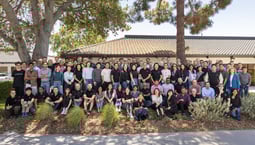



Sonatus Offices
Hybrid Workspace
Employees engage in a combination of remote and on-site work.
Sonatus has a hybrid model for those near our offices, requiring three days in-office per week. Some roles may be fully remote or require five days in-office.
