The Role
As a Principal Software Systems Engineer in the Autonomy Behavior Validation team, you will set the technical direction for turning safety and behavior requirements into a production-grade counterfactual simulation product.
You will build a capability that turns real incidents and simulation scenarios into trustworthy engineering evidence for developers, release decisions, and launch decisions. This includes scene reconstruction, implementation of safety-defined attentive-human benchmarks, human and other road-user response models, counterfactual simulation following intervention, controlled scene variation, outcome and severity estimation, and the validation needed to understand when a result is credible enough to support a decision. You will partner with Safety and other stakeholders to define and refine requirements and benchmark definitions, then turn them into scalable, auditable, and repeatable simulation workflows.
What You'll Do
- Set the technical strategy and architecture for counterfactual behavior evaluation, including operationalizing safety-defined attentive-human benchmarks, counterfactual simulation following human intervention, alternate-policy comparisons, and controlled scene perturbations.
- Lead the conversion of real incidents and simulation events into executable, provenance-preserving scenarios with enough fidelity, repeatability, and uncertainty characterization to support engineering and safety decisions.
- Implement and validate human and other road-user response models against agreed benchmarks and requirements, including perception and reaction timing, maneuver selection, vehicle dynamics, and the range of plausible outcomes.
- Define and deploy scalable pipelines for parameter extraction, scene reconstruction, counterfactual swaps, fuzzing, simulation execution, outcome estimation, and analysis of large scenario sets.
- Establish how the counterfactual product and its outputs are validated, including comparison to baseline runs, replay and closed-course evidence, model limitations, confidence, traceability to requirements, and appropriate use of results.
- Lead work across Behavior, Simulation, Safety, Human Factors, Legal, Product, and Operations, turning complex results into clear engineering actions, safety-case evidence, and release recommendations.
- Master's degree in systems engineering, mechanical engineering, aerospace engineering, electrical engineering, computer science, robotics, human factors, or a related field.
- 10 or more years of professional experience in autonomous vehicles, robotics, vehicle development, simulation, systems engineering, human factors, or safety-critical validation.
- A proven record of evaluating autonomous vehicles for a self-driving fleet, launch, supervised release, or other high-consequence product decision.
- Strong understanding of human behavior modeling, driver response, perception and reaction time, vehicle dynamics, uncertainty, and the limits of model-based conclusions.
- Deep experience building or leading counterfactual, replay, crash reconstruction, incident analysis, or comparable simulation-based evaluation capabilities.
- Professional experience with simulation evaluation at scale, including scenario generation, parameter sweeps, distributed execution, reproducibility, data quality, and the trade-offs between fidelity, confidence, runtime, and cost.
- Strong Python and agentic workflow experience. You should be comfortable designing and reviewing production-quality analysis, simulation, and validation software and using code to investigate an engineering question quickly.
- Strong written and verbal communication skills, with the ability to explain technical results, assumptions, and limitations to both engineering and non-engineering stakeholders.
- Demonstrated technical leadership across organizational boundaries and evidence of setting direction beyond a single project through a methodology, platform, framework, or reusable validation capability adopted by other teams.
- Experience operationalizing attentive-human benchmarks from naturalistic driving data, human factors research, expert review, or experimentally grounded response-time and maneuver models.
- Experience with traffic collision reconstruction or incident reconstruction using vehicle logs, sensor data, maps, physical constraints, and other evidence sources.
- Experience modeling other road-user behavior and the interaction between ego behavior, participant response, and environmental conditions.
- Experience with collision severity, injury-risk, risk quantification, safety claims, safety cases, hazard analysis, or residual-risk decisions.
- Experience validating simulation fidelity and counterfactual predictions against real drives, non-intervened events, closed-course tests, or other independent evidence.
- Experience translating legal or regulatory expectations into defensible reconstruction methods, validation evidence, or documented claims.
- A track record of developing engineers, leading technical communities, and making a broader organization better at systems engineering, simulation, and validation.
Compensation: The compensation information is a good faith estimate only. It is based on what a successful applicant might be paid in accordance with applicable state laws. The compensation may not be representative for positions located outside of New York, Colorado, California, or Washington. • The salary range for this role: is $238,700 to $365,700. The actual base salary a successful candidate will be offered within this range will vary based on factors relevant to the position. • Bonus Potential: An incentive pay program offers payouts based on company performance, job level, and individual performance. • Benefits: GM offers a variety of health and wellbeing benefit programs. Benefit options include medical, dental, vision, Health Savings Account, Flexible Spending Accounts, retirement savings plan, sickness and accident benefits, life insurance, paid vacation & holidays, tuition assistance programs, employee assistance program, GM vehicle discounts and more
About GM
Our vision is a world with Zero Crashes, Zero Emissions and Zero Congestion and we embrace the responsibility to lead the change that will make our world better, safer and more equitable for all.
Why Join Us
We believe we all must make a choice every day - individually and collectively - to drive meaningful change through our words, our deeds and our culture. Every day, we want every employee to feel they belong to one General Motors team.
Total Rewards | Benefits Overview
From day one, we're looking out for your well-being-at work and at home-so you can focus on realizing your ambitions. Learn how GM supports a rewarding career that rewards you personally by visiting Total Rewards resources.
Non-Discrimination and Equal Employment Opportunities (U.S.)
General Motors is committed to being a workplace that is not only free of unlawful discrimination, but one that genuinely fosters inclusion and belonging. We strongly believe that providing an inclusive workplace creates an environment in which our employees can thrive and develop better products for our customers.
All employment decisions are made on a non-discriminatory basis without regard to sex, race, color, national origin, citizenship status, religion, age, disability, pregnancy or maternity status, sexual orientation, gender identity, status as a veteran or protected veteran, or any other similarly protected status in accordance with federal, state and local laws.
We encourage interested candidates to review the key responsibilities and qualifications for each role and apply for any positions that match their skills and capabilities. Applicants in the recruitment process may be required, where applicable, to successfully complete a role-related assessment(s) and/or a pre-employment screening prior to beginning employment. To learn more, visit How we Hire.
Accommodations
General Motors offers opportunities to all job seekers including individuals with disabilities. If you need a reasonable accommodation to assist with your job search or application for employment, email us [email protected] or call us at 1-800-865-7580. In your email, please include a description of the specific accommodation you are requesting as well as the job title and requisition number of the position for which you are applying.
Skills Required
- Master's degree in systems engineering, mechanical engineering, aerospace engineering, electrical engineering, computer science, robotics, or a related field
- 10 or more years of professional experience in autonomous vehicles, robotics, simulation, systems engineering, or safety-critical validation
- Experience evaluating autonomous vehicles for a self-driving fleet, launch, supervised release, or another high-consequence product decision
- Experience owning or materially shaping go/no-go recommendations
- Deep end-to-end expertise in autonomous driving, including perception, prediction, planning, controls, and on-road behavior
- Deep systems engineering experience with decomposition, ODD definition, requirements strategy, V&V planning, traceability, and simulation evaluation at scale
- Strong Python experience
- Experience with agentic workflows and production-quality analysis and validation software
- Demonstrated technical leadership across organizational boundaries
- Experience setting technical direction adopted beyond a single team and communicating results, assumptions, and limitations clearly
- Experience leading validation for a driverless commercial launch or expansion into new operating domains
- Experience evaluating learned or end-to-end driving systems, including behavior, regressions, and generalization
- Experience with human benchmarking, counterfactual methods, or replay methods
- Experience building or using a safety case and familiarity with STPA, FMEA, fault trees, ISO 21448, UL 4600, or ISO 26262
- Experience with risk quantification, risk acceptance, and translating legal or regulatory expectations into compliance strategies
- Experience designing validation lifecycles, scorecards, confidence rubrics, or behavior protocols used by multiple engineering teams
What the Team is Saying














General Motors Compensation & Benefits Highlights
How does General Motors ensure its pay and bonus plans are competitive?
General Motors describes compensation as a mix of base pay, incentive opportunities, and financial benefits designed to remain competitive in the market. The overall package may include base salary, annual bonus or incentive plans, retirement support, stock purchase opportunities, and other financial benefits.
Some rewards are tied to performance, including annual bonuses and, for hourly employees, profit-sharing opportunities. These programs are part of GM’s broader approach to supporting employees financially while recognizing individual and company performance.
GM also offers resources that can support long-term financial well-being. These include retirement benefits, income protection programs, tuition assistance, and financial education or coaching resources. Specific offerings may vary by role, employment type, location, and eligibility.
At-a-Glance
- Compensation approach: Base pay, incentive opportunities, and financial benefits
- Incentives: Annual bonus or incentive plans, with profit-sharing opportunities for eligible hourly employees
- Financial support: Retirement benefits, stock purchase opportunities, and income protection resources
- Review note: Specific compensation and benefit details may vary by role, employment type, location and eligibility
General Motors Insights

What We Do
At General Motors, our vision is to create a world with Zero Crashes, Zero Emissions, and Zero Congestion. We wholeheartedly embrace the responsibility to lead the change that will make our world better, safer, and more equitable for all. Our industry and company are undergoing a once-in-a-lifetime technological transformation, which is reshaping our approach to technology and innovation. We are expanding our horizons through new technology platforms and driving innovations that deliver exceptional value to our customers.
Why Work With Us
At General Motors, our purpose is to pioneer the innovations that move and connect people to what matters. We’re driving the world forward, together. We’re building vehicle software alongside its hardware, hands-free driving that will lead to autonomy, and EVs that charge your home for an all-electric future.
Gallery


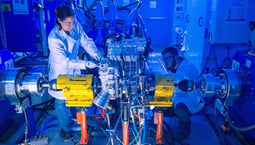




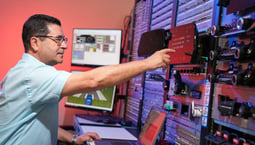
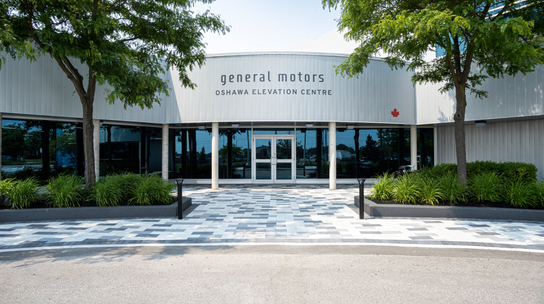
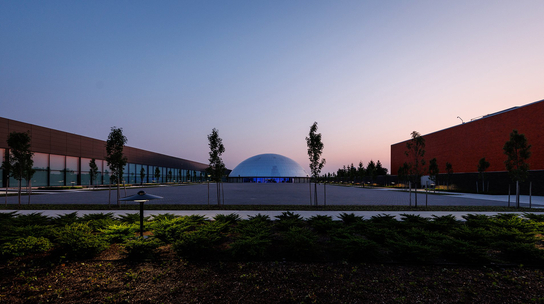
General Motors Offices
Hybrid Workspace
Employees engage in a combination of remote and on-site work.
Roles that are categorized as Hybrid mean that the successful candidate is expected to report onsite to the designated facility at least three times per week or other frequency as dictated by the business.