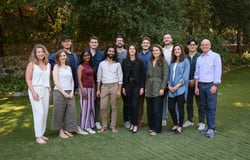
A full-time (100%) postdoctoral position is available in the lab of Dr. Srustidhar Das, at the Department of Clinical Research and at the Research Unit of Inflammation Research, Department of Molecular Medicine, Faculty of Health Sciences, University of Southern Denmark.
The position is limited to two years, with the possibility of extension subject to funding.
Research tasks
The position comprises research, teaching, professional development and supervision within intestinal tissue regeneration, epithelial biology, mucosal immunology and inflammatory bowel disease (IBD). The postdoc will join a translational research programme that investigates how inflammation reshapes the intestinal epithelium and its surrounding tissue niche, and how these changes can be targeted to promote safe and durable mucosal healing.
The successful candidate will combine patient-derived organoid and co-culture models with molecular biology, functional assays, and computational analysis of single-cell and spatial datasets. The position is particularly suited to a researcher who can connect experimental biology with bioinformatics and clinically relevant questions.
Research environment
The postdoc will be embedded in a dynamic and highly collaborative research environment spanning the Department of Clinical Research and the Department of Molecular Medicine at SDU. The project benefits from close interaction among basic scientists, clinicians, bioinformaticians and translational researchers, with strong links to Odense University Hospital and access to patient-derived material, advanced disease models and state-of-the-art molecular technologies.
The environment provides excellent opportunities to develop an independent research profile, contribute to clinically relevant discoveries in IBD and tissue regeneration, and build collaborations across experimental, computational and clinical disciplines.
Research project
The project investigates how inflammatory history establishes persistent epithelial and niche memory, shapes epithelial plasticity and influences intestinal regeneration in IBD. Using patient-derived biopsies, intestinal organoids, fibroblasts and immune-cell co-cultures, we will determine how epithelial memory and injury-induced cell-state transitions influence regenerative capacity and distinguish effective from impaired mucosal healing.
Functional experiments will be integrated with single-cell RNA sequencing, chromatin-accessibility analysis, spatial transcriptomics and spatial epigenomics. CRISPR-engineered patient-derived organoids, including lineage reporters and targeted genetic perturbations, will be used to trace epithelial cell states and validate candidate mechanisms. Selected organoids will also be tested in engraftment models to determine whether regenerative phenotypes translate into improved tissue integration and repair in vivo.
Key responsibilities
- Establish and manipulate patient-derived intestinal organoids and fibroblast–immune-cell co-cultures to investigate epithelial plasticity, cell-state transitions, regeneration, inflammatory responses and barrier function.
- Generate and validate CRISPR-engineered organoids, including reporter lines and targeted genetic perturbations, and perform engraftment studies to assess regenerative potential in vivo.
- Analyse and integrate scRNA-seq, scATAC-seq, spatial transcriptomic and spatial epigenomic datasets using reproducible workflows for quality control, differential analysis, cell-state annotation, trajectory analysis and multimodal integration.
- Apply molecular and cellular methods, including qPCR, immunostaining, advanced microscopy, flow cytometry and ELISA-based assays, and validate candidate pathways using pharmacological and CRISPR-based perturbations where appropriate.
- Collaborate with clinicians, experimental scientists and bioinformaticians to analyse and interpret patient-derived samples and data.
- Maintain accurate and reproducible records, present findings, prepare manuscripts and conference contributions, and contribute to grant applications, teaching and supervision where relevant.
Expectations of qualifications
The successful applicant must hold a PhD in molecular biology, cell biology, immunology, bioinformatics, computational biology, regenerative medicine, biomedicine or a closely related discipline, with documented research experience relevant to the project.
Essential qualifications
- Documented experience in organoid biology, preferably involving intestinal or other tissue-derived epithelial organoids, and in designing mechanistic studies of epithelial plasticity and regeneration.
- A strong background in tissue regeneration, epithelial biology, mucosal immunology, inflammatory disease or a closely related field.
- Demonstrated expertise in analysing single-cell or spatial-omics data, with proficiency in R and/or Python and experience developing reproducible computational workflows.
- Hands-on experience in molecular and cell biology, with the ability to design, perform, troubleshoot and interpret experiments using a structured and careful approach to data analysis, documentation and responsible research practice.
- A strong publication record appropriate to career stage; excellent written and spoken English; and the ability to drive projects independently while collaborating effectively in a multidisciplinary and international environment.
Desirable qualifications
- Experience with intestinal organoids, patient-derived material, fibroblast or immune-cell culture, or epithelial–stromal–immune co-culture models.
- Experience integrating scRNA-seq, scATAC-seq, spatial transcriptomic, spatial epigenomic or other multimodal datasets.
- Familiarity with advanced imaging, quantitative image analysis, flow cytometry, organoid phenotyping or high-content screening.
- Demonstrated experience generating and validating CRISPR-engineered organoids, including knock-in reporters or targeted gene perturbations, and with intestinal organoid engraftment or transplantation and in vivo assessment of epithelial regeneration is highly preferred.
- An interest in supervising junior researchers and contributing to collaborative teaching and research activities.
Research strategy for OUH and the Department of Clinical Research
The joint research strategy for the Department of Clinical Research and Odense University Hospital sets the direction for our shared research efforts in the years ahead. Rooted in the vision –We conduct research together to shape the patient care of the future – it focuses in particular on: cross-disciplinary research – with people at the centre; strong research environments – as drivers of development; and the research journey – from idea to impact. Further information on the joint research strategy of the Department of Clinical Research and Odense University Hospital is available here.
Further information
For further information, please contact Dr. Srustidhar Das, Department of Clinical Research and Department of Molecular Medicine, University of Southern Denmark (SDU), tel.: +45 71504339, e-mail: [email protected]
Application deadline
November 1, 2026 at 23.59 hrs. (CET).
Salary and terms of employment
The applicant will be employed in accordance with the agreement between the Ministry of Finance and AC (the Danish Confederation of Professional Associations).
The position as Postdoc is placed within salary steps 4–8 of the Danish state salary scale, depending on seniority. In addition, a centrally agreed postdoc allowance is paid, and further qualification- and function-related allowances may be negotiated.
The work location will be at Campusvej 55, 5230 Odense M, Denmark.
Application
Applications must be submitted electronically using the link “Apply now” - see below.
We strongly recommend that you read How to apply for a position at SDU before you apply.
Only applications written in English will be accepted for evaluation.
The application must include (as PDF files) (please note that the application (the motivation letter) and CV must not exceed 10 MB in total):
- a motivation letter
- a detailed CV
- degree certificates (inclusive of Ph.D.-diploma)
- a complete and numbered list of publications
- 3 scientific peer-reviewed publications considered by the candidate as most important for this position. Please note that a copy of each publication must be attached as a pdf file.
- It is permitted to merge copies of the selected publications into a single PDF file.
- a teaching portfolio detailing the candidate’s prior teaching experience, teaching skills, and teaching philosophy
- a detailed description of research experience
- an explanation of other qualifications relevant to the position
For technical issues, please contact: [email protected]
Please note that all the above-mentioned information must be included in the application.
Applications received after the deadline and/or incomplete applications will not be considered.
Assessment
Shortlisting will be used as part of the initial selection process.
Assessment of shortlisted applications will be done under the existing Appointment Order for universities. Shortlisted applications will be assessed by an assessment committee. The committee may request additional information, and, if so, it is the responsibility of the applicant to provide the necessary material.
When the assessment committee has submitted its report, the applicants will receive part of the evaluation that concerns themselves.
References will be obtained for the preferred candidate from their current and previous employers. Applicants invited for interview should expect to complete a work-related personality assessment.
Living and working in Denmark
Foreign applicants will be offered Danish language training as part of the employment.
The International Staff Office (ISO) at SDU provides a variety of services for new employees, guests and people who consider applying for a job at the University of Southern Denmark.
The University wishes our staff to reflect the diversity of society and thus welcomes applications from all qualified candidates regardless of personal background.
About UsSkills Required
- PhD in molecular biology, cell biology, immunology, bioinformatics, computational biology, regenerative medicine, biomedicine, or a closely related discipline
- Documented research experience relevant to intestinal regeneration, epithelial biology, mucosal immunology, inflammatory disease, or a related field
- Experience in organoid biology and designing mechanistic studies of epithelial plasticity and regeneration
- Demonstrated expertise analyzing single-cell or spatial omics data
- Proficiency in R and/or Python and experience developing reproducible computational workflows
- Hands-on molecular and cell biology experience, including experimental design, troubleshooting, interpretation, documentation, and responsible research practice
- Strong publication record appropriate to career stage
- Excellent written and spoken English
- Ability to drive projects independently and collaborate effectively in a multidisciplinary international environment
- Experience with intestinal organoids, patient-derived material, fibroblast or immune-cell culture, or epithelial-stromal-immune co-culture models
- Experience integrating scRNA-seq, scATAC-seq, spatial transcriptomic, spatial epigenomic, or other multimodal datasets
- Familiarity with advanced imaging, quantitative image analysis, flow cytometry, organoid phenotyping, or high-content screening
- Experience generating and validating CRISPR-engineered organoids, organoid engraftment or transplantation, and in vivo assessment of epithelial regeneration
- Interest in supervising junior researchers and contributing to teaching and collaborative research activities

What We Do
9 Fællesadministration is an administrative unit within the University of Southern Denmark, likely responsible for common administrative functions.