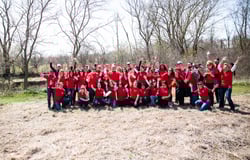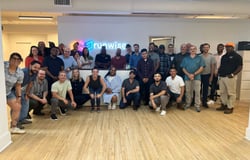
We’re Nadara. We work harmoniously with the power of nature and the communities around us to power lifetimes to come. We call our approach ‘living energy’.
We don’t just produce renewable energy, we live it – recognising our relationship with the people touched by our business and supporting social, educational, cultural, and environmental initiatives that contribute to the development of the communities we work alongside.
Discover more about our business here: https://nadara.com/about/
Nadara is an innovative place to work. We work in a stimulating and challenging environment, where every day we explore the unknown with curiosity, make decisions with quality and take action and deliver with courage. For us diversity is a real value, and we encourage in connecting different perspectives with respect.
Discover more about our culture and approach here: https://nadara.com/living-the-company/
Job Description Summary:The Mechanical Reliability Engineer will act as a subject‑matter expert in the reliability of mechanical systems and components on wind turbines. They will drive continuous improvement to minimize downtime, enhance performance, and optimize maintenance strategies across the fleet, provide risk‑informed guidance to internal stakeholders and lead the engineering processes that prevent unscheduled major component failures, ensuring the implementation of corrective actions and the definition of major component overhaul processes.Job Description:Key responsibilities and Authorities
A) Mechanical Systems Reliability – Engineering Support
• Assess the condition of mechanical systems and provide expert guidance to internal and external clients.
• Oversee drivetrain components within partial‑scope contracts; define actions to return/maintain assets in service.
• Support end‑of‑contract inspections (defect classification and risk‑informed failure timelines).
• Collaborate with Predictive Maintenance Team to ensure all CMS alerts (vibration, lubrication) are investigated, escalated, and solved to avoid unscheduled major component failures.
• Partner with Inspections & Repairs Team to scope/execute borescope (gearbox) inspections and translate findings into corrective actions.
B) Root Cause, Reliability & Risk
• Lead/participate in Root Cause Analysis (RCA) and Failure Mode and Effect Analysis (FMEA/FMECA); implement corrective and preventive actions.
• Conduct fleet‑wide component‑level condition and reliability assessments and propose strategies to achieve reliability and reduce failure risk.
C) Standards, Processes & ECRs
• Create, review and implement Engineering Change Requests (ECRs).
• Develop and maintain Engineering Best Practices, processes, checklists, and tools to improve condition assessment, optimize maintenance strategies, and ensure operational reliability.
D) Spares, Refurbishment & Overhauls
• Contribute to spare‑parts stock strategies based on fleet condition and risk assessment.
• Collaborate with Stock Management and Asset Management and approved refurbishment vendors to define/implement repair policies, framework contracts, and new overhaul routes for major components.
• Support inbound/outbound quality checks and technical disposal of damaged components.
E) Budget & Performance
• Support preparation and management of the Mechanical Reliability activity budget.
• Propose cost‑effective actions to meet reliability goals.
• Monitor KPIs to evidence program effectiveness.
F) Asset Integrity
• Provide risk‑informed guidance to internal stakeholders and lead engineering processes that oversee corrective actions on the structural and mechanical integrity of wind turbine components through defining maintenance plans and repairs strategy.
Health & Safety, Quality and Environment (HSQE) Key responsibilities and Authorities
This document must be read in combination with the HSQE Management System Manual, available on Nadara Intranet, which outlines the mandatory HSQE responsibilities and authorities related to this role.
Technical and cross Competences (Optional)
Wind Turbine Subsystems: Drivetrain (main bearing, gearbox, generator), yaw/pitch systems, couplings, slip rings, and related interfaces.
RCA & Reliability: RCA methods, FMEA/FMECA; reliability/risk assessments; estimation of failure progression/timelines; RAMS assessment.
Inspections: Borescope inspection review; evidence‑based acceptance criteria; translation of inspection findings into work orders and ECRs.
Project & Process: Ability to structure work; creation and maintenance of best practices, procedures, and tools.
Data & Reporting: Build and interpret reliability KPIs; clear, concise technical reporting for both engineering and non‑technical audiences.
Experience with safety aspects across the business; Definition and implementation of complex maintenance projects and policies, and proven abilities to discuss with OEM/ISPs on implementing such.
Managerial skills and behaviours (Optional)
Organised and methodical; safety‑oriented; results‑focused with persistence and ownership.
Confident, articulate communicator; excellent written communication.
Teamwork and the ability to direct different maintenance and other operational activities.
Relationship building across internal/external stakeholders; cross‑cultural awareness and sensitivity.
Education and Qualifications
BSc/MSc in Mechanical Engineering (or closely related discipline).
Demonstrable experience in the wind energy industry (5 years) focused on maintenance/reliability of mechanical systems within wind turbines.
Desirable:
- Demonstrable experience with reliability engineering tools (e.g., FMEA/FMECA, RCA, FTA)
- Experience with CMMS and SCADA Systems
- Condition Monitoring Techniques (vibration analysis, oil analysis, thermography)
Languages: English (required). Additional languages (French/Spanish/Portuguese/Italian) advantageous given fleet footprint and supplier base.
Location:
LisbonTime Type:
Full timeWorker Subtype:
RegularTop Skills

What We Do
We’re Nadara, one of Europe’s largest renewable energy independent power producers.
We own and operate around 200 renewable energy sites across Europe and the US, producing electricity from wind, solar, waste-to-energy, and biomass.
Every day, we harness the power of nature for good. The most obvious way is by generating dependable renewable energy, but this is just the beginning. We strive to make a deeper impact, seizing the opportunity to live renewable energy in the decisions we make and actions we take, both big and small.
We call this living energy. It sees us connecting with people, contributing to communities, and caring for the natural world. Guided by our values of impact, care and connection we work together to make our global and local impact as positive as possible.

.png)