


Superhuman offers a dynamic hybrid working model for this role. This flexible approach gives team members the best of both worlds: plenty of focus time along with in-person collaboration that helps foster trust, innovation, and a strong team culture.
Preferred locations for team members for our Data Platform roles are our San Francisco or Seattle hubs.
Grammarly is now part of Superhuman, the AI productivity platform on a mission to unlock the superhuman potential in everyone. The Superhuman suite of apps and agents brings AI wherever people work, integrating with over 1 million applications and websites. The company's products include Grammarly's writing assistance, Docs’ collaborative workspace, Mail's inbox management, and Go, the proactive AI assistant that understands context and delivers help automatically. Founded in 2009, Superhuman empowers over 40 million people, 50,000 organizations, and 3,000 educational institutions worldwide to eliminate busywork and focus on what matters. Learn more at superhuman.com and about our values here.
The Opportunity
As a Data Engineer on the Business Unit (BU) Pod supporting Go, you’ll build the pipelines and data models that help us understand how people use Superhuman’s proactive AI assistant. You’ll work closely with Product, Engineering, and Data Science to give teams the data they need to improve the product and measure its impact.
Go helps people where they already work, through conversations, inline suggestions, and built-in and custom agents. Understanding how people use these experiences takes more than counting clicks. Your work will help teams see where users get stuck, which capabilities they find useful, and what brings them back. It will also help connect Go’s usage to customer adoption and business growth.
You’ll own projects and datasets with a clear scope, supported by experienced engineers. Most of your work will focus on production pipelines and reusable data models that teams can use to answer their own questions. You’ll also contribute analysis and dashboards when they help move a decision forward. As you learn the product and our systems, you’ll have opportunities to take on more complex work.
What you’ll do
Build and maintain production data pipelines in Databricks that process product events, user activity, and agent interactions across Go.
Develop datasets for onboarding, activation, engagement, retention, and conversion so teams can work from consistent metrics.
Work with Product, Engineering, and Data Science to define what needs to be measured, improve event logging, and check that new features are represented correctly in downstream data.
Make data models easy to understand and use, with clear definitions and documentation that support self-service through analytics and AI tools. Build focused analyses and dashboards when they help partners use the data or make a decision.
Connect Go usage with customer and account data to help teams understand adoption, customer value, and Go’s contribution to growth and revenue.
Keep the datasets you own accurate, up-to-date, and reliable. Add tests and monitoring, investigate discrepancies, and fix the underlying causes.
Improve pipeline and query performance, manage compute costs, and make the code you work on easier to maintain.
You’ll work alongside engineers and partners across Data Platform and Go. We care about understanding the problem, questioning assumptions, and following through when the answer takes some digging. You’ll contribute to design decisions and have teammates to turn to as you build your expertise.
You have 2+ years of experience building and operating production data pipelines, ideally for product analytics or other critical business use cases.
You’re highly proficient in SQL and have experience writing, debugging, and optimizing transformations in a modern lakehouse or cloud data warehouse such as Databricks or Snowflake.
You understand data modeling and warehouse design, and can turn complex source data into tables that others can understand and reuse.
You test your work carefully, investigate unexpected results, and trace data issues back to their source.
You have experience with workflow orchestration, version control, and deployment practices for data pipelines, using tools such as Databricks Workflows, Airflow, and Git.
You use AI-assisted development tools such as Codex, Claude Code, or Cursor, and take responsibility for testing and validating the code they produce.
You communicate clearly with technical and nontechnical partners. You can turn a product question into data requirements and explain the assumptions and limitations behind an answer.
You’re curious about how people use products and how your work can help teams make better decisions.
You follow your work through to production, break problems into manageable steps, raise risks and dependencies early, and ask for help when you need it.
Experience using Python and/or Spark for data transformations, pipelines, or automation.
Experience with product or growth analytics, including adoption funnels, retention, conversion, or A/B experiments.
Experience working with event logging and behavioral data from web, desktop, or mobile products.
Experience supporting AI products or agents, including measuring adoption, interaction quality, reliability, latency, or usage costs.
Experience building dashboards or other data tools that product, analytics, and business teams use to answer their own questions.
Superhuman offers all team members competitive pay along with a benefits package encompassing the following and more:
Excellent health care (including a wide range of medical, dental, vision, mental health, and fertility benefits)
Disability and life insurance options
401(k) and RRSP matching
Paid parental leave
20 days of paid time off per year, 12 days of paid holidays per year, two floating holidays per year, and flexible sick time
Generous stipends (including those for caregiving, pet care, wellness, your home office, and more)
Annual professional development budget and opportunities
Superhuman takes a market-based approach to compensation, so base pay may vary by location. Our US locations are categorized into two compensation zones based on proximity to our hub locations.
For more information about our compensation zones and locations where we currently support employment, please refer to this page. If a location of interest is not listed, please speak with a recruiter for additional information.
Base pay may vary considerably depending on job-related knowledge, skills, and experience. The expected salary ranges for this position are outlined by compensation zone and may be modified in the future.
We encourage you to applyAt Superhuman, we value our differences, and we encourage all to apply—especially those whose identities are traditionally underrepresented in tech organizations. We do not discriminate on the basis of race, religion, color, gender expression or identity, sexual orientation, ancestry, national origin, citizenship, age, marital status, veteran status, disability status, political belief, or any other characteristic protected by law. Superhuman is an equal opportunity employer and a participant in the US federal E-Verify program (US). We also abide by the Employment Equity Act (Canada).
Skills Required
- 2+ years of experience building and operating production data pipelines
- Highly proficient in SQL
- Experience writing, debugging, and optimizing transformations in Databricks, Snowflake, or a similar modern lakehouse or cloud data warehouse
- Understanding of data modeling and warehouse design
- Experience testing work, investigating unexpected results, and tracing data issues to their source
- Experience with workflow orchestration, version control, and deployment practices using tools such as Databricks Workflows, Airflow, and Git
- Experience using AI-assisted development tools such as Codex, Claude Code, or Cursor, with responsibility for testing and validating generated code
- Clear communication with technical and nontechnical partners
- Ability to translate product questions into data requirements and explain assumptions and limitations
- Curiosity about product usage and data-driven decision-making
- Ability to follow work through production, break problems into manageable steps, raise risks and dependencies early, and seek help when needed
- Experience using Python and/or Spark for data transformations, pipelines, or automation
- Experience with product or growth analytics, including adoption funnels, retention, conversion, or A/B experiments
- Experience working with event logging and behavioral data from web, desktop, or mobile products
- Experience supporting AI products or agents, including measuring adoption, interaction quality, reliability, latency, or usage costs
- Experience building dashboards or data tools for product, analytics, and business teams
What the Team is Saying




Superhuman Compensation & Benefits Highlights
How does Superhuman ensure its pay and bonus plans are competitive?
Superhuman approaches compensation with a broad rewards package designed to compete for talent across technology, AI, product, engineering and go-to-market roles.
- Compensation philosophy: Superhuman combines competitive pay with benefits, flexibility and professional growth opportunities to create an overall rewards package that appeals to candidates in a competitive hiring market.
- Total rewards beyond base pay: Superhuman’s total rewards package includes paid parental leave, generous PTO, professional development budgets, and wellness stipends. For U.S. employees, the company covers 100 percent of dental and vision costs for team members and dependents, funds employee-only enrollment in the Anthem HDHP medical plan and matches 401(k) contributions up to 5 percent, capped at $6,000 per year with immediate vesting.
- Clearer earning expectations: Superhuman provides transparent, market-informed compensation ranges that reflect location, role scope and individual experience. This structured approach helps employees understand how pay is determined while supporting fairness and competitiveness across its distributed workforce in North America and Europe. By aligning compensation with both local market conditions and job responsibilities, Superhuman reinforces its commitment to attracting and retaining top talent.
- External signals:
- Compensation and Benefits Satisfaction: Employees on external review sites describe Superhuman’s compensation and benefits as strong, with reviews citing competitive salary, generous benefits and good overall rewards. (Glassdoor; Blind)
- Work-Life Balance and Flexibility: Reviewers point to Superhuman’s work-life balance, remote-first or hybrid flexibility and flexible return-to-office practices as meaningful parts of the employee experience. (Glassdoor; Blind)
- Compensation Review Confidence: Employees note that compensation is reviewed regularly and evaluated through a consistent framework, suggesting clear expectations around rewards and pay decisions. (Comparably)
Bottom line: Superhuman ensures its compensation remains competitive through market-based pay, location-aware salary ranges and a comprehensive total rewards package. Combined with consistently positive employee feedback on compensation, benefits and career growth, the company demonstrates a strong commitment to attracting and retaining top talent.
Superhuman Insights

What We Do
Superhuman (formerly Grammarly) is the AI productivity platform on a mission to unlock the superhuman potential in everyone. The Superhuman suite of apps and agents brings AI wherever people work, integrating with over 1 million applications and websites. The company’s products include Grammarly’s writing assistance, Docs’ connected surface for teams, Mail’s inbox management, and Go, the proactive AI assistant that understands context and delivers help automatically. Superhuman empowers over 40 million people, 50,000 organizations, and 3,000 educational institutions worldwide to eliminate busywork and focus on what matters. Learn more at superhuman.com.
Why Work With Us
Our teams are dedicated to building technology to help people do and be their best. That takes bold optimism, purpose, and the drive to do hard things well. If you’re all in on shaping what’s next—and building it with care—come join us.
Gallery
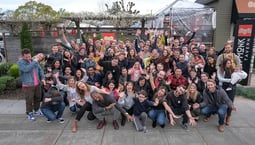




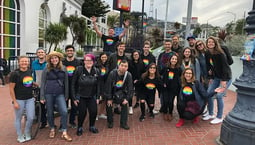



Superhuman Offices
Hybrid Workspace
Employees engage in a combination of remote and on-site work.
