


Shield AI is a venture-backed defense-tech company with the mission of protecting service members and civilians with intelligent systems. Its products include Hivemind autonomy software, V-BAT and X-BAT aircraft, and Aechelon simulation and synthetic reality technologies. With offices and facilities across the U.S., Europe, the Middle East, and Asia-Pacific, Shield AI’s technology actively supports operations worldwide. For more information, visit www.shield.ai. Follow Shield AI on LinkedIn, X, Instagram, and YouTube.
Shield AI builds intelligent systems that protect service members and civilians. Our products include Hivemind autonomy software and V-BAT and X-BAT aircraft, and our teams support customers and operations across the United States, Europe, the Middle East, and Asia-Pacific.
Shield AI is hiring a Senior Customer Sustainment Engineer to support Hivemind systems after they reach customers and operational teams. This role sits at the intersection of customer support, systems troubleshooting, and engineering.
Customers and forward deployed employees bring valuable operational context when they report a mission interruption, update concern, or unexpected system behavior. You will work with them to translate that context into a clear technical problem by gathering the right evidence, understanding the operating environment, narrowing the likely causes, and identifying the best path to resolution.
Some issues will be resolved through configuration changes, deployment corrections, known workarounds, or better guidance. Others will require a product or engineering change. In either case, you will stay with the issue through resolution, keep the customer informed, and make sure the outcome is captured for future use.
The role is the primary owner for Tier 1 support, handles a meaningful portion of Tier 2 troubleshooting, and can contribute to limited Tier 3 investigation when deeper technical experience is useful. Using DoD sustainment language, this is roughly the software equivalent of intermediate-level maintenance: resolve what can be addressed at that level, identify what needs depot-level repair, and provide engineering with a complete technical handoff. Product Support and core engineering teams provide the depot-level repair capability, while this role stays engaged to validate the result and close the loop with the customer.
You will work closely with Forward Deployment Engineering, Product Support Engineering, Operations & Sustainment, Product, Program, Licensing, and the core Hivemind engineering teams. The goal is straightforward: help customers return to mission-ready operation while making Hivemind easier to support over time.
What you'll do:
Own Tier 1 customer support and incident coordination from initial report through confirmed resolution.
Gather the information needed to understand an issue, including mission impact, software version, configuration, deployment state, logs, telemetry, screenshots, network context, and reproduction steps.
Troubleshoot Hivemind software, APIs, licensing and provisioning, deployments, configurations, networks, operator workflows, and partner or OEM integrations.
Separate product defects from configuration problems, environmental differences, integration issues, training needs, and feature requests.
Resolve common technical problems, handle appropriate Tier 2 investigations, and reproduce more complex failures in lab, simulation, or representative test environments.
Recognize issues that require Tier 3 or depot-level product repair and give engineering teams concise escalation packages that explain the impact, evidence, likely causes, work already attempted, and expected result.
Provide customers with clear updates, practical next steps, and technically sound workarounds while investigations are in progress.
Support software releases, upgrades, onboarding, licensing and provisioning workflows, and the transition from deployment into ongoing sustainment.
Turn recurring issues into troubleshooting guides, known-issue records, diagnostic tools, training material, and product feedback.
Use incident patterns to identify improvements to product reliability, diagnostics, documentation, and release readiness.
Projects you may work on:
Investigate a mission failure after a software update by comparing logs, configurations, versions, network behavior, telemetry, and release notes.
Reproduce an autonomy, API, or integration issue and provide engineering with the evidence needed to correct it.
Restore an offline customer environment affected by licensing, provisioning, time synchronization, or version compatibility.
Coordinate the technical response to a high-impact customer issue and validate the workaround or fix before closure.
Build a diagnostic playbook for recurring deployment, configuration, networking, or operator-workflow problems.
Required qualifications:
Bachelor's degree in Engineering, Computer Science, or a related technical field, or equivalent practical, military, field-engineering, or technical experience.
7+ years of hands-on experience supporting fielded, software-enabled systems in customer, operational, test, deployment, or sustainment environments.
Experience with cyber-physical, edge, mission, robotics, autonomy, aviation, defense, industrial-control, or similarly complex deployed systems.
Strong troubleshooting skills across software, Linux, configuration, networking, logs, telemetry, software versions, and hardware-adjacent interfaces.
A record of owning technical issues from an incomplete initial report through diagnosis and resolution.
Ability to read and reason about modern C++ and use existing Python, Bash, or similar scripts during troubleshooting and log analysis.
Clear written and verbal communication with customers, operators, and engineering teams, including during time-sensitive situations.
Ability to write useful incident records, troubleshooting guidance, engineering escalations, and customer-facing updates.
Sound judgment when working within security, export-control, safety, customer-site, contractual, and data-handling requirements.
Ability to possess a Secret DoD security clearance when required by customers.
Preferred qualifications:
Experience with autonomy software, robotics, unmanned systems, aviation, defense or mission software, ground-control software, SDKs, APIs, or edge-deployed systems.
Experience supporting fleet operations, operational-readiness events, flight or ground test campaigns, or customer-site deployments.
Familiarity with DoD sustainment, intermediate- and depot-level maintenance concepts, or comparable field-to-engineering support models.
Hands-on software engineering experience writing and debugging C++ and developing Python scripts or tools for diagnostics, automation, or data analysis.
Familiarity with software releases, configuration baselines, upgrade validation, rollback, and version compatibility.
Experience with licensing, provisioning, offline or air-gapped environments, edge compute, time synchronization, networking, or telemetry analysis.
Experience with Jira, Azure DevOps, Salesforce, ServiceNow, Zendesk, Confluence, or similar engineering and support tools.
Military, operator, maintainer, field-service, mission-support, or customer-engineering experience.
Active or prior security clearance.
Success looks like:
After 90 days,
You can independently manage Tier 1 Hivemind support, resolve appropriate Tier 2 problems, and bring well-supported Tier 3 or depot-level cases to the appropriate engineering team.
Customers and internal teams receive clear updates, practical next steps, and consistent follow-through.
Your escalation packages allow engineering teams to begin useful work without repeating basic discovery.
After 6 months
Common field issues have repeatable diagnostics, workarounds, and support guidance.
Forward Deployment Engineers and core engineers spend less time reconstructing customer problems because the evidence and technical qualification are already in place.
Incident trends are leading to improvements in Hivemind reliability, supportability, documentation, and release readiness.
#LI-KC3
#LE
Full-time regular employee offer package:
Pay within range listed + Bonus + Benefits + Equity
Temporary employee offer package:
Pay within range listed above + temporary benefits package (applicable after 60 days of employment)
Salary compensation is influenced by a wide array of factors including but not limited to skill set, level of experience, licenses and certifications, and specific work location. All offers are contingent on a cleared background and possible reference check. Military fellows and part-time employees are not eligible for benefits. Please speak to your talent acquisition representative for more information.
###
Shield AI is proud to be an equal opportunity workplace and is an affirmative action employer. We are committed to equal employment opportunity regardless of race, color, ancestry, religion, sex, national origin, sexual orientation, age, marital status, disability, gender identity or Veteran status. If you have a disability or special need that requires accommodation, please let us know.
Skills Required
- Bachelor's degree in Engineering, Computer Science, or a related technical field, or equivalent practical, military, field-engineering, or technical experience.
- 7+ years of hands-on experience supporting fielded, software-enabled systems in customer, operational, test, deployment, or sustainment environments.
- Experience with cyber-physical, edge, mission, robotics, autonomy, aviation, defense, industrial-control, or similarly complex deployed systems.
- Strong troubleshooting skills across software, Linux, configuration, networking, logs, telemetry, software versions, and hardware-adjacent interfaces.
- Experience owning technical issues from incomplete initial report through diagnosis and resolution.
- Ability to read and reason about modern C++ and use Python, Bash, or similar scripts for troubleshooting and log analysis.
- Clear written and verbal communication with customers, operators, and engineering teams during time-sensitive situations.
- Ability to write incident records, troubleshooting guidance, engineering escalations, and customer-facing updates.
- Ability to work within security, export-control, safety, customer-site, contractual, and data-handling requirements.
- Ability to possess a Secret DoD security clearance when required by customers.
- Experience with autonomy software, robotics, unmanned systems, aviation, defense or mission software, ground-control software, SDKs, APIs, or edge-deployed systems.
- Experience supporting fleet operations, operational-readiness events, flight or ground test campaigns, or customer-site deployments.
- Familiarity with DoD sustainment, intermediate- and depot-level maintenance concepts, or comparable field-to-engineering support models.
- Hands-on software engineering experience writing and debugging C++ and developing Python scripts or tools for diagnostics, automation, or data analysis.
- Familiarity with software releases, configuration baselines, upgrade validation, rollback, and version compatibility.
- Experience with licensing, provisioning, offline or air-gapped environments, edge compute, time synchronization, networking, or telemetry analysis.
- Experience with Jira, Azure DevOps, Salesforce, ServiceNow, Zendesk, Confluence, or similar engineering and support tools.
- Military, operator, maintainer, field-service, mission-support, or customer-engineering experience.
- Active or prior security clearance.
What the Team is Saying


Shield Compensation & Benefits Highlights
How does Shield ensure its pay and bonus plans are competitive?
Shield competes for high-performing talent through competitive compensation, company equity, retirement contributions and benefits that support employees’ health, families and wellbeing. Compensation is designed to recognize the level of skill, ownership and impact required to build advanced AI and aerospace systems.
- Competitive pay for specialized talent: Shield recruits engineers, operators and business professionals working across artificial intelligence, autonomy, robotics, aircraft development and manufacturing. The company offers competitive compensation to attract employees capable of solving technically difficult, mission-critical problems. Its hiring philosophy prioritizes sustained excellence, rapid learning, resilience and measurable results.
- Equity tied to long-term growth: Eligible employees receive company equity, allowing them to participate in Shield’s long-term success. That opportunity is supported by significant business momentum: Shield reached a $12.7 billion post-money valuation in 2026, more than doubling its previous investor valuation, and projected annual revenue of more than $540 million.
- Recognition for ownership and contribution: Shield’s culture rewards employees who take responsibility for difficult work and create meaningful impact. An employee said compensation and raises were “generous and fair,” while another reported that employees can pursue opportunities, demonstrate ownership and be rewarded for their contributions. A staff engineer also said that hard work was recognized and rewarded.
- Benefits that support life beyond work: Shield’s total-rewards approach is designed to give employees practical support across health, family, financial security and everyday flexibility. Medical coverage and mental-health resources help employees manage their wellbeing, while paid parental leave, pet insurance and flexible work hours recognize that responsibilities outside work look different for every person. Retirement matching, stock benefits and location-based fitness support add longer-term value, making the package more than a collection of perks—it is part of how Shield helps employees sustain demanding, mission-focused careers.
- External signals:
- Compensation sentiment: Employees surveyed externally describe pay increases and overall compensation as fair and generous. (Glassdoor)
- Performance recognition: Reviews connect rewards with ownership, strong output and demonstrated value. (Glassdoor)
- Business momentum: Employees point to rapid growth, strong customer demand and expanding product programs as positive long-term career and equity signals. (Glassdoor)
Bottom line: Shield supports competitive total rewards through salary, equity, retirement matching and broad benefits, while recognizing employees who take ownership and deliver meaningful results.
Shield Insights

What We Do
At Shield you won't wait years to see your work reach the field. You'll build hardware and software that operates in the real world right now, in the hands of the people who depend on it. Hivemind, our AI pilot, has been flying since 2018. It has flown more than 30 platforms, including an F-16, and it now sits under a U.S. Air Force production contract for Collaborative Combat Aircraft. When you write code or shape a system here, you contribute to technology with a proven flight record and a clear production future. V-BAT flies intelligence, surveillance, and reconnaissance missions with an operational record that stretches from Ukraine to the Indo-Pacific. It delivers eyes where they matter most, in the most demanding conditions on earth. The teams behind it watch their work get tested where the stakes are real. X-BAT takes its first flight this year. It's an AI-piloted fighter that needs no runway, built to operate where traditional aircraft can't. Join now and you help shape a program at its earliest, most formative stage. That's the kind of ground-floor work that defines a career. Do the most impactful work of your life, on problems that matter. Autonomy at this level asks a lot of you. You'll take on problems in perception, planning, and control that few teams anywhere are equipped to solve. You'll work across disciplines, from aerospace and robotics to machine learning and systems engineering, alongside people who hold themselves to an exacting standard and expect the same from you. Our mission is clear: protect service members and civilians with intelligent systems. That purpose runs through every decision, every design review, and every deployment. It's why the work here carries a weight you can feel. Ready to join our mission? Explore our open roles and find where you fit.
Why Work With Us
Founded in 2015 by a former Navy SEAL, Shield builds AI pilots and uncrewed aircraft. Veterans aren't an afterthought here, they're at every level. It's why the work carries weight: AI pilots and uncrewed aircraft flying real missions, from Ukraine to the Indo-Pacific, protecting service members and civilians.
Gallery
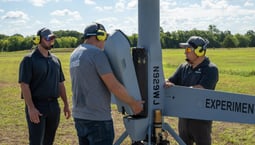


Shield Teams


Shield Offices
Hybrid Workspace
Employees engage in a combination of remote and on-site work.

