


Building a fulfilling engineering career isn’t just about learning new skills and driving the development of new technology — it’s about pursuing work with purpose.
For Vice President of Product Engineering Emily Rosengren at Grainger, a distributor of maintenance, repair and operating products, this purpose takes the form of a mission to “keep the world working.” Along with the rest of the engineering team, Rosengren supports the company’s digital ecosystem, from maintaining customer-facing experiences on Grainger.com to refining the systems other teams lean on to serve customers.
“I see a very clear connection between the work my team does every day and how we make important changes to benefit customers,” Rosengren said.
Meanwhile, at Nourish, an AI-native digital health system that matches patients with in-network dietitians, Director of Engineering Mike Abelar and his teammates on the growth engineering team stay busy helping people discover the company’s platform and begin their care journey. They develop features that help patients log meals, document their eating habits and more.
“That information helps their dietitian tailor the first appointment to their needs, setting them up for a successful start to care,” Abelar said.
For engineers at Grainger, Nourish and eight other companies, every workday offers another chance to deliver work with impact. Read on to learn how engineers at each company pursue purposeful work, and how they incorporate values into their day-to-day work.
Featured Companies

Magna International combines hands-on manufacturing expertise with innovative vehicle systems to build solutions designed for performance, safety and quality.
How does your team’s work connect to company purpose?
The exterior’s product engineering team is tasked with creating product designs that meet all the customer’s requirements, are optimized to produce a healthy bottom line, and highlight the expertise that Magna brings to the automotive industry. By doing all of these successfully, the team continues to bring value to both the vehicle manufacturers and shareholders alike.
What product decisions reflect your organization’s mission?
During the product development phase of a program, our engineers are empowered to take responsibility for their project, adapt to new processes and execute on time. The engineering team is enabled to make decisions that blend experience with forward technical growth to create a final design that is relevant with today’s technology while maintaining quality and performance.
“The engineering team is enabled to make decisions that blend experience with forward technical growth to create a final design that is relevant with today’s technology while maintaining quality and performance.”
How do you bring values into day-to-day engineering?
The engineering process, from full vehicle to individual components, goes well beyond just scientific knowledge and mechanical principles. To be successful in the automotive industry, you also need to be as acutely aware of the integrity that each individual displays during each project. Strong healthy relationships between customers and suppliers are integral in our day-to-day activities in order to succeed.


Ursa Major designs and manufactures propulsion systems for space, hypersonic applications and missile systems.
How does your team’s work connect to company purpose?
The engineering team uses creativity, discipline and physics to turn visionary ideas into reality. And the stakes are significant. Our customers are responsible for keeping us, our families, our friends and the homeland safe. Ursa Major makes that happen.
“The engineering team uses creativity, discipline and physics to turn visionary ideas into reality.”
What product decisions reflect your organization’s mission?
Engineering makes many decisions like material selection, tolerances, how to verify, structural margin and power consumption. The resulting combination of engineering decisions results in a product that can be manufactured and that the customer uses. Every decision impacts the design, and our customer trusts us to make the best decisions we can.
How do you bring values into day-to-day engineering?
Some time ago, Sunita Williams, a NASA astronaut, walked around my worksite. She introduced herself and showed us a picture of her family. Without saying anything, she reminded us that her life was in my hands when she flew on the vehicle we were building. That is a powerful memory and reinforces the importance of engineers making sound decisions. The impact of what we do is significant — be great engineers!


Grainger is the leading distributor of maintenance, repair and operating products, serving more than 4.5 million customers worldwide. The company’s enhancing its digital edge with technologies like machine learning, IoT, cloud automation and data-driven insights to maintain its leadership for the next 100 years.
How does your team’s work connect to company purpose?
At Grainger, our purpose is: We Keep The World Working®. The technology we build directly supports that mission by ensuring our customers and team members have access to the tools they need to do their jobs. Software delivery is a team sport where every role contributes to supporting the best solutions. In product engineering, our engineers help shape both what we build and how we build it.
Our product engineering team supports Grainger’s digital ecosystem ranging from customer-facing experiences on Grainger.com, mobile platforms and KeepStock, to the systems and tools that help our teams serve customers more effectively. I see a very clear connection between the work my team does every day and how we make important changes to benefit customers.
What product decisions reflect your organization’s mission?
Grainger has a set of principles that guide our culture. One that gets referenced a lot when making product decisions is: “Start With the Customer.” It’s easy to become distracted by the newest technology or industry trend, but we are deliberate about investing in solutions that help our customers solve real problems.
Grainger is willing to undertake complex technology change because we know it will be better for our customers over time. Our commitment to longer-term strategy while maintaining the ability to adapt to changing conditions is a distinctive combination. We have done more experimentation with AI than you might expect at a large, 99-year-old company, but we are committed to making sure we’re learning and prepared to adapt.
“Grainger is willing to undertake complex technology change because we know it will be better for our customers over time.”
How do you bring values into day-to-day engineering?
Technology, particularly how custom software gets delivered, is changing rapidly right now. My leadership team and I have done a lot of reflecting on what all this change means for us and how best to support our teams. We’ve started to center on a few ideas that we think are central to the culture we want to maintain, no matter how technology evolves: (1) investing in people, (2) strengthening collaboration and (3) building strong teams. Those ideas shape how we approach building software every day.
First, we invest in people. Grainger has a great early-career program and intends to keep investing in it. Learning and growth aren’t just for junior talent. We expect engineers at every level (including leaders) to be curious and invest in their own skill development. That’s why we’re committed to nurturing talent at every level, creating opportunities for continuous learning and helping engineers expand their skills as the industry changes. We want Grainger to be a place where people can build meaningful careers while working on technology that matters.
Second, we prioritize collaboration. As AI transforms how software is built, human collaboration is more important than ever. My team believes the best ideas emerge when engineers, product teams and business partners solve problems together, bringing different perspectives to complex challenges. I see a lot of chatter in the industry about how AI can improve individual productivity, but I think real impactful change will come from how teams work together with AI.
Third, teams matter. Strong teams create stronger outcomes for customers, and we intentionally build a culture where people can share ideas, learn quickly and navigate change together. General industry trends see technology teams getting smaller, but we see teams playing a very important cultural role. We’re interested in doing more, but not necessarily in making teams smaller. We want to thoughtfully evolve the way we work while staying focused on delivering value for customers and creating an environment where talented engineers can do their best work.

Dragos’ AI-powered platform provides asset visibility, continuous monitoring, vulnerability management and real-time threat detection.
How does your team’s work connect to company purpose?
Our mission is to safeguard civilization. We protect the operational technology that runs power grids, pipelines, water systems and manufacturing. For our product an engineering teams, that means building the Dragos Platform that defenders and operators rely on.
That mission is personal to me. I started my career wiring burner control panels for industrial furnaces and boilers, and I’ve worked in OT ever since. Early on, during a plant outage, a vendor kept asking how many users were affected. The real question was what had stopped running and what was at risk. An outage can cost a plant hundreds of thousands to millions of dollars an hour, damage equipment and put workers, families and communities at risk. You don’t need an OT background to learn that mindset. Many of our engineers come from software, cloud and IT security.
At Dragos, your work directly affects our customers and the communities they serve. When a utility can see what’s connected to its network or a manufacturer catches an intrusion before it reaches the plant floor, we’ve helped protect something people depend on. Safeguarding civilization isn’t just a tagline. It reflects our mission and goal every day.
“When a utility can see what’s connected to its network or a manufacturer catches an intrusion before it reaches the plant floor, we’ve helped protect something people depend on.”
What product decisions reflect your organization’s mission?
In OT, even a small product decision can affect safety and production, so we weigh what operators can safely put into practice, not just what technology can do. For example, our research shows that only three to six percent of OT vulnerabilities require immediate action. Rather than handing plant teams thousands of issues they can’t patch until a scheduled maintenance window, we use intelligence and operational context to prioritize based on what matters to the organization.
Dragos EmberAI, our AI agent for OT, draws on over a decade of Dragos research and incident response to help analysts investigate alerts and run threat hunts. Analysts approve every change, and it never runs autonomously because one wrong change could stop production or put people at risk. Poor segmentation showed up in 81 percent of our architecture reviews, so we help teams validate every connection before they change security rules.
Our mission to safeguard civilization doesn’t stop at who can afford protection. Through our Community Defense Program, 100+ small utilities receive protection at no cost. Every feature starts with the security practitioner and plant operator. If they won’t trust it and can’t safely use it, we don’t build it.
How do you bring values into day-to-day engineering?
At Dragos, our four core values of trust, transparency, authenticity and being mission-driven underpin how we work together to bring our mission to life. Across teams, that means keeping the people who rely on our technology at the center of every decision we make.
For example, the product management team visits customer sites, observes security teams and walks facilities ranging from utilities and refineries to food and pharmaceutical production lines. It’s hard to write requirements for equipment you’ve never stood next to.
Those firsthand insights help inform engineering decisions. Our product managers and engineers collaborate to build capabilities around the operator’s job that can help improve an organization’s visibility, security and control while also ensuring resiliency and efficiency of operations.
That collaboration extends to our threat intelligence and incident response teams. They bring knowledge of the groups targeting industrial systems and lessons from real attacks into early designs and prototypes, staying involved through release. Together, this shared expertise helps us build technology grounded in the realities our customers face.


Clear Street offers a cloud-native brokerage and clearing system that adds efficiency to the market while transparently minimizing risk and cost for clients.
How does your team’s work connect to company purpose?
Clear Street is rebuilding market infrastructure from the ground up: one modern platform for every market, asset class and type of investor. Our team builds the part clients touch: a platform where retail investors can trade multiple asset classes from wherever they are.
“Wherever” means two things. Geographically, we serve clients across the globe, not a single market. Practically, we meet people where they already work: web and mobile, TradingView, FIX, our public API and even the AI assistants they use every day. Advanced clients get the execution and data they need, and everyone else gets the same power in an experience that feels simple.
Because we’re building from scratch, engineers and product managers decide together what to build, and they see their work reach clients quickly. Every feature we ship extends institutional-grade infrastructure to more people in more places.
“Every feature we ship extends institutional-grade infrastructure to more people in more places.”
What product decisions reflect your organization’s mission?
Our mission is to give investors one place to trade any market anywhere, and every product decision starts from that. We built this product from scratch so we could make each choice with “any asset, anytime, anywhere” in mind. That shows up in execution speed, access to private markets and AI that lets clients ask questions about their portfolio in plain English and go from an idea to a trade without a complicated order ticket. It also shows up in quieter choices, like letting clients trade stocks and futures from a single account while the complexity stays behind the scenes.
We ship ambitious products quickly because the fastest way to build the right thing is to put real capability in clients’ hands and learn from how they use it. We scope deliberately, launch and iterate on direct client feedback.
How do you bring values into day-to-day engineering?
“1% Better Every Day” shapes our work the most. We ship constantly and let clients guide us. Instead of debating what users might want, we watch how they use what we built, listen to what they tell us and turn it into the next release. Those gains compound, and the product clients see today reflects hundreds of small iterations.
Much of our work now happens alongside AI coding tools, which makes our other values matter more. AI makes it easy to move fast, but the hard part is shipping the right things. Reliability comes first: When something breaks, we fix the root cause and turn the lesson into team-wide standards. We speak up, so ideas get challenged no matter who they come from, and once we decide, we commit. And when a design stops working, we rebuild it rather than patch around it.

Nourish’s AI-native digital health system matches patients with in-network dietitians.
How does your team’s work connect to company purpose?
Nourish is the country’s largest dietitian-led metabolic health clinic, helping people improve their health starting with personalized nutrition care. Our growth engineering team helps people discover Nourish, start care and stay engaged throughout their care journey.
“Our growth engineering team helps people discover Nourish, start care and stay engaged throughout their care journey.”
We start shaping each person’s care journey while they are signing up. Our personalization engine uses what we learn about their starting point and goals to highlight which services fit their needs and how to set up their program for success, including how many appointments to initially schedule.
One of the most important factors in a patient’s success is having a dietitian who understands their needs. Our ML-powered matching algorithm uses what we learn about each patient to find the best individualized fit across our network of more than 8,000 dietitians.
Once patients sign up, we guide them through personalized app onboarding, helping them log meals and share more about their habits and goals. That information helps their dietitian tailor the first appointment to their needs, setting them up for a successful start to care.
What product decisions reflect your organization’s mission?
Nourish’s mission is to help people improve their health. What that looks like depends on where someone is in their journey, and some people aren’t yet ready to work with a dietitian.
One product decision we’ve made is to offer core app features for free, even before someone signs up for dietitian care. Users can log meals, get meal insights and chat with an AI assistant about their nutrition goals. These features help them understand their habits and start making progress. When they’re ready for more support, a dietitian can help them build on the progress they’ve already made in the app.
Another experience we’ve chosen to prioritize is helping people work toward their goals together, because food and health are shared experiences. We make it easy for users to refer friends and family to Nourish. For a family, that could mean planning meals together, working with the same dietitian and supporting each other as they build healthier habits.
How do you bring values into day-to-day engineering?
Nourish’s values shape how we build products and work together to improve patients’ health. There are two I would highlight.
“Think from first principles” means engineers help define problems, challenge assumptions and propose ideas that shape future roadmaps. Building experiences that help patients succeed takes everyone’s ideas and effort, so engineers provide feedback on product requirements and designs, both up front and as they build. For example, engineers have driven work on the insurance entry experience end to end to make it easier for patients to sign up.
“Have that dog in you” means being resourceful and persistent. We’re an experiment-driven team, and every result is an opportunity to learn, double down on what works or change direction. Engineers dig into data, logs and feedback to understand where experiments can improve. To make the most of all the experiments we run, our engineers built an agent that helps engineering, product and the broader team analyze results more thoroughly and identify what to try next.
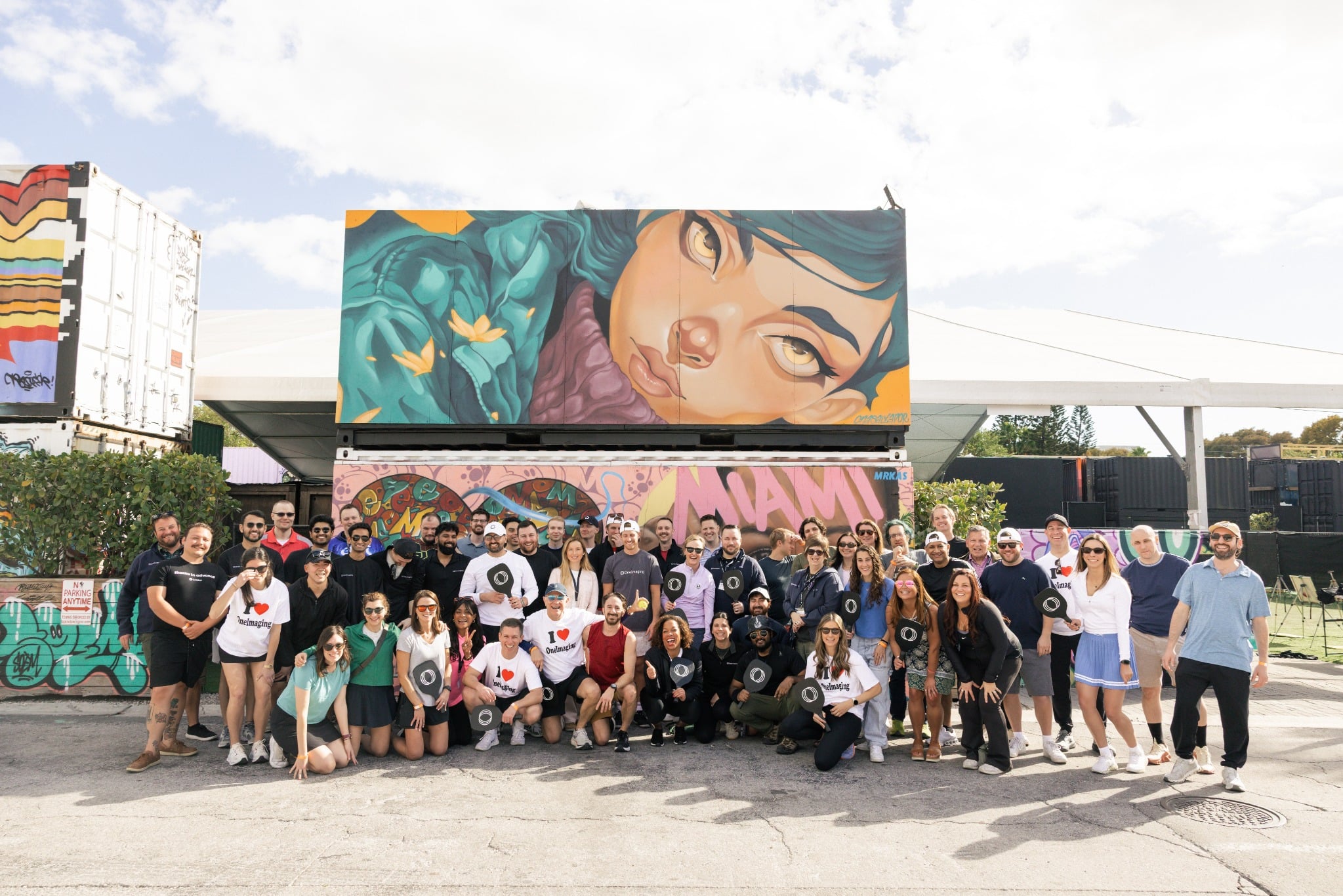


OneImaging’s platform helps patients book and prepay for medical imaging appointments.
How does your team’s work connect to company purpose?
OneImaging exists to make medical imaging affordable and easy to access. Patients routinely face opaque pricing, weeks-long waits and confusing referrals for something as routine as an MRI or CT scan. Our engineering team builds the infrastructure that removes those barriers: the platform that connects a national network of imaging centers, surfaces transparent pricing up front and gets a patient from referral to scheduled appointment in minutes rather than days. Every system we ship, from provider onboarding to image sharing to the scheduling layer, is measured against one question: Does this get a patient the scan they need, faster and for less? That direct line between a pull request and a person getting care is why most of us are here.
“That direct line between a pull request and a person getting care is why most of us are here.”
What product decisions reflect your organization’s mission?
Transparent pricing is the clearest example. It would be easier to build a product that hides cost until the end, but we show patients and employers the price before they book because affordability is the point, not a feature. We’ve also prioritized frictionless provider onboarding over flashier work, because the breadth of our network is what lets patients find a high-quality, low-cost option near them. And we’re investing in real-time AI decision support to help route each patient to the right modality and facility, which keeps unnecessary or mis-ordered scans from happening in the first place. Each of these decisions traded short-term convenience for long-term patient outcomes, which is exactly the trade our mission asks us to make.
How do you bring values into day-to-day engineering?
We run on objectives and key results that trace back to patient access and cost, so engineers can see how their quarter’s work moves the mission, not just the roadmap. We keep the culture low-ego and team-driven: Code review is about getting the patient the right outcome, not about who was right. Because we operate in healthcare, reliability and data stewardship are non-negotiable, so we treat security, uptime and HIPAA-aligned handling of imaging data as part of the definition of done rather than a separate checklist. And we try to give people real ownership. The engineers closest to a problem usually have the best read on what patients and providers actually need, and we’d rather empower that judgment than route every decision through a committee.


Hinge is an online dating app.
How does your team’s work connect to company purpose?
At Hinge, everything we do is in service of helping people go on great dates, so that people can ultimately delete our app. That’s not just one team’s goal. Across the work and systems we build, we’re all asking the same question: What’s the right thing to do for our daters?
For the team working on the core experience, that might mean making it easier to suggest and plan a date, or helping people get to know each other and feel more comfortable meeting in person. The same thinking guides trust and safety, platform and growth, including our approach to monetization as a freemium experience. When we build paid features, we need a clear conviction that they’ll offer meaningful value and help people go on great dates, while keeping the free experience a great way to meet someone.
Because that commitment is shared, engineers, product managers and everyone building here speak up when something doesn’t feel right for daters. We encourage those conversations in Slack threads, tech plans and team meetings. If a feature doesn’t seem like it’s actually helping people, we want to discuss how we can meaningfully help our community of users.
“If a feature doesn’t seem like it’s actually helping people, we want to discuss how we can meaningfully help our community of users.”
What product decisions reflect your organization’s mission?
Our mission shapes the user experience we optimize for and the metrics that guide our day-to-day product decisions.
A clear example is how we think about our recommendation system. Our goal is to help people go on great dates, so we don’t optimize for engagement or retention. We’re actively trying to reduce the time and effort it takes for daters to safely and meaningfully meet in person. We measure that effort and prioritize features that make our app more effective.
Additionally, we prioritize safety across our platform. When thinking about the chat experience, we released Are You Sure? — a feature that encourages daters to pause and reconsider before sending a message that could be perceived as offensive. For the receiver of messages, Did This Bother You? checks in with daters about messages that might feel uncomfortable and gives us a better read on what people are actually experiencing. Both features put daters in control of what feels safe to them, instead of solely relying on behind-the-scenes technology. That’s the throughline here: Dates aren’t great if people don’t feel safe getting there.
How do you bring values into day-to-day engineering?
The most important thing for me is modeling our values at every level of engineering leadership. That starts with the bar I hold myself to and shows up in what we expect from leaders and managers, who we promote to staff and senior roles, and what we reward. Whatever we write on paper, people learn from what they see around them.
Of Hinge’s core values — authenticity, courage and empathy — empathy stands out to me as something that makes Hinge special. Our app brings people together, and the way we build these experiences needs to stay deeply human.
For me, empathy starts with curiosity. When I see something I don’t expect or understand, I try to slow down, ask questions and understand what led a team to a decision before judging whether it’s right or wrong. I want to understand their point of view first. That helps us identify gaps in our thinking, including my own, and get to a better decision together.
In day-to-day engineering, that can be as simple as getting around a whiteboard, putting the different considerations and assumptions on the table, and working through them together. We’re building a shared understanding of the principles behind the decision.


Rocket’s portfolio of brands includes mortgage lender Rocket Mortgage, personal finance app Rocket Money and real estate brokerage platform provider Redfin.
How does your team’s work connect to company purpose?
Our teams are very passionate about our mission to “Help Everyone Home.” We know that the lifecycle of home ownership is a big one, and each client is somewhere on that journey. We work hard to build technology that meets our clients wherever they are. One great example this year has been our digital preapproval process. For many years, clients often had to talk on the phone to verify their documentation and get preapproved. This year, we delivered a fully digital experience, so clients can get preapproved 24/7, 365 days a year. We give them what they need, when they need it, to help empower the next step on their home ownership journey.
What product decisions reflect your organization’s mission?
Our products and technology really need to be an extension of who we are as a company. At Rocket, we talk a lot about our ISMs, our 16 company philosophies that drive our focus on empathy, urgency and care for our clients. I think about things like solving client pain points around providing us documents: It can be incredibly frustrating when you’re working with your lender and you’re having trouble providing the documentation they need. Clients sometimes didn’t see the tasks their banker had asked for until they logged out and back in, so we changed our client portal to show tasks in real time, the moment they’re updated. Little things might be little in a large process, but to our clients, a little thing is a roadblock to completing one of the biggest transactions of their lives. We don’t only tackle the big things. We use our innovation and energy to tackle problems, large and small.
“We don’t only tackle the big things. We use our innovation and energy to tackle problems, large and small.”
How do you bring values into day-to-day engineering?
Agentic tooling and a culture where everybody can contribute shows up in how we work. We’ve challenged ourselves to move beyond older ways of working so that anybody can bring new ideas and solutions to the table. Our leaders and team members are empowered, and even expected, to challenge the status quo. We hold ourselves to a high “say:do” ratio – doing what we say we will do – at every level of the organization. Innovation doesn’t come only from our most senior engineers. It comes from the newest intern to our most senior leaders. We also partner with several industry leaders on the Personal Agent Protocol, an open standard that lets consumers decide what access their personal agents have with a business. Our clients are using the latest technology, and our teams are excited to build the connections and pathways that make it possible.


Carbon Robotics harnesses the power of computer vision, AI and robotics to build autonomous agricultural equipment that’s designed to eliminate chemicals, reduce costs and increase yields.
How does your team’s work connect to company purpose?
Ultimately, Carbon is working toward healthy and effective agriculture through robotics! I’m on the front-end team, which here at Carbon means full-stack development of our web and mobile interfaces, so what we do literally lets our farmers use our machines. Configure them, monitor them, operate them and provide support — If you need a button or display or chat to make it happen, we’re involved.
I work primarily on LaserWeeder. For that product, the more effective we can make our users, the fewer herbicides they need, and the more vegetables they can produce. It’s healthier produce with a lower resource requirement. It’s a cliché, but in the end, we think it’s good for people and the planet. So, building interfaces that make this (quite complicated) product straightforward to use and configure correctly is critical to making all this other effort we’ve gone through worth it. And of course, behind every usable interface is heaps of engineering effort to get all the pieces of the system working together smoothly, which my team also does a lot of.
What product decisions reflect your organization’s mission?
What product decisions don’t?! You can see a company’s real mission by the product decisions they’re making. Again, focusing on LaserWeeder because I work on it more: Our decisions are very directly driven by talking to our farmers and addressing their barriers to adoption, which matters because we see this technology helping existing organic producers scale, while helping conventional farmers cut back on some of these pretty intense chemicals.
“Our decisions are very directly driven by talking to our farmers and addressing their barriers to adoption, which matters because we see this technology helping existing organic producers scale, while helping conventional farmers cut back on some of these pretty intense chemicals.”
Getting into some specifics: Recently, we’ve spent a lot of product effort improving on our approach to plant classification models. They needed to be quick, simple and intuitive for the farmer to configure, while also being really customizable to the specific conditions on that customer’s farm. That’s required a big collaborative push across our machine learning, robot and cloud/front-end teams, but it’s critical to making our machines actually work well for the people using them. In general, I see us choosing critical core investments like that over flashy features that might sound good for one marketing cycle, which I love as an engineer, to have faith that I’m getting to focus on work that really matters to our farmers’ outcomes.
How do you bring values into day-to-day engineering?
For one, we’re really mindful to engineer on the right time horizon; getting improvements out to customers soon enough to make a difference, but being careful enough that we don’t regress what they’re already relying on. The seasonal (and physical) nature of agriculture really helps make that tradeoff visible to the whole team. Tangibly, that means that we prioritize shipping “good” over “perfect,” but we also still really use and value our manual QA, because in an integrated system humans catch errors that no amount of CI is going to. We’ve got QA tractors running in real fields, and we send engineers out to the field frequently to get real-life validation in. Similarly, we really value getting processes out of the way. But you can’t just say “no process!” and hope. You have to build the structure that lets people self-organize as needed. For us, that means that we’re not just in the office, but the software team is all in the same office. We actually get to turn around and have quick discussions as needed and see each other at lunch. To me, it’s a commitment to a certain kind of flexible collaboration that requires knowing and trusting your team.


