


Shield AI is a venture-backed defense-tech company with the mission of protecting service members and civilians with intelligent systems. Its products include Hivemind autonomy software, V-BAT and X-BAT aircraft, and Aechelon simulation and synthetic reality technologies. With offices and facilities across the U.S., Europe, the Middle East, and Asia-Pacific, Shield AI’s technology actively supports operations worldwide. For more information, visit www.shield.ai. Follow Shield AI on LinkedIn, X, Instagram, and YouTube.
We are seeking a Propulsion Performance Engineer to own engine calibration and performance for the reciprocating engines that power the V-BAT platform. This role serves as the technical owner for engine calibration strategy — driving test plans, ECU tuning, and performance analysis from bench through flight test — and is accountable for the torque, power, speed, and fuel efficiency characteristics the engine delivers across its full operating envelope.
You'll work hands-on with engine hardware, electronic fuel injection and engine control systems, and engine test stands, creating and executing engine testing strategies under the direction of senior staff propulsion engineers. Candidates with a background in air-cooled or aviation two-stroke engines are especially encouraged to apply; at minimum, we're looking for someone with deep hands-on experience on reciprocating engines (four-stroke or two-stroke) who can own calibration decisions with minimal oversight.
What You'll Do In This Role
Support the engine calibration strategy by defining test plans, calibration methodology, and acceptance criteria across dynamometer, bench, and flight test campaigns.
Perform ECU configuration and tuning (including fuel mapping, ignition timing, and injector phasing) to optimize engine performance, fuel efficiency, and reliability across the operating envelope.
Analyze and deliver torque, power, and fuel consumption results, identifying calibration or hardware improvement opportunities and driving corrective action.
Lead troubleshooting and root-cause investigations for engine testing for the development team and production teams.
Reduce and interpret test and flight data to validate performance against requirements, closing gaps between design intent and measured behavior.
Represent engine calibration and performance in design reviews, technical readiness checkpoints, and cross-functional discussions with design, controls, and flight test teams.
Develop and maintain calibration documentation, procedures, and performance reporting to support program milestones.
Support refinement of performance models for the propulsion system and the vehicle through targeted test campaigns and data review.
Required qualifications:
Bachelor's degree in Mechanical Engineering, Aerospace Engineering, or a related engineering discipline.
5+ years of experience in a mechanical or aerospace engineering role, with a focus on engine performance or calibration.
Deep hands-on experience with reciprocating (piston) engines.
Demonstrated experience with electronically controlled fuel injectors and fuel injection systems.
Proven experience with ECU configuration and engine calibration, including ownership of calibration decisions.
Strong ability to analyze and interpret engine torque, power, and fuel consumption data to drive engine design, ECU calibration, and vehicle performance decisions.
U.S. Citizenship or ability to comply with ITAR requirements.
Preferred qualifications:
Podium finish in FSAE competition, with at least one first place trophy in any dynamic event.
Background in air-cooled engines, particularly aviation two-stroke platforms.
Experience with dynamometer test cells and associated data acquisition systems.
Deep familiarity with fuel maps, ignition timing strategies, and closed-loop engine control logic.
Proficiency in Python or MATLAB for data reduction and calibration tooling.
Experience writing custom data analysis tools to automate engine performance analysis and calibration workflows.
Experience supporting military propulsion systems, tactical aircraft, or high-performance aerospace platforms.
M.S. or Ph.D. in Mechanical Engineering, Aerospace Engineering, or a related engineering discipline.
Full-time regular employee offer package:
Pay within range listed + Bonus + Benefits + Equity
Temporary employee offer package:
Pay within range listed above + temporary benefits package (applicable after 60 days of employment)
Salary compensation is influenced by a wide array of factors including but not limited to skill set, level of experience, licenses and certifications, and specific work location. All offers are contingent on a cleared background and possible reference check. Military fellows and part-time employees are not eligible for benefits. Please speak to your talent acquisition representative for more information.
###
Shield AI is proud to be an equal opportunity workplace and is an affirmative action employer. We are committed to equal employment opportunity regardless of race, color, ancestry, religion, sex, national origin, sexual orientation, age, marital status, disability, gender identity or Veteran status. If you have a disability or special need that requires accommodation, please let us know.
Skills Required
- Bachelor’s degree in Mechanical Engineering, Aerospace Engineering, or a related engineering discipline.
- 5+ years of experience in mechanical or aerospace engineering focused on engine performance or calibration.
- Deep hands-on experience with reciprocating piston engines.
- Experience with electronically controlled fuel injectors and fuel injection systems.
- Experience configuring ECUs and calibrating engines, including ownership of calibration decisions.
- Ability to analyze engine torque, power, and fuel consumption data.
- U.S. citizenship or ability to comply with ITAR requirements.
- Podium finish in FSAE competition, including at least one first-place dynamic-event trophy.
- Background in air-cooled engines, particularly aviation two-stroke platforms.
- Experience with dynamometer test cells and data acquisition systems.
- Familiarity with fuel maps, ignition timing strategies, and closed-loop engine control logic.
- Proficiency in Python or MATLAB for data reduction and calibration tooling.
- Experience writing custom data-analysis tools for engine performance and calibration workflows.
- Experience supporting military propulsion systems, tactical aircraft, or high-performance aerospace platforms.
- Master’s or Ph.D. in Mechanical Engineering, Aerospace Engineering, or a related discipline.
What the Team is Saying


Shield Compensation & Benefits Highlights
-
Healthcare Strength — Medical, dental, and vision coverage are described as strong and affordable, and offerings include a mental-health assistance program. Overall impressions point to good plan value for many employees.
-
Retirement Support — A 401(k) with employer matching is highlighted positively, with accounts describing a company match and favorable experiences. Current match formulas and vesting are noted as worth confirming.
-
Equity Value & Accessibility — Full-time hires receive equity (often via RSUs), positioned as a meaningful component of total rewards. A double-trigger structure is noted as potentially deferring taxes until a liquidity event.
Shield Insights

What We Do
At Shield you won't wait years to see your work reach the field. You'll build hardware and software that operates in the real world right now, in the hands of the people who depend on it. Hivemind, our AI pilot, has been flying since 2018. It has flown more than 30 platforms, including an F-16, and it now sits under a U.S. Air Force production contract for Collaborative Combat Aircraft. When you write code or shape a system here, you contribute to technology with a proven flight record and a clear production future. V-BAT flies intelligence, surveillance, and reconnaissance missions with an operational record that stretches from Ukraine to the Indo-Pacific. It delivers eyes where they matter most, in the most demanding conditions on earth. The teams behind it watch their work get tested where the stakes are real. X-BAT takes its first flight this year. It's an AI-piloted fighter that needs no runway, built to operate where traditional aircraft can't. Join now and you help shape a program at its earliest, most formative stage. That's the kind of ground-floor work that defines a career. Do the most impactful work of your life, on problems that matter. Autonomy at this level asks a lot of you. You'll take on problems in perception, planning, and control that few teams anywhere are equipped to solve. You'll work across disciplines, from aerospace and robotics to machine learning and systems engineering, alongside people who hold themselves to an exacting standard and expect the same from you. Our mission is clear: protect service members and civilians with intelligent systems. That purpose runs through every decision, every design review, and every deployment. It's why the work here carries a weight you can feel. Ready to join our mission? Explore our open roles and find where you fit.
Why Work With Us
Founded in 2015 by a former Navy SEAL, Shield builds AI pilots and uncrewed aircraft. Veterans aren't an afterthought here, they're at every level. It's why the work carries weight: AI pilots and uncrewed aircraft flying real missions, from Ukraine to the Indo-Pacific, protecting service members and civilians.
Gallery
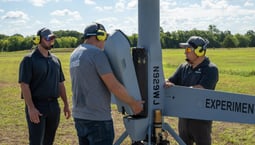


Shield Teams


Shield Offices
Hybrid Workspace
Employees engage in a combination of remote and on-site work.

