


What you'll do:
- System Integration & Deployment — Integrate autonomy software onto unmanned aircraft systems, ensuring seamless operation across onboard compute, sensors, and control interfaces.
- Pre-flight Preparation — Own the build, configuration, and validation process for flight-ready systems; coordinate hardware/software compatibility and mission readiness.
- On-site Flight Test Support — Travel to test sites and support live flight operations, including safety checks, system bring-up, and troubleshooting under time-critical constraints.
- Hardware/Software Debugging — Diagnose and resolve integration issues across complex autonomy software stacks and embedded systems in lab and field environments.
- Flight Data Capture & Analysis — Manage data collection during missions and post-test analysis, working with autonomy engineers to refine behaviors and identify improvements.
- Collaboration Across Teams — Work closely with autonomy, GNC, systems, and test teams to ensure mission-critical functionality is delivered on time and validated thoroughly.
- Continuous Improvement — Build tools and processes to improve integration timelines, flight test reliability, and team efficiency across deployment cycles.
- Support Certification and Compliance — Assist with documentation and system-level validation required for certification, airworthiness, and compliance in defense-relevant environments.
- Travel Requirement – Members of this team typically travel around 30-40% of the year (to different office locations, customer sites, and flight integration events).
Required qualifications:
- BS/MS in Computer Science, Electrical Engineering, Mechanical Engineering, Aerospace Engineering, and/or similar degree, or equivalent practical experience.
- Typically requires a minimum of 7 years of related experience with a Bachelor’s degree; or 5 years and a Master’s degree; or 4 years with a PhD; or equivalent work experience.
- Proficiency in programming languages such as C++ and Python, and familiarity with real-time operating systems (RTOS).
- Proficiency in Linux-based development and experience working with embedded systems, shell scripting, and system diagnostics.
- Knowledge of sensor integration, sensor fusion, and middleware frameworks (e.g., ROS, DDS).
- Hands-on experience supporting flight demos or live exercises.
- Experience with simulation tools and environments for testing and validation.
- Strong problem-solving skills, with the ability to troubleshoot and optimize system performance.
- Excellent communication and teamwork skills, with the ability to work effectively in a collaborative, multidisciplinary environment.
Preferred Qualifications:
- Direct experience supporting unmanned aerial systems or similar flight test campaigns.
- Familiarity with autonomy stacks, flight control systems, or GNC pipelines.
- Competence in sensor integration, electronics debugging, or avionics bring-up.
- Proficiency in developing automation tools for system testing, logging, and data parsing.
- Comfortable interfacing with DoD stakeholders during field events or technical reviews.
- Experience with UCI and OMS Standards.
Skills Required
- BS/MS in Computer Science, Electrical, Mechanical, Aerospace Engineering, or equivalent practical experience
- Minimum experience: typically 7 years with BS, or 5 years with MS, or 4 years with PhD, or equivalent
- Proficiency in C++ and Python
- Familiarity with real-time operating systems (RTOS)
- Proficiency in Linux-based development, embedded systems, shell scripting, and system diagnostics
- Knowledge of sensor integration, sensor fusion, and middleware frameworks (ROS, DDS)
- Hands-on experience supporting flight demos or live exercises
- Experience with simulation tools and environments for testing and validation
- Strong problem-solving skills and ability to troubleshoot/optimize system performance
- Excellent communication and teamwork skills in multidisciplinary environments
- Direct experience supporting unmanned aerial systems or flight test campaigns
- Familiarity with autonomy stacks, flight control systems, or GNC pipelines
- Competence in electronics debugging, sensor integration, or avionics bring-up
- Proficiency in developing automation tools for testing, logging, and data parsing
- Comfort interfacing with DoD stakeholders during field events or technical reviews
- Experience with UCI and OMS Standards
What the Team is Saying


Shield Compensation & Benefits Highlights
How does Shield ensure its pay and bonus plans are competitive?
Shield competes for high-performing talent through competitive compensation, company equity, retirement contributions and benefits that support employees’ health, families and wellbeing. Compensation is designed to recognize the level of skill, ownership and impact required to build advanced AI and aerospace systems.
- Competitive pay for specialized talent: Shield recruits engineers, operators and business professionals working across artificial intelligence, autonomy, robotics, aircraft development and manufacturing. The company offers competitive compensation to attract employees capable of solving technically difficult, mission-critical problems. Its hiring philosophy prioritizes sustained excellence, rapid learning, resilience and measurable results.
- Equity tied to long-term growth: Eligible employees receive company equity, allowing them to participate in Shield’s long-term success. That opportunity is supported by significant business momentum: Shield reached a $12.7 billion post-money valuation in 2026, more than doubling its previous investor valuation, and projected annual revenue of more than $540 million.
- Recognition for ownership and contribution: Shield’s culture rewards employees who take responsibility for difficult work and create meaningful impact. An employee said compensation and raises were “generous and fair,” while another reported that employees can pursue opportunities, demonstrate ownership and be rewarded for their contributions. A staff engineer also said that hard work was recognized and rewarded.
- Benefits that support life beyond work: Shield’s total-rewards approach is designed to give employees practical support across health, family, financial security and everyday flexibility. Medical coverage and mental-health resources help employees manage their wellbeing, while paid parental leave, pet insurance and flexible work hours recognize that responsibilities outside work look different for every person. Retirement matching, stock benefits and location-based fitness support add longer-term value, making the package more than a collection of perks—it is part of how Shield helps employees sustain demanding, mission-focused careers.
- External signals:
- Compensation sentiment: Employees surveyed externally describe pay increases and overall compensation as fair and generous. (Glassdoor)
- Performance recognition: Reviews connect rewards with ownership, strong output and demonstrated value. (Glassdoor)
- Business momentum: Employees point to rapid growth, strong customer demand and expanding product programs as positive long-term career and equity signals. (Glassdoor)
Bottom line: Shield supports competitive total rewards through salary, equity, retirement matching and broad benefits, while recognizing employees who take ownership and deliver meaningful results.
Shield Insights
Similar Jobs

What We Do
At Shield you won't wait years to see your work reach the field. You'll build hardware and software that operates in the real world right now, in the hands of the people who depend on it. Hivemind, our AI pilot, has been flying since 2018. It has flown more than 30 platforms, including an F-16, and it now sits under a U.S. Air Force production contract for Collaborative Combat Aircraft. When you write code or shape a system here, you contribute to technology with a proven flight record and a clear production future. V-BAT flies intelligence, surveillance, and reconnaissance missions with an operational record that stretches from Ukraine to the Indo-Pacific. It delivers eyes where they matter most, in the most demanding conditions on earth. The teams behind it watch their work get tested where the stakes are real. X-BAT takes its first flight this year. It's an AI-piloted fighter that needs no runway, built to operate where traditional aircraft can't. Join now and you help shape a program at its earliest, most formative stage. That's the kind of ground-floor work that defines a career. Do the most impactful work of your life, on problems that matter. Autonomy at this level asks a lot of you. You'll take on problems in perception, planning, and control that few teams anywhere are equipped to solve. You'll work across disciplines, from aerospace and robotics to machine learning and systems engineering, alongside people who hold themselves to an exacting standard and expect the same from you. Our mission is clear: protect service members and civilians with intelligent systems. That purpose runs through every decision, every design review, and every deployment. It's why the work here carries a weight you can feel. Ready to join our mission? Explore our open roles and find where you fit.
Why Work With Us
Founded in 2015 by a former Navy SEAL, Shield builds AI pilots and uncrewed aircraft. Veterans aren't an afterthought here, they're at every level. It's why the work carries weight: AI pilots and uncrewed aircraft flying real missions, from Ukraine to the Indo-Pacific, protecting service members and civilians.
Gallery
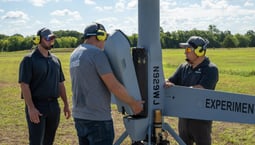


Shield Teams


Shield Offices
Hybrid Workspace
Employees engage in a combination of remote and on-site work.

