


The Director of IT Infrastructure Services leads the strategy, engineering, delivery, and operational excellence of the company’s core enterprise infrastructure services across Network Engineering, Cloud Platform Engineering, and Infrastructure Services. This role is responsible for ensuring the availability, performance, scalability, security, and cost efficiency of the global technology foundation that enables business operations, engineering, enterprise applications, and mission-critical services.
This leader owns the operating model and technical roadmap for enterprise networking, cloud platforms, on-premises compute and storage, data center services, infrastructure automation, and cloud identity. Success in this role means resilient, performant, and secure services, predictable delivery, effective capacity and lifecycle management, strong operational discipline, and infrastructure platforms that can scale with the company’s rapid growth and evolving business requirements.
As a senior IT leader, the Director establishes architecture standards, service-management practices, operational metrics, and investment priorities across hybrid infrastructure environments. The ideal candidate brings deep technical and leadership experience in enterprise networking, cloud platforms, data center infrastructure, and DevOps practices, as well as a demonstrated ability to build and lead high-performing teams in security-conscious, high-growth environments.
The role has three direct-report organizations:
- Network Engineering
- Cloud Platform Engineering
- IT Infrastructure Engineering
What you’ll do:
- Develop and execute the multi-year IT infrastructure strategy and roadmap across enterprise networking, cloud platforms, on-premises infrastructure, data centers, cloud identity, and infrastructure automation.
- Lead, mentor, and scale the Infrastructure Services leadership team.
- Establish a clear service delivery model, including service ownership, operational standards, escalation paths, on-call expectations, service-level objectives, capacity planning, lifecycle management, and performance metrics.
- Oversee Network Engineering, including enterprise routing and switching, wired and wireless connectivity, WAN, SD-WAN, Internet connectivity, VPN, client VPN, firewalls, network access control, segmentation, remote access, and network observability.
- Ensure network services are engineered and operated with high availability, strong security controls, resilient connectivity, documented standards, and appropriate support for corporate offices, data centers, remote users, cloud environments, and critical business applications.
- Lead Cloud Platform Engineering, including cloud architecture, platform management, cloud provisioning, IaC (Infrastructure as Code), DevOps enablement, cloud operations, cloud identity, cloud networking, monitoring, logging, resilience, and cost optimization.
- Define and govern standards for cloud landing zones, account or subscription structures, identity and access controls, infrastructure configuration, environment provisioning, tagging, backup, disaster recovery, logging, and policy enforcement.
- Drive infrastructure automation across cloud and on-premises environments through infrastructure as code, configuration management, CI/CD practices, self-service provisioning, orchestration, and standardized operational runbooks.
- Oversee Infrastructure Services, including on-premises compute, storage, virtualization, backup and recovery, hardware lifecycle management, data center operations, colocation services, and physical infrastructure planning.
- Establish capacity, availability, resiliency, and disaster-recovery strategies for critical infrastructure platforms, ensuring recovery objectives and operational procedures align with business and security requirements.
- Partner closely with Cybersecurity to embed security-by-design and least-privilege principles into network, cloud, identity, and infrastructure architectures, including segmentation, privileged access controls, logging, vulnerability remediation, secure configuration baselines, and incident response readiness.
- Partner with Enterprise Applications, Data, Engineering, End User Computing, Facilities, Finance, Procurement, and business stakeholders to align infrastructure capabilities with enterprise priorities, application requirements, growth plans, and site expansion needs.
- Lead infrastructure incident management and executive communications for significant service disruptions, ensuring rapid restoration, root-cause analysis, corrective actions, and measurable improvements to operational resilience.
- Establish and monitor operational KPIs and executive reporting for infrastructure availability, performance, service health, capacity, delivery velocity, cloud spend, operational risk, security posture, and modernization progress.
- Own infrastructure financial planning, including budget development, forecasting, vendor negotiations, licensing, cloud consumption, hardware refresh cycles, managed-service costs, and cost-optimization initiatives.
- Develop strategic relationships with cloud providers, telecommunications carriers, hardware and software vendors, managed service providers, and implementation partners to improve service quality, reduce risk, and optimize total cost of ownership.
- Define and maintain infrastructure architecture principles, technical standards, reference designs, documentation requirements, and lifecycle roadmaps.
- Build a culture of accountability, continuous improvement, automation, documentation, operational rigor, and customer-focused service delivery across the Infrastructure Services organization.
Required qualifications:
- 12+ years of progressive experience in enterprise IT infrastructure, cloud platforms, networking, systems engineering, or related technical disciplines.
- 5+ years of leadership experience managing managers and leading multi-functional infrastructure, cloud, and network engineering organizations.
- Demonstrated experience developing and executing enterprise infrastructure strategies across hybrid cloud, network, data center, and core platform services.
- Deep expertise in enterprise network architecture and operations, including routing, switching, WAN, VPN, firewalls, network segmentation, network access control, remote access, and network monitoring.
- Strong experience designing, operating, and governing cloud platforms, including cloud architecture, identity, networking, provisioning, observability, cost management, resiliency, and operational controls.
- Experience leading DevOps and infrastructure automation initiatives using infrastructure-as-code, configuration management, CI/CD pipelines, automated provisioning, and standardized platform services.
- Strong background in on-premises infrastructure, including compute, storage, virtualization, backup and recovery, data center or colocation operations, and hardware lifecycle management.
- Proven experience establishing service-management practices, including incident management, problem management, change management, service-level objectives, operational dashboards, and root-cause analysis.
- Experience implementing high-availability, business continuity, and disaster-recovery capabilities for critical technology platforms.
- Demonstrated ability to partner effectively with Cybersecurity on identity, network security, cloud security, logging, vulnerability remediation, privileged access, and security architecture requirements.
- Strong financial acumen and experience managing infrastructure budgets, cloud consumption, vendor contracts, telecommunications spend, licensing, and capital or operating expense planning.
- Strong executive communication skills, including the ability to translate complex technical risks, tradeoffs, investment needs, and operational performance into clear business-oriented recommendations.
- Experience participating in or leading high-severity incident response, executive escalation management, and post-incident improvement programs.
Preferred qualifications:
- 15+ years of progressive IT infrastructure experience, including 7+ years leading large-scale, multi-disciplinary infrastructure organizations.
- Experience building and scaling infrastructure services in a high-growth, geographically distributed, or rapidly evolving enterprise environment.
- Experience supporting regulated, security-sensitive, or compliance-driven environments with rigorous requirements for access control, segmentation, auditability, resiliency, and secure operations.
- Experience operating infrastructure within Microsoft Azure, AWS, or multi-cloud environments, including enterprise identity integration and cloud governance.
- Experience with modern network architectures, including SD-WAN, zero-trust network access, secure remote access, network segmentation, SASE, and cloud-native networking.
- Experience with infrastructure observability platforms, AIOps, capacity analytics, service health dashboards, and automated remediation.
- Strong background in ITIL-based service management, operational maturity models, and KPI-driven continuous improvement.
- Experience with merger, acquisition, office expansion, data-center migration, cloud migration, or enterprise-scale infrastructure modernization programs.
- Relevant technical or leadership certifications, such as CISSP, CCNP/CCIE, JNCIP/JNCIE, AWS or Azure architecture certifications, ITIL, PMP, or equivalent experience.
Skills Required
- 12+ years of progressive experience in enterprise IT infrastructure, cloud platforms, networking, systems engineering, or related technical disciplines.
- 5+ years of leadership experience managing managers and leading multifunctional infrastructure, cloud, and network engineering organizations.
- Experience developing and executing enterprise infrastructure strategies across hybrid cloud, network, data center, and core platform services.
- Deep expertise in enterprise network architecture and operations, including routing, switching, WAN, VPN, firewalls, network segmentation, network access control, remote access, and network monitoring.
- Experience designing, operating, and governing cloud platforms, including architecture, identity, networking, provisioning, observability, cost management, resiliency, and operational controls.
- Experience leading DevOps and infrastructure automation initiatives using infrastructure-as-code, configuration management, CI/CD pipelines, automated provisioning, and standardized platform services.
- Strong background in on-premises infrastructure, including compute, storage, virtualization, backup and recovery, data center or colocation operations, and hardware lifecycle management.
- Experience establishing service-management practices, including incident management, problem management, change management, service-level objectives, operational dashboards, and root-cause analysis.
- Experience implementing high-availability, business continuity, and disaster-recovery capabilities for critical technology platforms.
- Ability to partner effectively with Cybersecurity on identity, network security, cloud security, logging, vulnerability remediation, privileged access, and security architecture.
- Strong financial acumen and experience managing infrastructure budgets, cloud consumption, vendor contracts, telecommunications spend, licensing, and capital or operating expense planning.
- Strong executive communication skills, including translating technical risks, tradeoffs, investment needs, and operational performance into business recommendations.
- Experience participating in or leading high-severity incident response, executive escalation management, and post-incident improvement programs.
- 15+ years of progressive IT infrastructure experience, including 7+ years leading large-scale, multidisciplinary infrastructure organizations.
- Experience building and scaling infrastructure services in a high-growth, geographically distributed, or rapidly evolving enterprise environment.
- Experience supporting regulated, security-sensitive, or compliance-driven environments.
- Experience operating infrastructure within Microsoft Azure, AWS, or multi-cloud environments, including enterprise identity integration and cloud governance.
- Experience with modern network architectures, including SD-WAN, zero-trust network access, secure remote access, network segmentation, SASE, and cloud-native networking.
- Experience with infrastructure observability platforms, AIOps, capacity analytics, service health dashboards, and automated remediation.
- Strong background in ITIL-based service management, operational maturity models, and KPI-driven continuous improvement.
- Experience with merger, acquisition, office expansion, data-center migration, cloud migration, or enterprise-scale infrastructure modernization programs.
- Relevant technical or leadership certifications such as CISSP, CCNP/CCIE, JNCIP/JNCIE, AWS or Azure architecture certifications, ITIL, PMP, or equivalent experience.
What the Team is Saying


Shield Compensation & Benefits Highlights
How does Shield ensure its pay and bonus plans are competitive?
Shield competes for high-performing talent through competitive compensation, company equity, retirement contributions and benefits that support employees’ health, families and wellbeing. Compensation is designed to recognize the level of skill, ownership and impact required to build advanced AI and aerospace systems.
- Competitive pay for specialized talent: Shield recruits engineers, operators and business professionals working across artificial intelligence, autonomy, robotics, aircraft development and manufacturing. The company offers competitive compensation to attract employees capable of solving technically difficult, mission-critical problems. Its hiring philosophy prioritizes sustained excellence, rapid learning, resilience and measurable results.
- Equity tied to long-term growth: Eligible employees receive company equity, allowing them to participate in Shield’s long-term success. That opportunity is supported by significant business momentum: Shield reached a $12.7 billion post-money valuation in 2026, more than doubling its previous investor valuation, and projected annual revenue of more than $540 million.
- Recognition for ownership and contribution: Shield’s culture rewards employees who take responsibility for difficult work and create meaningful impact. An employee said compensation and raises were “generous and fair,” while another reported that employees can pursue opportunities, demonstrate ownership and be rewarded for their contributions. A staff engineer also said that hard work was recognized and rewarded.
- Benefits that support life beyond work: Shield’s total-rewards approach is designed to give employees practical support across health, family, financial security and everyday flexibility. Medical coverage and mental-health resources help employees manage their wellbeing, while paid parental leave, pet insurance and flexible work hours recognize that responsibilities outside work look different for every person. Retirement matching, stock benefits and location-based fitness support add longer-term value, making the package more than a collection of perks—it is part of how Shield helps employees sustain demanding, mission-focused careers.
- External signals:
- Compensation sentiment: Employees surveyed externally describe pay increases and overall compensation as fair and generous. (Glassdoor)
- Performance recognition: Reviews connect rewards with ownership, strong output and demonstrated value. (Glassdoor)
- Business momentum: Employees point to rapid growth, strong customer demand and expanding product programs as positive long-term career and equity signals. (Glassdoor)
Bottom line: Shield supports competitive total rewards through salary, equity, retirement matching and broad benefits, while recognizing employees who take ownership and deliver meaningful results.
Shield Insights
Similar Jobs

What We Do
At Shield you won't wait years to see your work reach the field. You'll build hardware and software that operates in the real world right now, in the hands of the people who depend on it. Hivemind, our AI pilot, has been flying since 2018. It has flown more than 30 platforms, including an F-16, and it now sits under a U.S. Air Force production contract for Collaborative Combat Aircraft. When you write code or shape a system here, you contribute to technology with a proven flight record and a clear production future. V-BAT flies intelligence, surveillance, and reconnaissance missions with an operational record that stretches from Ukraine to the Indo-Pacific. It delivers eyes where they matter most, in the most demanding conditions on earth. The teams behind it watch their work get tested where the stakes are real. X-BAT takes its first flight this year. It's an AI-piloted fighter that needs no runway, built to operate where traditional aircraft can't. Join now and you help shape a program at its earliest, most formative stage. That's the kind of ground-floor work that defines a career. Do the most impactful work of your life, on problems that matter. Autonomy at this level asks a lot of you. You'll take on problems in perception, planning, and control that few teams anywhere are equipped to solve. You'll work across disciplines, from aerospace and robotics to machine learning and systems engineering, alongside people who hold themselves to an exacting standard and expect the same from you. Our mission is clear: protect service members and civilians with intelligent systems. That purpose runs through every decision, every design review, and every deployment. It's why the work here carries a weight you can feel. Ready to join our mission? Explore our open roles and find where you fit.
Why Work With Us
Founded in 2015 by a former Navy SEAL, Shield builds AI pilots and uncrewed aircraft. Veterans aren't an afterthought here, they're at every level. It's why the work carries weight: AI pilots and uncrewed aircraft flying real missions, from Ukraine to the Indo-Pacific, protecting service members and civilians.
Gallery
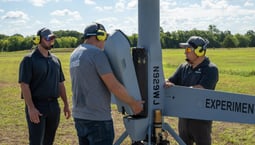


Shield Teams


Shield Offices
Hybrid Workspace
Employees engage in a combination of remote and on-site work.

